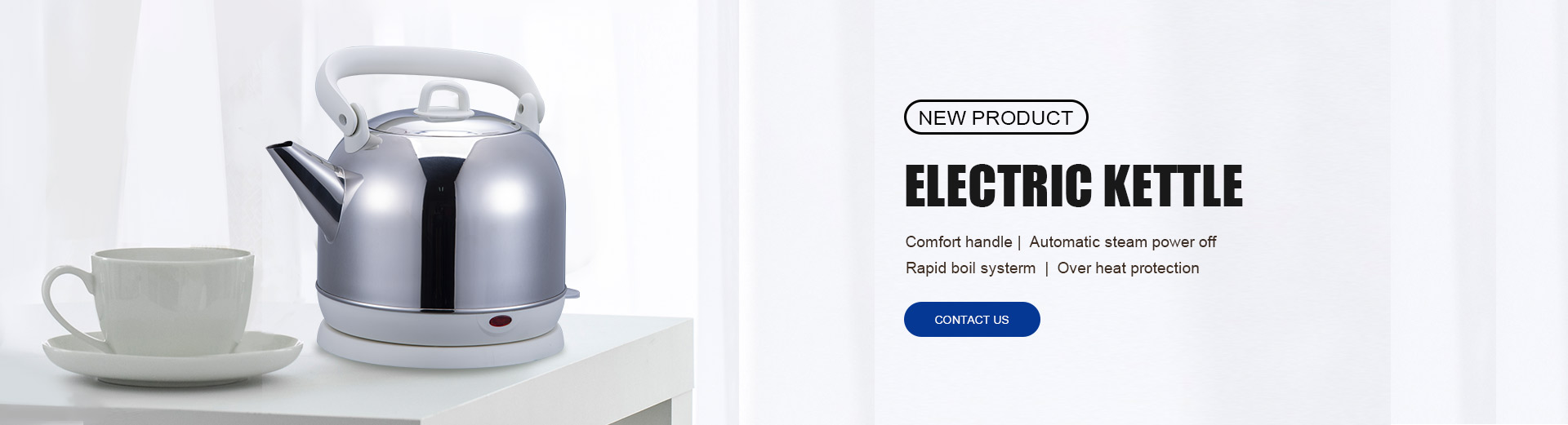
The answer lies in their specialized heating design, high power output, and direct-contact energy transfer.Below we’ll explore the science, components, and engineering features that allow electric kettles to work with such remarkable efficiency.
Cordless electric tea kettles have transformed the way people boil water—offering safety, efficiency, and modern convenience. Unlike traditional kettles that rely on stovetops or fixed cords, these models feature a separable base that delivers power through concealed connectors. This design makes pouring, cleaning, and handling easier while maintaining fast boiling performance.
An electric kettle is a reliable companion in the kitchen, but even the best models can occasionally suffer from burn marks or discoloration inside or outside the body. Burnt residue may appear after boiling without enough water, overheating, or accidental misuse. It not only affects the appearance of your kettle but can also alter the taste of water and reduce heating efficiency.
Electric kettles have become essential in homes, offices, hotels, and cafés. They are fast, convenient, and energy-efficient. However, choosing the right model requires more than picking the most attractive design. Buyers should consider capacity, material, wattage, voltage compatibility, safety features, and maintenance to ensure long-lasting performance and safety.
An electric kettle is one of the most frequently used appliances in kitchens, offices, and hotels. Whether you use it to make tea, coffee, or instant meals, it comes into contact with water every day. Over time, limescale and mineral buildup can accumulate inside the kettle, affecting both taste and heating efficiency.
Electric kettles are valued for their speed, efficiency, and reliability. But if you care about electricity consumption or are choosing a kettle for international markets, you may wonder: how many watts does an electric kettle use?
The answer depends on where you live, as voltage standards vary between regions. Most electric kettles, including those manufactured by Shenbao Electric Appliance Co., Ltd., operate on either 110–120 volts (in North America and Japan) or 220–240 volts (in Europe, Asia, and most other regions).
Electric kettles are built to last for years, providing fast, efficient boiling in homes, offices, and hotels. But like all household appliances, they eventually reach the end of their service life. When that time comes, you may wonder: how should you dispose of an electric kettle safely and responsibly?
The answer is no. You should never put an electric kettle inside the fridge, whether it’s plugged in or not. Refrigerators are not designed for appliances containing heating elements, and doing so may damage both the kettle and the fridge. Below, we’ll explain why, what risks are involved, and how to store water safely instead.
The answer is no. Electric kettles contain electrical components that should never be submerged in water or placed inside a dishwasher. Doing so can damage the heating system, cause short circuits, and void your warranty. However, that doesn’t mean cleaning your kettle is difficult — with proper care, you can keep it spotless and safe using simple manual methods.
The short answer is yes, but only if the surge protector is properly rated for high-power appliances. Electric kettles draw significant current during heating, and using the wrong type of power strip can cause overheating or tripping. Let’s explore how to use surge protectors safely with your kettle, and why Shenbao Electric Appliance Co., Ltd. always recommends careful connection practices.
The simple answer is yes, you can — as long as the kettle is switched off and kept in a dry, safe area. However, while modern kettles from Shenbao Electric Appliance Co., Ltd. are built with multiple safety protections, unplugging after use is still the best habit for long-term safety and energy efficiency.