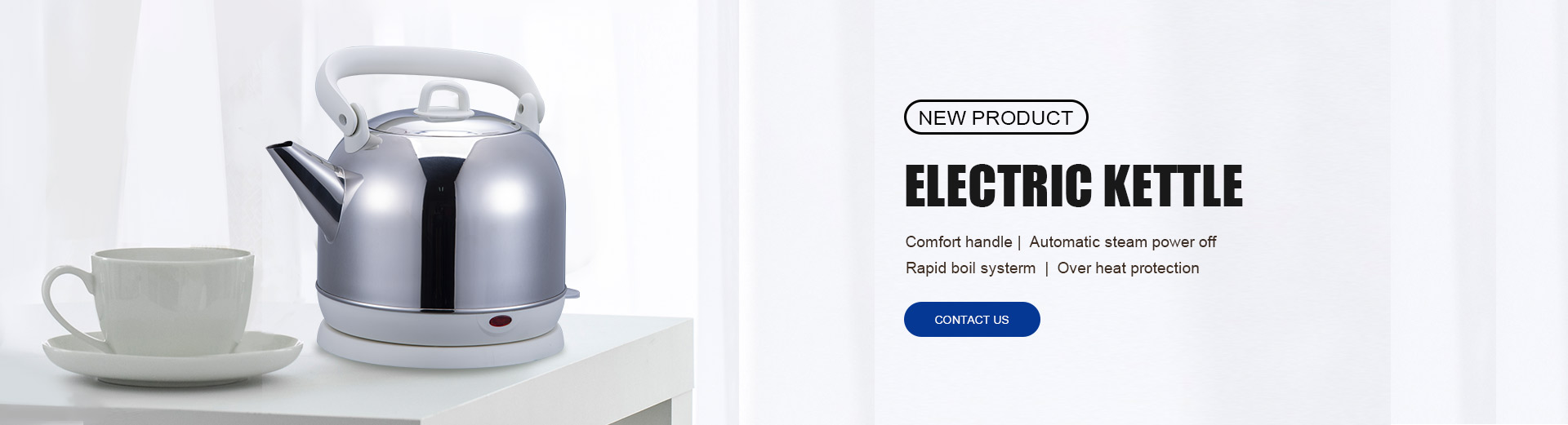
electric kettles have become essential in homes, offices, hotels, and cafés. They are fast, convenient, and energy-efficient. However, choosing the right model requires more than picking the most attractive design. Buyers should consider capacity, material, wattage, voltage compatibility, safety features, and maintenance to ensure long-lasting performance and safety.
This guide explains everything you need to know when selecting an electric kettle for daily use or for export markets.
The first thing to determine is how much water you typically need to boil.
For single users or dorm rooms, a 0.8–1.0 L kettle is sufficient.
For families or office use, choose 1.5–2.0 L models.
For hotels or commercial kitchens, larger kettles above 2.0 L can meet continuous demand.
A properly chosen capacity improves efficiency, saves energy, and avoids unnecessary boiling.
The material directly affects durability, taste, and safety.
Stainless Steel: Strong, corrosion-resistant, and odor-free. Ideal for long-term use and easy to clean.
Double-Wall Stainless Steel: Keeps the outer surface cool while maintaining internal heat longer.
Glass: Aesthetic and transparent but requires careful handling.
Food-Grade Plastic: Lightweight and affordable, suitable for budget-friendly options.
For daily or export use, stainless-steel kettles remain the most reliable choice, combining hygiene with high heat resistance.
electric kettles are rated by watts (W), indicating how quickly they heat water.
| Wattage | Typical Boiling Time (1 L) | Suitable For |
|---|---|---|
| 1000–1200 W | 6–8 min | Travel or compact use |
| 1500–1800 W | 4–6 min | Home and office |
| 2000–2200 W | 3–4 min | Fast boiling or commercial use |
Higher wattage means faster heating but requires stable power supply and quality components. Always ensure your socket or extension cord supports the kettle’s rated current.
Before purchasing or exporting a kettle, confirm the voltage standard of the destination region.
110–120 V is used mainly in North America and Japan.
220–240 V is common in Europe, Asia, and the Middle East.
Using the wrong voltage can damage the appliance or pose safety risks. For international buyers, manufacturers like Shenbao provide models tailored to each voltage range and plug type.
A high-quality electric kettle must have comprehensive safety protection to prevent accidents. Essential safety features include:
Automatic Shut-Off: Stops heating when the water reaches boiling point.
Boil-Dry Protection: Cuts power if the kettle is turned on without water.
Thermal Fuse Protection: Disconnects power in case of overheating.
Stable Base and Non-Slip Feet: Ensures safety during operation.
Heat-Resistant Handle and Lid: Protects users from burns or steam.
Kettles with these safety mechanisms not only meet international standards but also extend product life.
Regular cleaning keeps the kettle hygienic and efficient. Choose designs that simplify this process:
Wide-mouth opening for easy access.
Removable anti-scale filter to trap mineral deposits.
Smooth stainless-steel interior that resists limescale.
Seamless spout design for easy pouring and washing.
Avoid dishwashers — electric kettles contain electrical components that must never be submerged in water.
Modern kettles should combine fast heating with minimal energy waste.
Double-wall insulation helps retain heat longer and keeps the exterior cool.
Precision thermostats ensure accurate shut-off, preventing overboiling.
High-efficiency heating plates convert more than 90% of electrical energy into heat.
Energy-efficient models lower electricity bills and are better for the environment.
While performance is key, user comfort also matters:
Cordless 360° base for flexible placement.
Ergonomic handle for easy lifting and pouring.
Visible water-level indicator for accuracy.
Quiet boiling design for offices and hospitality environments.
Optional temperature control for making tea, coffee, or formula milk at precise temperatures.
Good design enhances daily convenience and improves user experience.
For overseas markets, kettles must comply with international safety and environmental regulations such as CE, CB, GS, and RoHS.
Each certification ensures product reliability, electrical safety, and compliance with import standards.
When purchasing or exporting, always verify that certificates and test reports are valid and up to date.
Price should reflect quality, features, and target market.
Basic models (boil + auto shut-off) are suitable for cost-sensitive buyers.
Mid-range models with insulation or quick-boil features balance value and performance.
Premium models with temperature control and large capacity fit professional or luxury markets.
Evaluate total cost including packaging, shipping, and warranty when building your product line.
Descale every 2–3 weeks if using hard water.
Empty unused water daily to prevent mineral buildup.
Wipe the outer surface with a soft cloth — avoid abrasive cleaners.
Unplug before cleaning or moving.
Keep the base dry to protect electrical components.
Proper maintenance extends the kettle’s lifespan and ensures safe, efficient use.
Choosing the right electric kettle involves balancing capacity, material, wattage, safety, and design according to your target market. A well-selected kettle offers fast boiling, energy savings, and long-term reliability.
Shenbao Electric Appliance Co., Ltd. manufactures a wide range of stainless-steel and temperature-controlled electric kettles, all tested to international safety standards. With advanced thermostats, automatic shut-off systems, and double-wall insulation, Shenbao kettles combine performance, safety, and durability for global users.
Explore Shenbao’s high-efficiency kettle series at www.shenbao-china.com — where smart engineering meets everyday comfort.