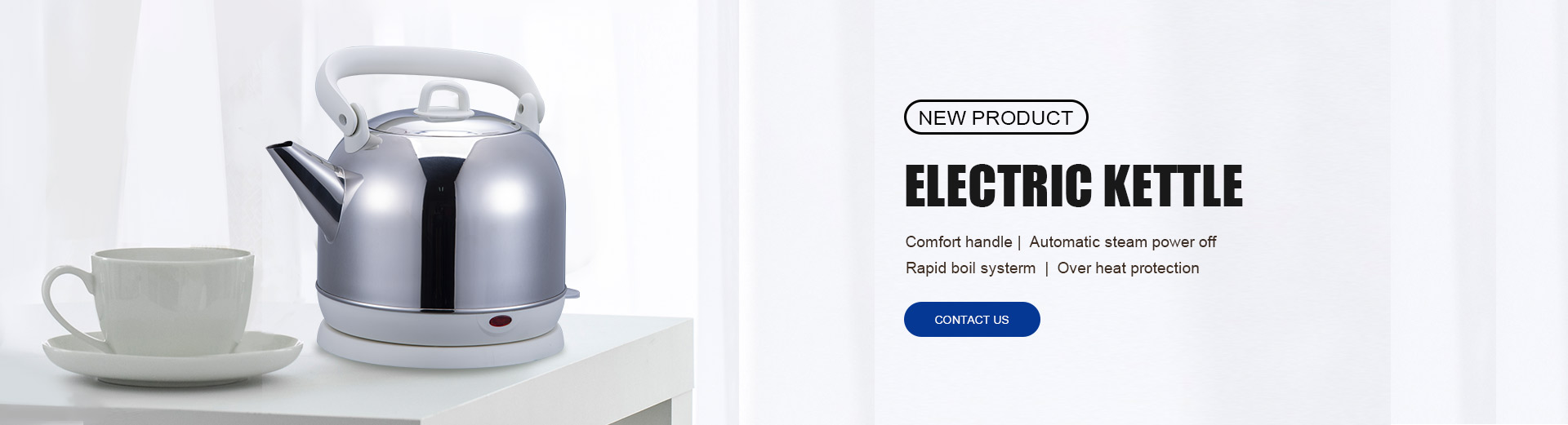
electric kettles are among the quickest household appliances for heating water, often bringing it to a full boil in just a few minutes.
But what makes them so fast compared with stovetop pots or microwave heating?
The answer lies in their specialized heating design, high power output, and direct-contact energy transfer.
Below we’ll explore the science, components, and engineering features that allow electric kettles to work with such remarkable efficiency.
Most electric kettles operate between 1500 and 2200 watts, a significantly higher power level than many other small appliances.
The heating element converts almost all electrical energy directly into thermal energy with very little loss.
| Appliance | Typical Power (Watts) | Energy Efficiency (%) |
|---|---|---|
| electric kettle | 1500 – 2200 | 90 – 95 |
| Microwave Oven | 800 – 1200 | 60 – 70 |
| Induction Cooker (Pot Heating) | 1200 – 2000 | 80 – 85 |
| Gas Stove (Kettle on Flame) | ≈ 2000 | 40 – 55 |
Because the heating element is submerged directly beneath the water, there’s minimal energy loss to the surrounding air.
All the heat produced stays within the kettle chamber, raising the water temperature much faster than traditional methods.
At the bottom of the kettle, the concealed metal resistance coil—usually made from nickel-chromium alloy—produces heat when electricity passes through.
This element is mounted tightly against a stainless-steel heating plate, ensuring instant conduction to the water above.
As soon as current flows, the element reaches operating temperature in seconds.
Because the surface area of the plate is wide and in full contact with the water, heat distribution is uniform, eliminating the delay common in stovetop kettles.
Modern electric kettles, including Shenbao’s stainless-steel and double-wall models, are engineered to retain heat efficiently:
Double-wall construction keeps outer surfaces cool while trapping internal heat.
Seamless stainless-steel liners prevent energy loss through thin joints or gaps.
Precision thermostats reduce unnecessary reheating by cutting power at exactly 100 °C.
These design optimizations help maintain over 90 % thermal efficiency, allowing one liter of water to boil in as little as 3–4 minutes using 2000 watts of power.
As the water heats, steam pressure builds inside the kettle’s lid area.
A bimetal thermostat senses this temperature rise and disconnects power once boiling is reached.
This ensures no energy is wasted and prevents overheating.
The shut-off mechanism also allows the heating element to cool quickly, ready for the next cycle.
In high-efficiency kettles like those produced by Shenbao, this automation not only saves energy but also extends the product’s working life by reducing continuous high-temperature exposure.
Unlike stovetop kettles, which rely on external flame or induction through cookware, electric kettles deliver electricity straight into the heating surface inside the appliance.
This short thermal path eliminates delays from conduction through multiple materials.
Electrical energy becomes heat within the kettle itself, making the conversion nearly instantaneous.
The compact design also allows the kettle to respond immediately to user input—pressing the switch starts full-power heating in less than one second.
The heating speed of a kettle depends on two variables: voltage supply and water quantity.
At 220 – 240 V, standard in Europe and Asia, the same element delivers more energy than at 110 V, leading to faster boiling.
Heating smaller volumes naturally takes less time, since energy required rises linearly with mass.
Shenbao manufactures regional models calibrated precisely for each voltage standard, ensuring optimal performance across global markets.
In addition to traditional thermostats, some modern electric kettles integrate smart temperature controllers and microprocessors.
These components monitor temperature in real time, adjusting output to maintain efficiency while reducing strain on the heating element.
Such innovation means water reaches target temperatures faster while consuming less overall energy—a perfect balance between speed and sustainability.
Use the right amount of water. Heating only what you need saves both time and power.
Keep the interior clean. Limescale buildup insulates the heating plate, slowing heat transfer.
Use room-temperature water. Very cold water increases boiling time.
Cover the lid securely. Preventing steam loss keeps energy inside.
Maintain regular descaling. A clean surface ensures consistent contact and efficient conduction.
Following these habits can make your kettle boil up to 15 % faster over time.
Because the heating element contacts water directly, nearly all energy becomes heat, while microwaves lose part of their energy to air and container surfaces.
Yes—within safe electrical limits. A 2000 W kettle boils faster than a 1500 W model, but both maintain similar overall efficiency.
Absolutely. Good insulation retains more heat, preventing energy loss and shortening total heating time.
The thermostat senses steam earlier in high-altitude or low-pressure environments, causing slightly earlier shut-off.
Yes, as long as outlets and cords are rated for 10 A (220 V) or 15 A (120 V). Shenbao kettles are designed to meet these international safety requirements.
Electric kettles heat so fast because they combine high-power resistive elements, direct contact heating, and efficient thermal design that minimizes energy loss.
Their precision thermostats and insulated structures transform nearly all electrical input into usable heat, delivering boiling water within minutes.
Shenbao Electric Appliance Co., Ltd. applies these principles in every product, engineering each stainless-steel kettle with high-efficiency heating plates, auto shut-off systems, and double-wall insulation to ensure both speed and safety.
Discover Shenbao’s innovative kettle technology at www.shenbao-china.com — where fast heating meets smart engineering.