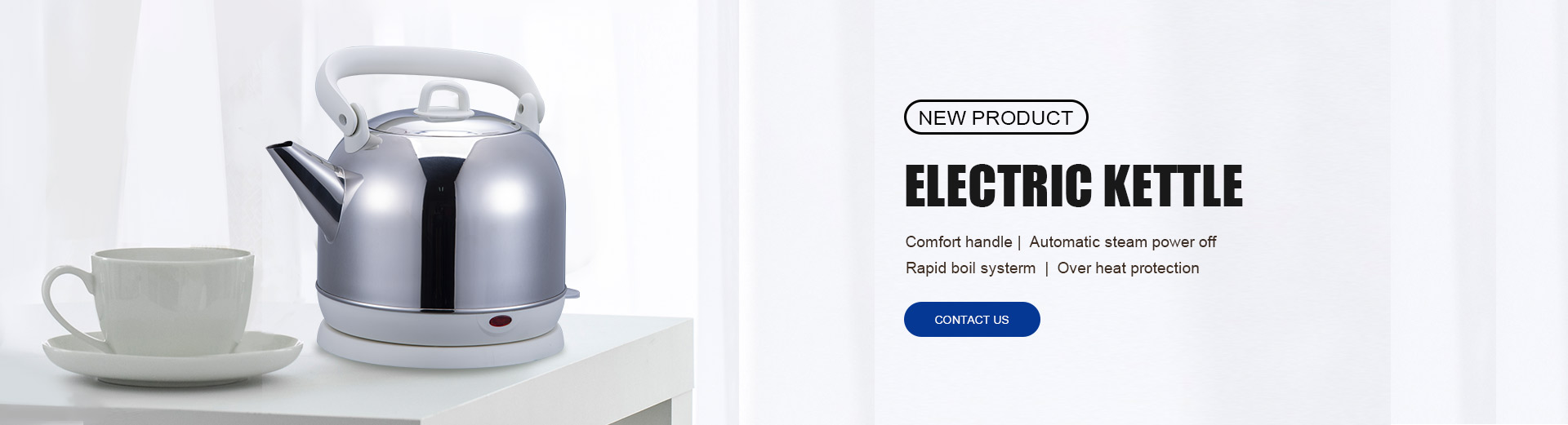
One of the most impressive features of a modern electric kettle is its ability to switch off automatically once the water reaches boiling point.
Unlike traditional stovetop kettles, which rely on the user to listen for a whistle, electric kettles use precision thermostats and steam sensors to detect temperature changes and stop heating at exactly the right moment.
This automatic shut-off function ensures safety, energy efficiency, and convenience, making electric kettles one of the most reliable appliances in any home or workplace.
The automatic shut-off system works through a temperature-sensitive component known as a bimetal thermostat.
This small but critical part is usually located near the top of the kettle or close to the steam outlet.
Here’s what happens during operation:
When you switch on the kettle, the heating element at the bottom converts electrical energy into heat.
As the water heats up, steam begins to rise through a narrow steam channel that leads to the thermostat area.
When the steam reaches the bimetal strip, the rising temperature causes the metals to expand and bend.
Once it bends enough, it triggers a mechanical switch that cuts the electrical circuit — turning off the kettle automatically.
This process is fast, reliable, and requires no sensors or external input, which is why it remains the standard method used in most kettles worldwide.
A bimetal thermostat is a thin strip made from two different metals joined together — usually brass and steel or copper and Invar.
Each metal expands at a different rate when exposed to heat, causing the strip to bend.
When the temperature rises, the strip curves in one direction.
When it cools down, it returns to its original shape.
This physical movement operates the switch that powers the kettle’s heating element on and off.
Because the reaction depends on the natural expansion properties of metals, it is both accurate and maintenance-free.
Steam is the real signal that tells the kettle when to turn off.
When water boils, steam pressure rises sharply inside the closed lid area.
Most kettles have a small vent or steam pipe that channels this hot vapor directly toward the thermostat.
The steam rapidly heats the bimetal strip to above 100 °C, causing an immediate bend that breaks the circuit.
Once the steam dissipates and the kettle cools, the strip resets — allowing the kettle to be used again.
This smart use of natural steam energy means the system needs no electronics, no programming, and no calibration, ensuring long-lasting reliability.
In addition to automatic shut-off, electric kettles are also equipped with boil-dry protection.
This feature activates when the kettle is switched on without sufficient water inside.
Here’s how it works:
The heating element warms rapidly because there’s no water to absorb the heat.
A second temperature sensor or bimetal disc detects this abnormal temperature rise.
It cuts the power instantly to prevent the element from burning or damaging the kettle.
Shenbao kettles include dual safety protection systems — one for boiling detection and one for dry-heating prevention — ensuring both user safety and product durability.
The heating element and the thermostat work together seamlessly.
While the element’s job is to generate heat efficiently, the thermostat monitors temperature and steam.
As power flows, the element heats the stainless-steel plate in direct contact with water.
Once the thermostat detects sufficient steam, it breaks the electrical path.
The power indicator light switches off, confirming that the kettle has stopped boiling.
This entire cycle takes only a few minutes, providing a perfect balance of speed, safety, and automation.
Advanced models, such as those designed by Shenbao Electric Appliance Co., Ltd., integrate upgraded thermostats and smart components:
Precision steam ducts for faster temperature feedback.
Enhanced bimetal discs rated for over 10,000 switching cycles.
Thermal insulation layers that maintain heat longer after shut-off.
Micro-controlled versions for temperature presets or “keep warm” modes.
These improvements ensure consistent performance, even under frequent use in commercial or export environments.
If your kettle does not turn off automatically, it could indicate:
A blocked steam channel from limescale buildup.
A damaged or misaligned thermostat.
Excessive internal moisture, affecting heat detection.
To maintain proper performance:
Clean the kettle regularly using vinegar or lemon to remove scale.
Avoid overfilling, which can prevent steam from reaching the thermostat.
Do not boil milk or soup, as residue may block the steam vent.
Always allow the kettle to cool between consecutive boils.
Proper maintenance ensures the shut-off system remains precise and reliable for years.
Steam travels through the vent to the thermostat. The temperature rise bends the bimetal strip, cutting power instantly.
Yes. The power switch is manual, so you can turn it off anytime before boiling.
The steam vent may be blocked with scale or the thermostat may have lost sensitivity. Cleaning usually solves the issue.
Yes. Removing the kettle breaks the electrical contact between base and body, automatically stopping the heating process.
Yes. Mechanical thermostats are durable and designed to last through thousands of heating cycles without recalibration.
An electric kettle knows when to turn off through a simple yet ingenious system that combines steam detection and a bimetal thermostat.
When the water reaches boiling point, the thermostat reacts to steam temperature and disconnects power, ensuring safety and efficiency.
This precise, automatic process makes electric kettles fast, safe, and convenient for everyday use.
Shenbao Electric Appliance Co., Ltd. incorporates advanced thermostats, dual protection systems, and heat-efficient stainless-steel designs into every product.
Each kettle is engineered for international safety standards, reliable shut-off performance, and long-lasting durability.
Explore more about Shenbao’s innovative electric kettles at www.shenbao-china.com — where smart technology meets everyday reliability.