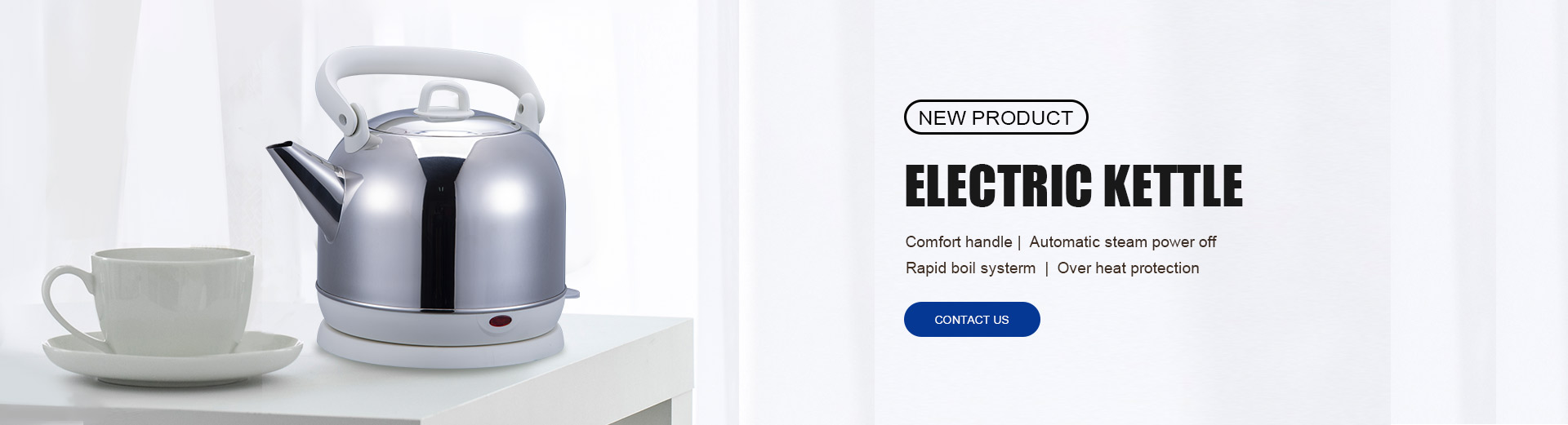
Most electric kettles used in homes or offices last between three to five years under regular daily use. The exact lifespan depends on build quality, heating element design, material selection, maintenance habits, water hardness, and frequency of usage. A kettle built with durable internal components, stable temperature control, and quality stainless steel tends to remain functional much longer than low-grade models.
Kettles made with stainless steel interiors resist corrosion, withstand repeated heating cycles, and tolerate mineral deposits better than lower-grade metals or plastics. Stainless Steel Kettles maintain structural integrity and are less prone to leaks, deformation, or internal rusting.
High-quality heating discs deliver steady performance across thousands of boiling cycles. Manufacturing processes that include precise welds, reliable thermostats, and well-engineered electrical pathways greatly extend how long a kettle can operate safely.
Plastic-heavy kettles may degrade sooner as repeated exposure to high heat causes discoloration, cracking, or weakening of internal mechanisms. Even so, well-manufactured kettles with minimal plastic contact inside can still offer stable longevity.
Households boiling water several times each day place greater strain on the heating element and thermostat. The kettle cycles between heat and cool repeatedly, which shortens lifespan if not supported by durable design.
Operating the kettle with too little water accelerates wear because the heating plate becomes exposed to uneven surface temperatures. Overfilling can cause boiling water to spill into control areas, damaging internal components.
Hard water minerals settle and harden inside a kettle that holds standing water for extended periods. This buildup forces the heating plate to work harder, reducing efficiency and shortening service life.
Regions with high levels of calcium and magnesium create faster limescale buildup. Thick mineral layers force the kettle to heat less efficiently, increasing energy consumption and stressing the heating element.
Without regular cleaning, limescale can eventually affect the thermostat’s responsiveness or cause uneven heat distribution along the kettle’s base. This can lead to premature shut-off failures or reduced boiling performance.
Removing mineral deposits every two to six weeks, depending on water hardness, ensures that the heating element remains efficient. A clean heating plate prolongs lifespan, prevents overheating, and maintains consistent boiling speed.
Leaving the lid open after each boil reduces moisture accumulation inside the kettle. This prevents interior odors, slows mineral buildup, and protects the inner chamber from corrosion.
Ensuring the kettle sits securely on its base, avoiding forceful lid operation, and keeping the electrical contacts dry all contribute to long-term reliability.
If the kettle takes significantly longer to heat water, the heating plate may be weakened or heavily scaled.
If the kettle fails to stop boiling or shuts off too early, the thermostat or steam sensor may be deteriorating.
Burning smells, buzzing, or excessive rattling indicate internal electrical stress or mineral buildup.
Any sign of water leakage from seams or connectors indicates structural failure, requiring immediate replacement for safety.
Reliable manufacturers specializing in electric kettles typically use reinforced heating components, durable thermostat systems, and stable assembly methods that support long-term daily use. Products developed under mature OEM and ODM systems undergo performance testing, endurance cycling, and safety checks, allowing them to maintain functionality for many years. Strong design control and robust production lines ensure that kettles remain consistent over thousands of heating cycles.
With durable materials, a stable heating element, and regular cleaning, many well-made kettles can last between five and seven years, and some even longer. Households with soft water and good maintenance habits may see kettles remaining functional for close to a decade. In contrast, low-quality kettles used heavily in hard-water regions may only last one to three years.
An electric kettle typically lasts between three and five years, but lifespan varies with material quality, build design, maintenance frequency, and water conditions. Regular descaling, proper usage, and choosing a well-manufactured kettle significantly extend its life. When supported by durable construction and reliable safety functions, an electric kettle can provide many years of fast, efficient, and dependable hot water.