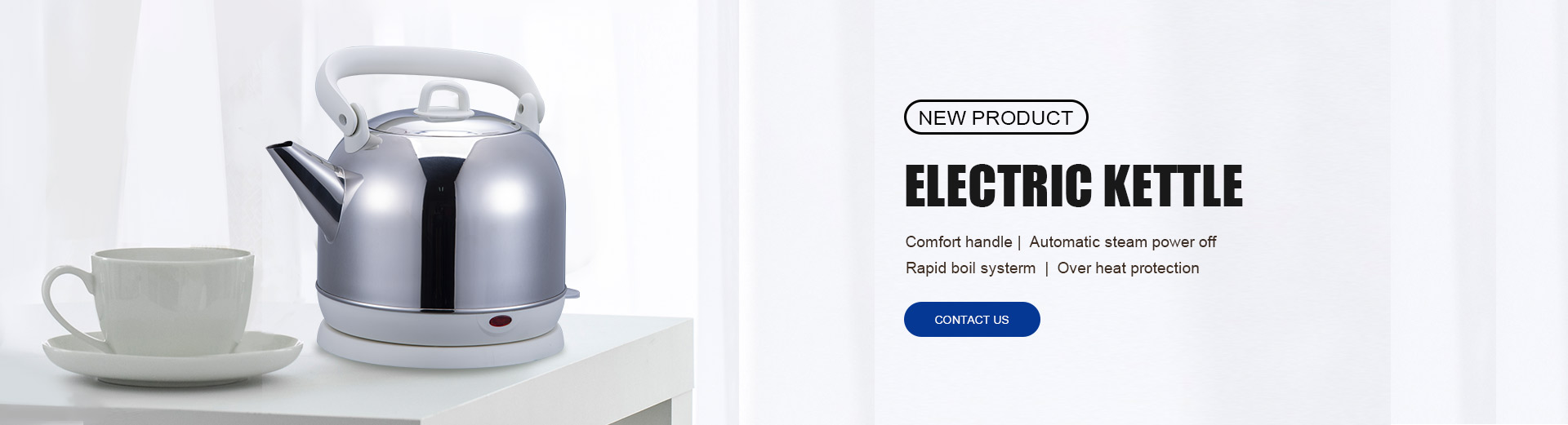
An electric kettle is one of the highest-power small appliances found in a household. Because it heats water rapidly through a high-wattage heating element, it draws a significant amount of electrical current. The exact number of amps depends on the kettle’s wattage and the voltage standard used in the region. Understanding this demand is important for safety, proper circuit usage, and preventing overloads in the home.
To determine how many amps a kettle draws, the following formula applies:
Amps = Watts ÷ Volts
This formula shows that the same kettle will draw different amounts of current depending on the voltage of the electrical system it is connected to.
Most electric kettles fall between:
1500W–3000W for daily household models
The higher the wattage, the faster the boil—and the higher the amp draw.
Households that use 120V outlets typically see higher amp draw for the same kettle wattage.
For example:
A 1500W kettle: 1500 ÷ 120 = 12.5 amps
A 1800w kettle: 1800 ÷ 120 = 15 amps
Since many home circuits in 120V regions are rated at 15 amps, a high-power kettle operating near this limit can easily overload the circuit if used together with other appliances.
Using a kettle alongside toasters, microwaves, or heaters on the same circuit may trip the breaker. Manufacturers producing kettles for these regions typically optimize wattage to stay within safe limits.
Higher voltage reduces the current needed to achieve the same wattage.
Examples:
A 2000W kettle: 2000 ÷ 230 = 8.7 amps
A 3000W kettle: 3000 ÷ 230 = 13 amps
Most circuits in these regions safely support 13A sockets or higher, which is why kettles with higher wattage are more common and boil significantly faster.
Kettles operating at 220–240V systems can use higher wattage without drawing excessive current. This improves heating speed while maintaining stable electrical performance in the home.
Efficient heating plates heat water faster and maintain stable resistance, keeping current draw consistent during operation. Manufacturers with strong engineering design ensure that kettles draw current safely without unstable fluctuations.
Heating a full kettle keeps the heating element at maximum wattage for a longer period. Heating smaller volumes reduces the duration of high current draw but does not change the peak amperage.
Cold water requires longer heating time, while mineral buildup on the heating plate forces the kettle to work harder, extending the duration of high current draw. Regular descaling reduces this strain.
Older wiring or worn sockets may resist electrical flow, causing heat buildup at contact points. Ensuring quality connections is essential for safe kettle usage.
In regions with 120V systems, using the kettle on its own circuit helps prevent overload.
In 230V regions, kettles usually operate comfortably within standard socket limits.
Using multiple high-wattage appliances on the same circuit can trip breakers or cause overheating. Kettles should ideally be used alone when operating at peak power.
The power cord must remain in good condition. Any signs of heat damage, discoloration, or loose fit should be addressed immediately.
Clean and firm socket contact ensures safe operation. Loose or worn connections may cause sparks or overheating.
Professional manufacturers of electric kettles design their products with stable heating efficiency, consistent electrical resistance, and safety shut-off mechanisms to handle high current demand. This includes durable heating plates, precise thermostats, and protective circuits that maintain safe amperage levels throughout repeated daily boiling cycles. These design strengths ensure that kettles operate safely even at high wattage.
An electric kettle typically draws:
10–15 amps in 120V regions
7–13 amps in 220–240V regions
The exact number depends on wattage and voltage supply. Higher wattage means faster boiling but also higher current draw. Understanding these electrical requirements ensures safe operation and helps avoid overloading home circuits, especially in lower-voltage regions.