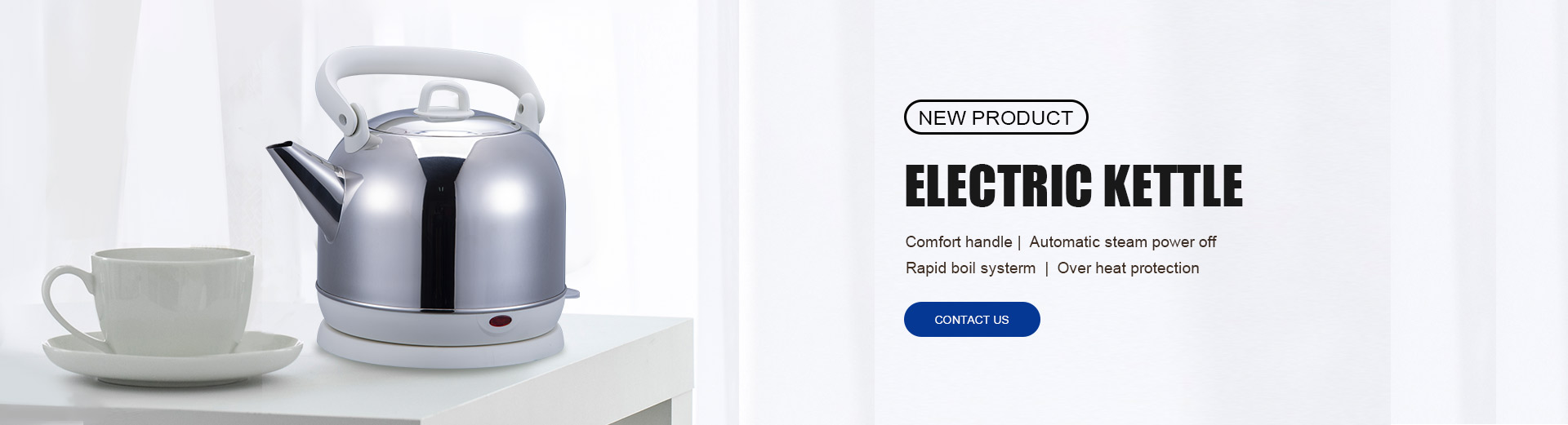
A rapid boil kettle is designed with a high-efficiency heating element that brings water to a boil faster than standard kettles. This speed is achieved through higher wattage, optimized heating plate design, and improved heat transfer. The question is whether this faster boil time translates into actual energy savings. To determine that, it’s important to understand how energy consumption works during water heating.
Rapid boil kettles typically operate between 2000W and 3000W, while standard kettles may run between 1200W and 1800W. Although higher wattage means they draw more amps, they heat water in a shorter time.
For example:
A standard kettle may take 4–5 minutes to boil 1 liter
A rapid boil kettle may take 2–3 minutes to boil the same amount
Even though rapid boil kettles use more power per second, the shorter run time can reduce the total energy consumed.
The heating plate in a rapid boil kettle is designed for strong, even heat distribution. Less time is wasted heating the kettle body or losing energy to the surrounding air. This contributes to improved overall energy efficiency.
When heating the same amount of water, rapid boil kettles often use less total energy because they run for a shorter duration. Boiling water quickly reduces heat loss through steam and the kettle walls. The result is reduced overall energy usage, especially when boiling full volumes.
There are conditions under which rapid boil kettles may not save electricity:
Heating very small amounts of water in oversized kettles
Repeated boiling due to distractions or forgetting to use boiled water
Boiling more water than needed because the kettle is large and heats quickly
Energy savings depend on user habits as much as kettle design.
The main reason rapid boil kettles save energy is that they minimize the time during which heat can escape. Standard kettles lose more energy to the environment because they operate longer before reaching boiling temperature.
Many rapid boil kettles use improved alloy heating plates that provide concentrated heat directly to the water. This reduces wasted energy and supports consistent performance even with repeated daily use.
Modern rapid boil kettles often use double-wall or insulated designs that help retain heat. Improved lids trap steam more effectively, preventing heat loss during boiling.
Boiling 1 liter of water:
Standard kettle (1500W, 5 minutes):
Energy = 1500W × 5 minutes
Rapid boil kettle (3000W, 2.5 minutes):
Energy = 3000W × 2.5 minutes
Both scenarios result in similar total energy usage, but the rapid boil kettle often edges lower because less heat escapes over time.
If users boil only what they need, rapid boil kettles consistently outperform slower models in efficiency.
Fast heating improves convenience in busy homes, offices, and kitchens.
Rapid boil kettles are ideal for heavy daily use since they recover temperature quickly and endure repeated heating cycles.
Shorter heating cycles can reduce wear on the internal thermostat and heating plate, potentially extending product lifespan.
In regions with lower-voltage circuits or limited electrical capacity, high-wattage kettles may strain household wiring.
If boiling only a cup of water, efficiency gain may be minimal compared with a standard kettle.
Kettles engineered with rapid boil capability require durable heating components, stable thermostat design, and precise thermal protection. Manufacturers with strong OEM and ODM backgrounds ensure that rapid boil kettles not only heat faster but also maintain consistent performance under frequent daily operation. These design advantages contribute to both energy efficiency and long-term reliability.
Rapid boil kettles can save electricity, especially when boiling larger volumes of water, due to shorter heating time and improved energy efficiency. However, actual savings depend strongly on user behavior—boiling the correct amount of water and using the kettle efficiently. When engineered well, rapid boil kettles offer a combination of speed, convenience, and energy-conscious performance that benefits everyday use.