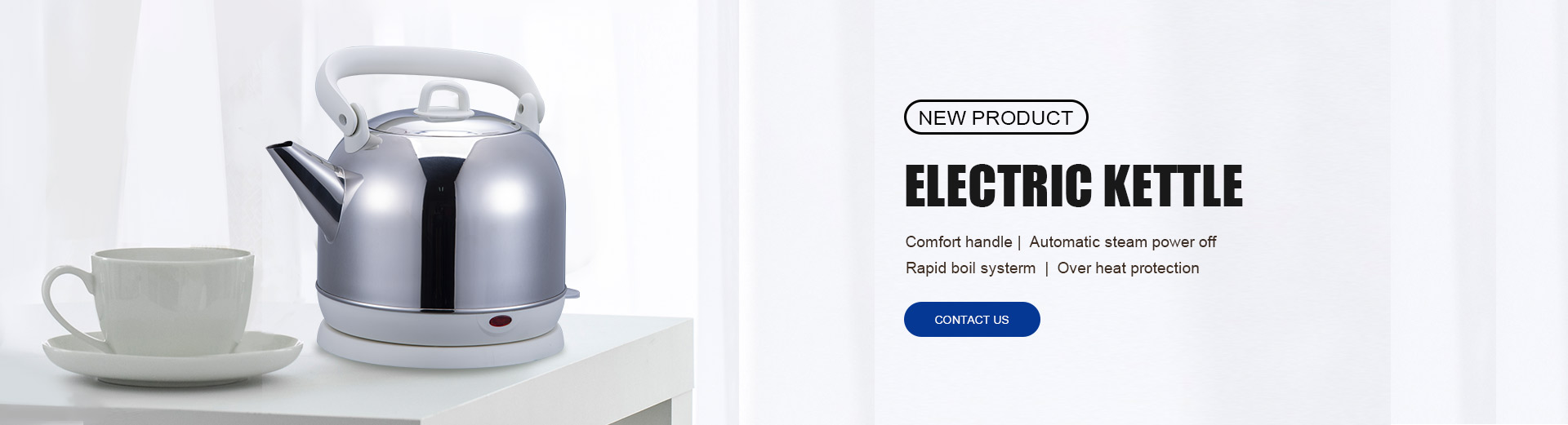
electric kettles are noticeably faster at boiling water than stovetop kettles or many other household appliances. This speed is not accidental. It is the result of purpose-built engineering, optimized heat transfer, and safety systems designed specifically for rapid water heating. From a manufacturing and product-design perspective, several core factors explain why electric kettles heat water so quickly.
The most important reason electric kettles are fast is direct energy conversion.
Electric kettles use a high-power heating element that converts electrical energy straight into heat at the base of the kettle. There is no intermediate step such as heating air, a burner, or a separate metal pot. Almost all generated heat is transferred directly into the water.
This direct contact significantly reduces energy loss and shortens the time required to reach boiling temperature.
Electric kettles are engineered for a single purpose: boiling water.
Because they do not need to handle multiple cooking functions, their internal components—wiring, switches, heating plates, and thermal protection systems—are designed to support short bursts of high power. This allows the kettle to operate at a higher power density than many general-purpose kitchen appliances.
From a product engineering standpoint, concentrating power on one function results in faster heating without compromising safety.
Modern electric kettles use a flat, concealed heating plate integrated into the base.
This design offers several performance advantages:
Large contact area between heat source and water
Even heat distribution across the base
Reduced hot spots and energy waste
Because the heating plate sits directly beneath the water, thermal energy is transferred efficiently and uniformly, accelerating the boiling process.
Electric kettles are enclosed systems.
Compared with stovetop heating, electric kettles reduce heat loss through:
A closed lid that traps steam and heat
Compact internal volume
Insulated or metal bodies that stabilize temperature
Less heat escaping into the surrounding air means more energy is used to raise water temperature rather than warming the kitchen environment.
The internal shape of an electric kettle is designed to encourage natural convection.
As water near the heating plate warms, it rises, while cooler water moves downward. This continuous circulation distributes heat evenly throughout the kettle, preventing cold zones and allowing the entire volume of water to reach boiling temperature more quickly.
From a manufacturing perspective, internal geometry is carefully tested to support fast, stable circulation.
Electric kettles are equipped with precise temperature or steam-based sensors.
These systems allow the kettle to:
Run at full power until boiling is reached
Shut off immediately once boiling occurs
Because the kettle does not rely on manual monitoring, it can safely maintain maximum heating speed throughout the entire cycle. This contributes to both speed and energy efficiency.
Stovetop kettles lose energy through:
Heat escaping around the pot
Inefficient burner-to-pot contact
Heating of surrounding air
Electric kettles integrate the heat source and container into a single unit, eliminating many of these losses. This structural efficiency explains why electric kettles often boil water faster even when using similar total energy.
From a production and quality-control standpoint, fast boiling is a key performance indicator.
Well-designed electric kettles must balance:
Rapid heating
Stable boiling behavior
Controlled noise and vibration
Long-term durability of the heating system
Extensive testing ensures that speed is achieved through efficient heat transfer rather than excessive stress on internal components.
Electric kettles are fast because they are purpose-built appliances. Direct electrical heating, high power density, optimized heating plate design, efficient water circulation, minimal heat loss, and accurate shut-off systems all work together to deliver rapid boiling performance.
From a product engineering and manufacturing perspective, this speed reflects efficient design, not wasteful energy use. When properly designed and maintained, electric kettles remain one of the fastest, safest, and most efficient ways to boil water in everyday use.