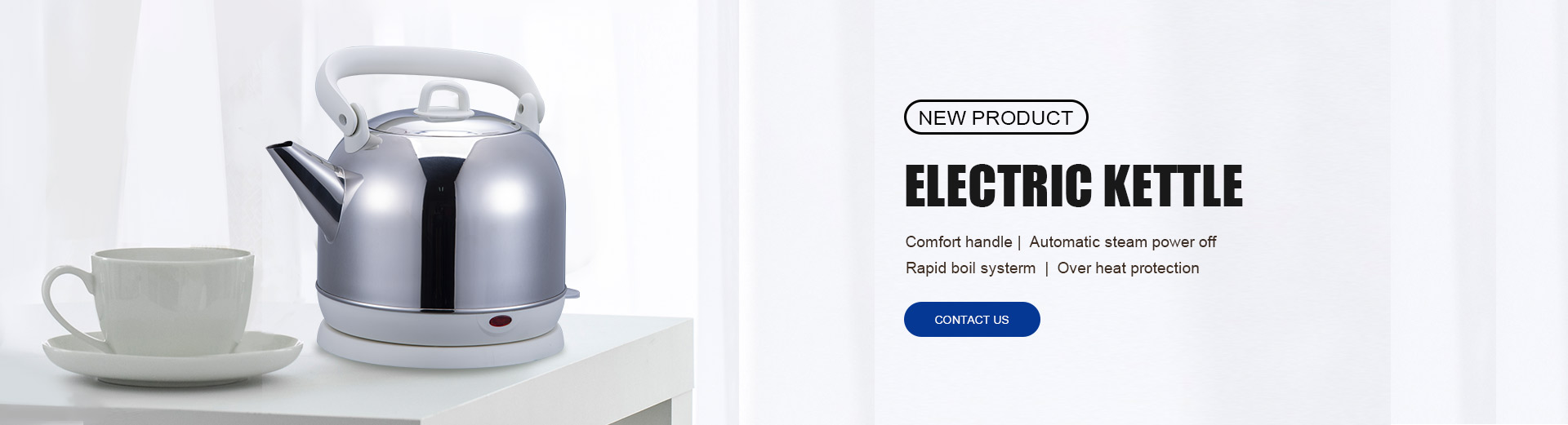
How often you should clean an electric kettle depends mainly on water hardness, how frequently you use it, and how well you empty and dry it after use. From a product performance and longevity perspective, kettle cleaning should be preventive, not only done when heavy buildup becomes visible.
Minerals in water—especially calcium and magnesium—settle on the heating plate every time water is boiled. If cleaning is delayed, this buildup can:
Slow boiling speed
Increase boiling noise
Reduce energy efficiency
Affect automatic shut-off accuracy
Shorten the kettle’s service life
Regular cleaning keeps the kettle efficient, quiet, and reliable.
Empty remaining water
Rinse lightly with clean water
Leave the lid open to air-dry
This prevents standing water, odor, and early mineral concentration.
Rinse thoroughly
Visually inspect the base for white or chalky residue
Check for unusual noise during boiling
Weekly checks help catch early buildup before it hardens.
The key maintenance step is descaling. Recommended frequency depends on water quality:
| Water Quality | Descaling Frequency |
|---|---|
| Soft or filtered water | Every 4–6 weeks |
| Normal tap water | Every 2–4 weeks |
| Hard water | Every 1–2 weeks |
If your kettle becomes louder or slower before the scheduled time, clean it sooner.
Clean the kettle right away if you notice:
White or gray residue on the base or walls
Flakes floating in boiled water
Louder rumbling or crackling sounds
Longer time to reach boiling
Flat or unusual taste in water
These are performance warnings, not just cosmetic issues.
Material affects visibility, not necessity.
Glass Kettles show scale more clearly
Stainless Steel Kettles may hide buildup
Plastic kettles can trap odor if scale is ignored
All electric kettles require the same cleaning frequency because scale forms on the heating plate regardless of body material.
No—not when using mild, food-safe methods such as citric acid or diluted vinegar. Regular gentle cleaning:
Preserves heating efficiency
Reduces operating noise
Protects internal sensors
Extends overall lifespan
Over-cleaning becomes an issue only when abrasive tools or harsh chemicals are used.
Kettles that are rarely cleaned often develop:
Hardened scale bonded to the heating plate
Increased energy consumption
Repeated safety shut-offs
Permanent performance loss
Once heavy scale forms, cleaning becomes less effective and damage may already be irreversible.
Empty and air-dry after daily use
Check weekly for early buildup
Descale every 2–4 weeks on average
Clean sooner if noise or slow boiling appears
Most electric kettles should be descaled every 2–4 weeks, with more frequent cleaning in hard-water areas. Daily rinsing and proper drying significantly reduce buildup and extend cleaning intervals.
Consistent, preventive cleaning ensures faster boiling, quieter operation, better energy efficiency, and a longer service life for your electric kettle.