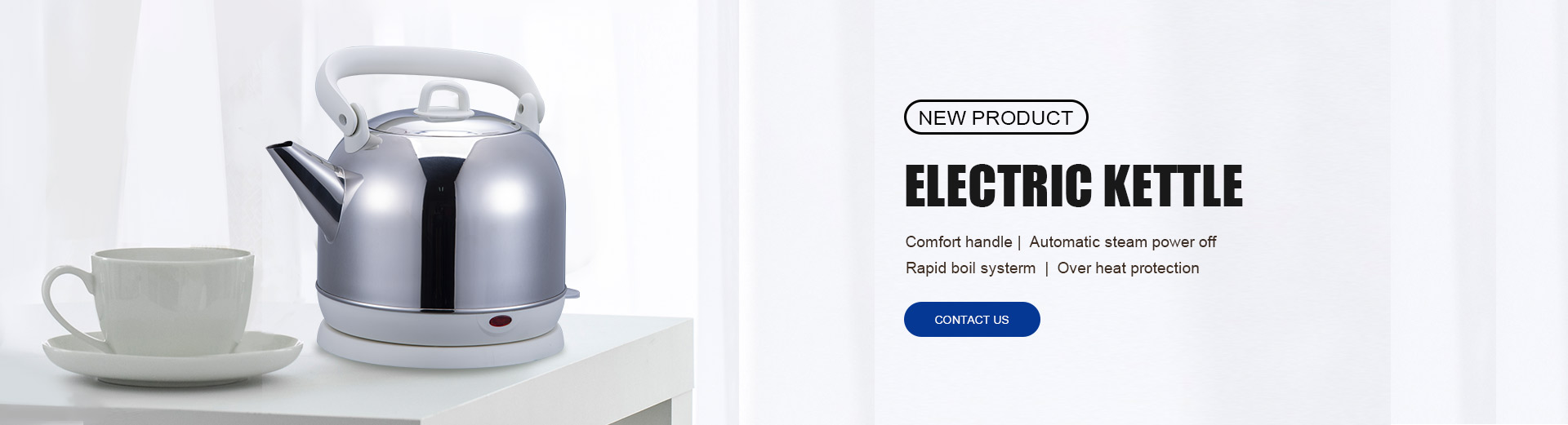
The “pot” of an electric kettle—its inner walls and heating base—is where mineral scale, residue, and odors accumulate most easily. Proper cleaning keeps boiling fast, quiet, and efficient, and protects internal components over time. Below is a safe, manufacturer-recommended approach suitable for stainless steel, glass, and plastic kettles.
Limescale / white residue from hard water
Film or flakes after repeated boiling
Odors from standing water or occasional food contact
Stains on the heating plate and lower walls
Even if the kettle still boils, buildup reduces performance and lifespan.
Citric acid is food-safe and highly effective at dissolving mineral deposits without damaging the heating plate or sensors.
Citric acid powder
Clean water
Soft cloth or non-abrasive sponge
Fill halfway with water
Ensure the water level is above the minimum mark.
Add citric acid
Use 1–2 teaspoons per liter of water (use more for heavy buildup).
Boil fully
Turn the kettle on and let it shut off automatically.
Soak
Leave the solution inside for 15–30 minutes to loosen deposits.
Empty and rinse
Pour out the solution and rinse 2–3 times with clean water.
Final boil
Boil fresh water once and discard.
If residue remains, repeat the soak instead of scrubbing.
Vinegar also dissolves scale but leaves a stronger odor.
Mix equal parts water and white vinegar.
Fill halfway and boil.
Soak 20–30 minutes.
Empty and rinse thoroughly.
Boil clean water once or twice to remove odor.
Use sparingly to avoid lingering smells.
Wipe gently with a soft cloth or sponge after descaling.
Do not scrape or use abrasive pads.
Scratches increase future scale bonding and reduce heat transfer.
Rinse after each day of use.
Empty all water and air-dry with the lid open.
For odors, repeat a mild citric-acid boil and rinse.
| Water Quality | Deep Cleaning |
|---|---|
| Soft or filtered water | Every 4–6 weeks |
| Normal tap water | Every 2–4 weeks |
| Hard water | Every 1–2 weeks |
Clean sooner if boiling becomes louder or slower.
Do not use steel wool or metal brushes
Do not use bleach or harsh chemicals
Do not immerse the kettle base in water
Do not ignore heavy buildup
These can cause permanent damage or safety issues.
Empty the kettle after use
Don’t leave water standing overnight
Air-dry with the lid open
Use filtered water if possible
Clean before deposits harden
To clean an electric kettle pot properly, use citric acid descaling, rinse thoroughly, and finish with a clean-water boil. Gentle, regular maintenance restores heating efficiency, reduces noise, protects internal components, and extends the kettle’s service life.