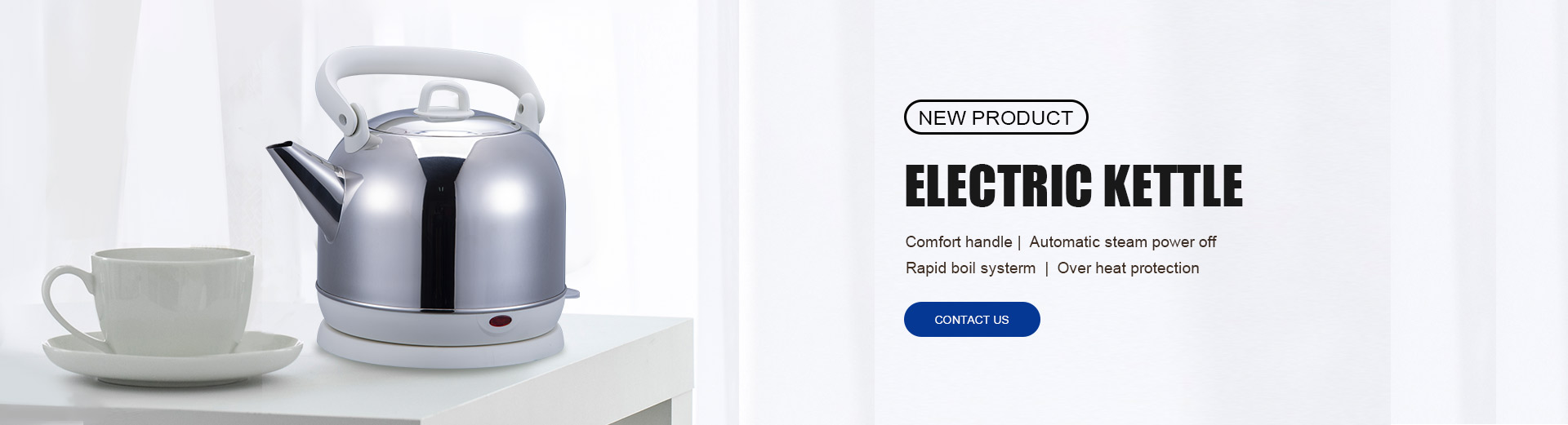
In most households and commercial settings, boiling water in an electric kettle is generally cheaper and more energy efficient than boiling on a hob, especially when using an electric stove. The reason lies in heat transfer efficiency, power concentration, and boil time control.
SHENBAO is a professional electric kettle manufacturer integrating mold design, injection molding, metal stamping, and complete assembly under ISO9001 quality management. With export-oriented production and certifications such as CE, CB, GS, RoHS, and LFGB, SHENBAO emphasizes calibrated heating systems and structured safety validation to ensure stable energy performance across global markets.
Typical power range: 1500–2200W
Direct contact heating via concealed heating plate
Energy efficiency: approximately 80–95% heat transfer efficiency
Automatic shut-off at boiling
Because the heating element is in direct contact with water, minimal energy is lost.
Typical power range: 1200–2000W per heating zone
Heat passes from element → pan → water
Energy efficiency: approximately 65–75%
Manual monitoring required
Heat loss occurs through pan material and surrounding air.
Flame heating under metal kettle
Energy efficiency: approximately 40–60%
Significant heat loss around cookware
Gas flames lose heat to surrounding air before fully transferring to water.
Assuming average electricity rates and 1 liter of water:
Electric kettle typically consumes around 0.1–0.15 kWh per boil
Electric hob may require more time and energy due to indirect transfer
Gas cost varies regionally but often results in higher energy loss
electric kettles usually reach boiling faster, reducing total consumption time.
Boiling 1 liter of water:
Electric kettle: approximately 3–5 minutes
Electric hob: approximately 6–9 minutes
Gas hob: approximately 5–8 minutes
Faster boiling reduces overall energy usage.
Electric kettles provide:
Automatic shut-off
Dry-boil protection
Thermostat calibration
Stable heating output
Hobs require manual supervision and do not automatically stop at boiling.
SHENBAO product lines emphasize concealed heating structures and multi-level safety protection systems to improve efficiency and operational safety.
When sourcing electric kettles for retail or project distribution, supplier structure impacts long-term energy performance.
Controlled heating element specification
Precise thermostat calibration
Structured assembly workflow
ISO9001 quality management
Compliance documentation support
SHENBAO integrates mold manufacturing, injection molding, stamping, and assembly within its production system, improving consistency.
Limited oversight of heating element sourcing
Inconsistent wattage calibration
Variable internal components
Reduced documentation transparency
For bulk procurement, direct manufacturer cooperation improves energy consistency and reduces defect rates.
Structured OEM / ODM development can optimize:
Heating wattage configuration
Stainless steel thickness
Insulation structure
Auto shut-off sensitivity
Energy consumption testing
Compliance documentation preparation
Early engineering validation improves heating efficiency and market competitiveness.
When purchasing kettles in volume, evaluate:
Voltage compatibility (110V / 220–240V)
Wattage stability (1500–2200W typical range)
Capacity selection
Certification readiness
Lead time stability
Energy performance consistency across batches
Proper specification alignment reduces channel and compliance risk.
Professional electric kettle production generally includes:
Raw material inspection
Stainless steel forming or stamping
Plastic injection molding
Heating plate installation
Wiring and thermostat assembly
Functional boiling test
Dry-boil protection validation
Final inspection
SHENBAO describes comprehensive in-house processing capability across these stages.
Reliable production should include:
Electrical insulation resistance testing
Wattage accuracy verification
Boil-time measurement
Automatic shut-off validation
Final functional inspection
These checkpoints ensure stable energy performance.
Electric kettles distributed internationally must comply with:
Electrical safety regulations
RoHS environmental standards
CE / CB / GS certification where required
Food-contact compliance for applicable markets
SHENBAO indicates support for major international compliance frameworks, simplifying regulatory approval.
Boiling water in an electric kettle is typically cheaper and more energy efficient than using a hob, particularly when compared to gas or electric stovetops with indirect heat transfer. The direct heating structure, faster boil time, and automatic shut-off contribute to lower overall energy consumption.
From a sourcing perspective, choosing a structured manufacturer with ISO-based quality management, integrated production control, certified material standards, and export compliance support ensures consistent heating efficiency, reduced operational risk, and reliable long-term supply.