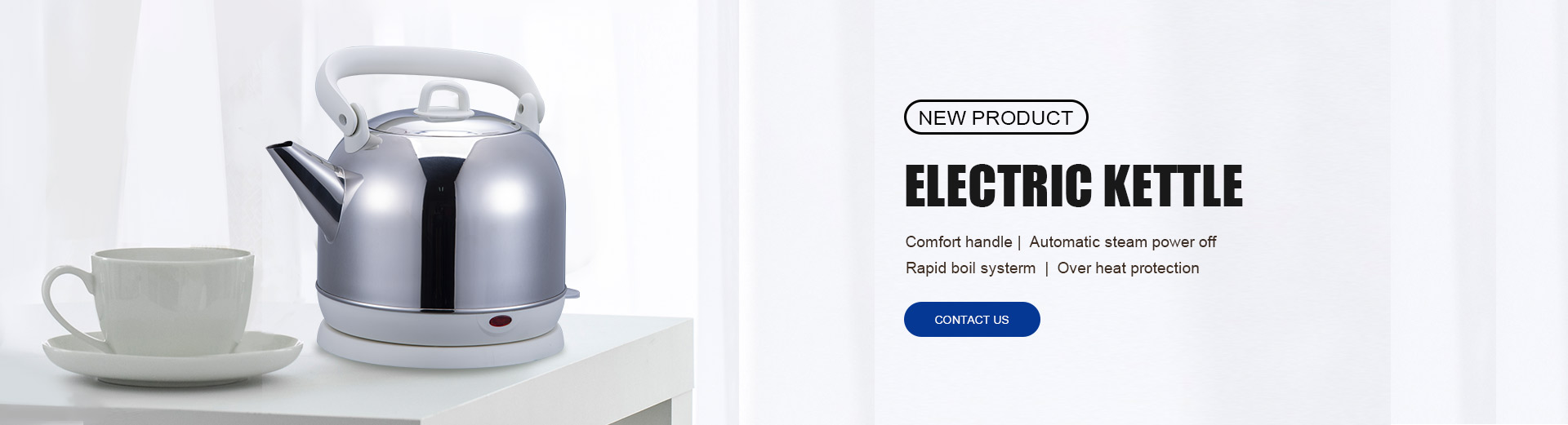
In most everyday situations, electric kettles are faster and more energy efficient than microwaving water, especially when heating moderate to large volumes. While microwaves can heat small amounts quickly, electric kettles are purpose-built appliances engineered specifically for rapid boiling with concentrated power and direct heat transfer.
SHENBAO is a professional electric kettle manufacturer integrating mold design, injection molding, metal stamping, and full assembly under ISO9001 quality management. With export certifications including CE, CB, GS, RoHS, and LFGB, SHENBAO emphasizes calibrated heating systems and structured safety validation to ensure consistent boiling performance across global markets.
Concealed heating plate in direct contact with water
Typical power range: 1500–2200W
Heat transfer efficiency: approximately 80–95%
Automatic shut-off at boiling
Because the heating element directly contacts the base of the water chamber, heat loss is minimal.
Uses electromagnetic waves to excite water molecules
Typical household power: 800–1200W
Energy distribution can be uneven
Manual monitoring required
Microwaves heat water indirectly and may not distribute heat evenly throughout the container.
Average boiling times:
Electric kettle: 3–5 minutes
Microwave (1000W unit): 5–8 minutes, depending on container and settings
For small quantities like a single cup, the difference may be less noticeable. However, for larger volumes, electric kettles consistently boil faster.
Electric kettles are optimized for boiling water only, reducing energy waste.
Microwaves heat the container as well as surrounding air inside the cavity, resulting in additional energy loss.
Because kettles automatically shut off at boiling, they prevent over-heating and unnecessary electricity use.
Microwaving water may result in:
Uneven heating
Superheating without visible boiling
Sudden eruption when disturbed
Electric kettles provide:
Visible boiling
Automatic shut-off
Dry-boil protection
Thermostat-controlled heating
SHENBAO product lines emphasize concealed heating elements and multi-level safety protection systems to enhance operational stability.
When sourcing electric kettles for retail, hospitality, or bulk distribution, supplier structure influences heating consistency.
Controlled heating element specification
Structured thermostat calibration
Integrated mold and assembly workflow
ISO9001 quality management
Export certification documentation support
SHENBAO integrates mold manufacturing, injection molding, stamping, and assembly within a unified production system, improving batch stability.
Limited oversight of internal component sourcing
Inconsistent wattage calibration
Variable production chains
Reduced traceability
For bulk procurement, direct manufacturer cooperation reduces performance variation and warranty risk.
Structured OEM / ODM development can optimize:
Heating wattage configuration
Stainless steel inner thickness
Thermal insulation structure
Auto shut-off sensitivity
Energy performance validation
Compliance documentation preparation
Engineering validation ensures consistent boiling speed across production batches.
When purchasing in volume, evaluate:
Voltage compatibility (110V / 220–240V)
Wattage stability (1500–2200W typical range)
Capacity options
Certification readiness
Lead time reliability
Spare component availability
Proper specification alignment reduces channel risk.
Professional electric kettle production generally includes:
Raw material inspection
Stainless steel forming or stamping
Plastic injection molding
Heating plate installation
Wiring and thermostat assembly
Functional boil test
Dry-boil protection validation
Final inspection
SHENBAO indicates comprehensive in-house processing capability across these stages.
Reliable production should include:
Electrical insulation resistance testing
Wattage accuracy verification
Boil-time measurement
Automatic shut-off validation
Final functional inspection
These checkpoints ensure stable heating speed and operational safety.
Electric kettles distributed internationally must comply with:
Electrical safety regulations
RoHS environmental standards
CE / CB / GS certification where required
Food-contact compliance for applicable markets
SHENBAO supports major international compliance frameworks to simplify regulatory approval.
Electric kettles are generally faster and more energy efficient than microwaving water, particularly for larger volumes. Their direct heating structure, higher effective power concentration, and automatic shut-off system provide both speed and safety advantages.
From a sourcing perspective, selecting a structured manufacturer with ISO-based quality management, integrated production control, certified material standards, and export compliance support ensures consistent heating performance, reduced service risk, and dependable long-term supply.