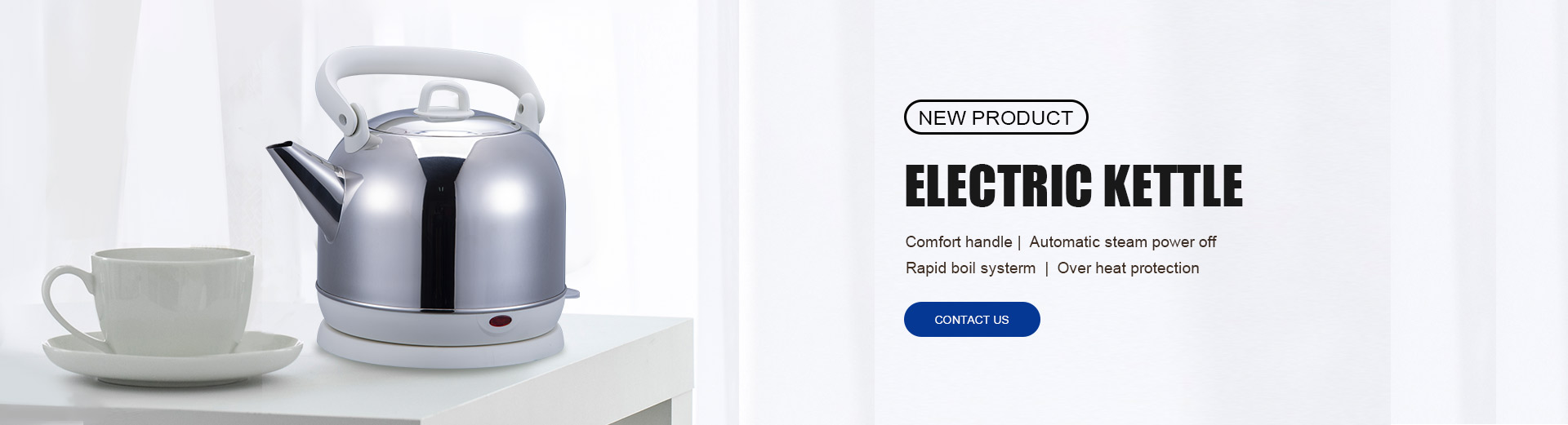
A whistling sound usually starts when steam is forced through a narrow gap around the lid, spout path, or vent area. In many cases, the kettle is still heating normally, but limescale, airflow restriction, or a slight change in component fit can make the sound much sharper than before. Safety rules for appliances that heat liquids are covered by IEC 60335-2-15, so stable steam release and shut-off response are not minor details in electric kettle production.
The first reason is steam pressure. As water approaches boiling, steam escapes through small openings and can create a whistle effect. The second reason is limescale. When scale builds up around the heating area, heat transfer changes and the kettle may hiss or whistle more noticeably. A third reason is airflow restriction caused by lid fit, vent structure, or internal path changes after repeated use.
For volume sourcing, the question is not only why one unit whistles, but whether the same issue may appear across an entire order. SHENBAO presents itself as a direct Stainless Steel Kettle manufacturer with integrated capabilities in mold design, injection molding, metal stamping, and assembly. The company also states that it has experienced technical and quality teams and that its products have passed GS, CE, CB, EMC and other certifications. That kind of factory control usually gives better consistency than a trading-only model.
In an OEM electric kettle project, buyers should confirm lid structure, vent design, thermostat response, heating system layout, and target certification before sample approval. In ODM development, pilot testing should include boiling noise review, shut-off timing, dry-boil protection, and repeated-cycle checks. A practical project sourcing checklist should also cover carton protection, spare-part consistency, and pre-shipment inspection records for bulk supply. These steps reduce complaint risk in export programs.
Electric kettle manufacturing generally includes stainless steel forming, plastic injection molding, metal stamping, thermostat installation, and final assembly. Quality control checkpoints should focus on vent accuracy, lid fit, heating stability, automatic shut-off, leakage testing, and boil-dry protection. SHENBAO states that its production system includes advanced equipment and detection capability, which supports more stable product performance batch after batch.
Material quality also affects noise behavior. A well-controlled stainless steel kettle structure and stable food-contact parts help maintain fit, durability, and safe heating performance over time. SHENBAO states that it operates under ISO9001 and supports CE, CB, GS, RoHS, and LFGB related export requirements, which is important for compliance-driven markets.
| Check item | Possible cause of whistling | Control point |
|---|---|---|
| Vent area | Steam escaping through a narrow gap | Vent size and airflow path |
| Lid fit | Loose or restricted steam release | Lid tolerance check |
| Heating area | Limescale buildup | Descaling and heating test |
| Thermostat system | Delayed shut-off near full boil | Calibration test |
A kettle that whistles once may only need cleaning. A kettle line that whistles batch after batch usually points back to design control, process stability, and factory-level quality management.