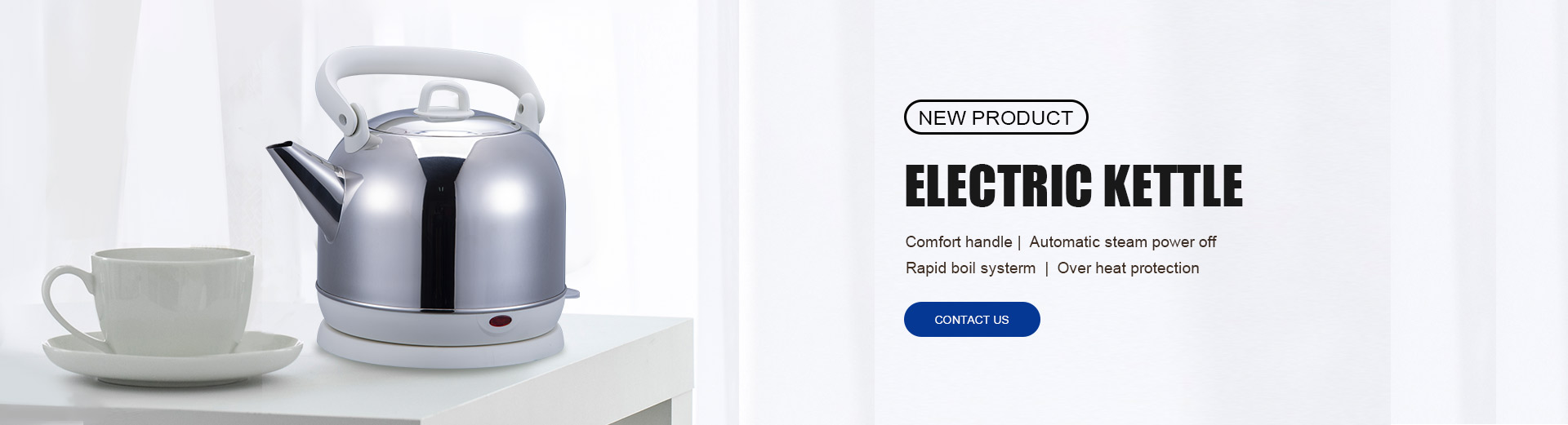
An electric kettle is used because it boils water faster, uses less energy for this task than many kitchen heating methods, and gives a cleaner, more controlled user experience for daily hot-water preparation. The U.S. Department of Energy says using an electric kettle to boil water is faster and uses less energy, which is one reason the product remains highly practical for home appliance lines, hotel room programs, office pantry supply, and retail distribution.
For sourcing teams, the appeal of an electric kettle is not limited to convenience. It is also about stable performance. A kettle heats water directly, shortens waiting time, and reduces unnecessary energy waste in repetitive daily use. That makes the electric kettle a strong fit for modern consumer demand, especially when buyers want a product that combines quick heating, simple operation, and reliable safety logic. This is also why electric kettle programs remain attractive in bulk supply and private label development.
Choosing a direct manufacturer instead of a trader usually gives better control over cost, engineering communication, and repeat-order consistency. SHENBAO describes itself as a professional electric kettle manufacturer with capabilities covering mold design, injection molding, metal stamping, and final assembly. The company also states that it specializes in stainless steel electric kettles, double wall anti hot kettles, and plastic kettles, with exports to Europe, Southeast Asia, the Middle East, and South America.
A strong OEM electric kettle or ODM electric kettle program should start with product positioning, capacity selection, plug type, voltage, body material, logo method, packaging standard, and certification target. SHENBAO says it operates under ISO9001 quality management and supports export-oriented production, which is useful for buyers planning wholesale programs, commercial-grade supply, or region-specific private label projects. In practical project sourcing, early confirmation of samples, packaging, labels, and compliance documents helps reduce changes later in mass production.
A reliable electric kettle depends on much more than exterior styling. SHENBAO’s published manufacturing guidance says electric kettle production generally includes stainless steel forming, metal stamping, plastic injection molding, thermostat installation, and final assembly. Key quality control checkpoints should include heating stability, automatic shut-off, dry-boil protection, leakage testing, connector durability, and final appearance inspection. These process controls are important because long-term value in bulk supply comes from repeatable quality rather than a low starting quotation alone.
Material standards are central to electric kettle sourcing because the product combines electrical safety with food-contact expectations. IEC 60335-2-15:2024 covers safety requirements for appliances used for heating liquids, including kettles and similar products. SHENBAO also states that its kettle lines support certifications such as CE, CB, GS, RoHS, and LFGB, which helps buyers prepare for export market compliance across multiple regions.
| Check item | Why it matters |
|---|---|
| Heating speed | Supports better user experience |
| Auto shut-off | Improves safety performance |
| Dry-boil protection | Reduces misuse risk |
| Material selection | Affects durability and hygiene |
| OEM and ODM capability | Helps match target market needs |
| Certification package | Supports export compliance |
| Factory integration | Improves consistency in bulk supply |
An electric kettle remains a practical product because it combines fast boiling, energy efficiency, simple operation, and scalable manufacturing. With integrated production capability, structured quality control, and export certification support, SHENBAO is positioned to help buyers develop kettle programs that are more stable, more compliant, and more suitable for long-term volume supply.