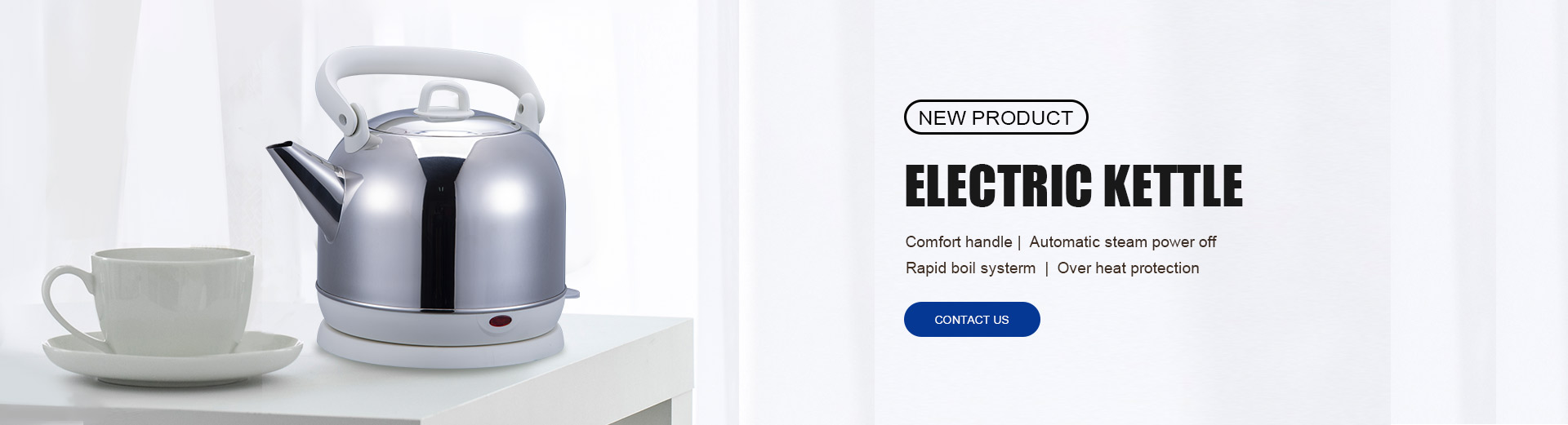
Developing a custom electric kettle requires a complete process from product concept to mass production. A professional custom electric kettle manufacturer needs to evaluate design feasibility, select suitable materials, develop prototypes, complete production testing, and control every manufacturing stage before delivering finished products.
A successful OEM or ODM kettle project is not only about creating an attractive appearance. It requires a combination of engineering capability, manufacturing experience, quality control systems, and export compliance knowledge.
SHENBAO specializes in the research, development, and manufacturing of stainless steel electric kettles, double wall anti-hot kettles, plastic kettles, and other stainless steel products. The factory integrates mold design and manufacturing, injection molding, metal stamping, assembly, and quality management capabilities to support customized kettle projects. :contentReference[oaicite:0]{index=0}
The first step in custom kettle development is understanding the product requirements.
Before production begins, manufacturers need detailed information about:
| Project Information | Manufacturing Purpose |
|---|---|
| Product application | Determines structure and functions |
| Target market | Defines certification and design requirements |
| Capacity requirement | Influences product size and material usage |
| Appearance style | Guides product development |
| Order quantity | Helps plan production resources |
For example, a compact household kettle may focus on lightweight design and convenience, while a large capacity kettle may require stronger structures and higher durability.
A professional manufacturer evaluates the idea from a production perspective to determine whether the design can achieve stable mass production.
After confirming the product concept, engineers review the design and manufacturing feasibility.
The engineering evaluation usually covers:
Product structure
Component layout
Material selection
Assembly method
Production difficulty
Safety requirements
| Design Area | Engineering Focus |
|---|---|
| Kettle body | Forming process and material thickness |
| Handle | Strength and user comfort |
| Lid | Opening and sealing performance |
| Heating system | Safety and compatibility |
| External parts | Injection molding requirements |
During this stage, manufacturers may suggest improvements to simplify production, reduce costs, and improve product reliability.
This is one of the main advantages of working directly with a manufacturer instead of a trader because engineering teams can participate in product optimization.
Material selection directly affects kettle performance, appearance, and durability.
Common materials used in electric kettle production include:
| Material | Advantages |
|---|---|
| 304 Stainless Steel | Corrosion resistance and durability |
| Double Wall Stainless Steel | Better insulation performance |
| Food Grade Plastic | Flexible design options |
| Glass | Transparent and modern appearance |
For Stainless Steel Kettles, manufacturers usually evaluate:
Material grade
Thickness requirements
Surface treatment
Food contact standards
Production efficiency
After design confirmation, the factory develops prototypes to verify:
Product appearance
Structural design
Component matching
Functional performance
The prototype stage helps identify problems before entering bulk production.
Many customized kettle projects require new molds, especially when changing product structures or plastic components.
The mold development process includes:
Product structure analysis
Mold design
Mold manufacturing
Trial production
Sample improvement
A manufacturer with internal mold capabilities can improve development efficiency and reduce communication problems.
SHENBAO has comprehensive processing capabilities covering mold design and manufacturing, injection molding, metal stamping, and assembly, allowing different production stages to be controlled within one factory system. :contentReference[oaicite:1]{index=1}
Before mass production, manufacturers create samples for testing and approval.
Sample evaluation usually includes:
| Testing Item | Purpose |
|---|---|
| Appearance inspection | Confirm design requirements |
| Dimension checking | Verify production accuracy |
| Functional testing | Confirm kettle performance |
| Safety testing | Evaluate product protection |
| User experience review | Improve product design |
For OEM projects, the approved sample becomes the production reference for future bulk orders.
Clear sample approval helps prevent quality differences during large-scale manufacturing.
After sample approval, the project moves into bulk production.
A typical electric kettle manufacturing process includes:
Raw material preparation
Metal cutting
Stainless steel forming
Metal stamping
Surface polishing
Component production
Assembly
Functional testing
Final inspection
Packaging
| Production Stage | Quality Control Focus |
|---|---|
| Material preparation | Verify specifications |
| Metal processing | Maintain dimensions |
| Surface treatment | Ensure appearance consistency |
| Assembly | Check component matching |
| Testing | Confirm safety and function |
SHENBAO produces stainless steel electric kettles with manufacturing capabilities covering development, design, production, and assembly. Its product range includes stainless steel kettles, double wall kettles, Glass Kettles, and traditional large kettles. :contentReference[oaicite:2]{index=2}
Quality control is essential throughout the custom kettle development process.
A complete quality system includes:
| Quality Checkpoint | Inspection Focus |
|---|---|
| Incoming materials | Confirm material standards |
| Mold testing | Verify component accuracy |
| Sample inspection | Confirm product design |
| Production monitoring | Maintain consistency |
| Final inspection | Approve shipment quality |
Electric kettles require additional safety checks because they combine water, heating systems, and electrical components.
SHENBAO products include safety features such as automatic steam power off, dry burning power off, and high temperature fuse protection. The company operates ISO9001 quality management systems, and products have obtained certifications including CE, CB, GS, ROHS, and LFGB according to different market requirements. :contentReference[oaicite:3]{index=3}
Custom electric kettle development can follow different cooperation models.
| Model | Main Feature |
|---|---|
| OEM | Production based on provided specifications |
| ODM | Manufacturer provides design and development support |
| Private Label | Existing products with customized branding |
A complete OEM and ODM process includes:
Requirement analysis
Engineering review
Prototype development
Sample approval
Production preparation
Quality inspection
Shipment management
Manufacturers with strong development capabilities can help improve product structure, optimize production methods, and reduce unnecessary development costs.
Before large-scale production, manufacturers need to confirm:
| Category | Key Information |
|---|---|
| Production volume | Order quantity and schedule |
| Materials | Supply availability |
| Quality standards | Inspection requirements |
| Packaging | Transportation protection |
| Export market | Certification requirements |
Different markets may require different compliance standards.
For example, electrical products entering international markets may require safety certifications, while food-contact components need to meet relevant material safety requirements.
SHENBAO products are exported to Europe, Southeast Asia, the Middle East, South America, and other overseas markets, with experience supporting international product requirements. :contentReference[oaicite:4]{index=4}
Before starting a project, manufacturers usually require:
| Category | Required Information |
|---|---|
| Product concept | Function and application |
| Design | Drawings or samples |
| Material | Stainless steel and component standards |
| Features | Capacity, power, safety functions |
| Customization | Logo, color, packaging |
| Quantity | Bulk order requirements |
| Compliance | Target market standards |
Custom electric kettle development requires cooperation between design, engineering, production, and quality teams.
A reliable custom electric kettle manufacturer should provide complete support from product concept evaluation to finished product delivery.
With integrated capabilities in mold manufacturing, injection molding, metal stamping, assembly, and quality management, SHENBAO provides OEM and ODM kettle manufacturing solutions for global markets.