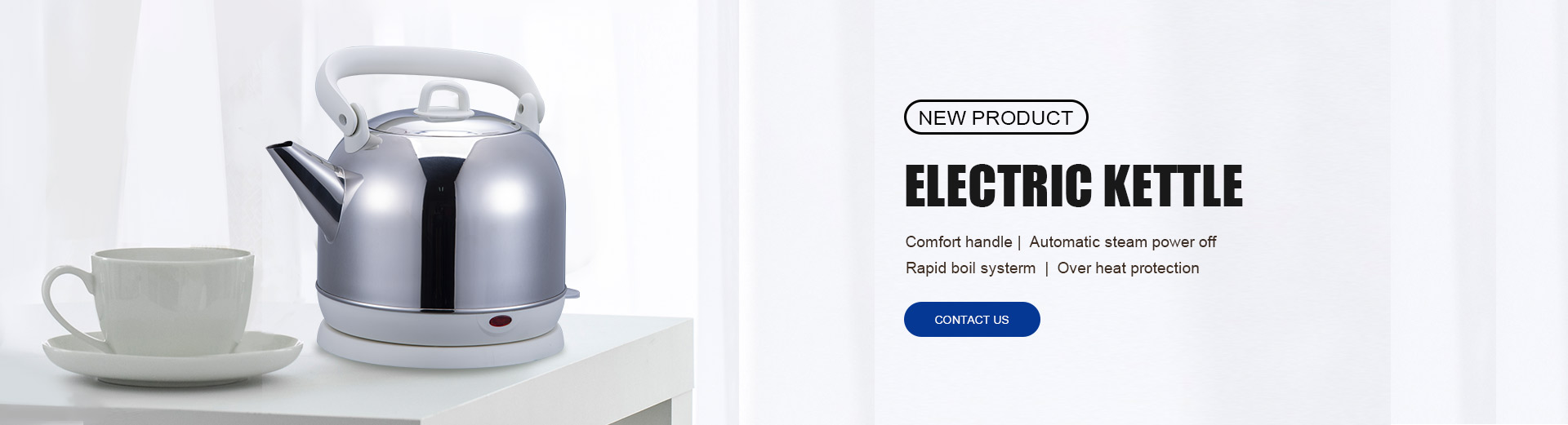
Creating a unique electric kettle requires more than changing the logo or packaging. A professional electric kettle manufacturer needs to evaluate product structure, materials, appearance, functions, and production feasibility to transform customization ideas into reliable finished products.
For OEM and ODM electric kettle projects, design customization allows products to match different market positioning, user preferences, and application scenarios. However, every design decision must also consider manufacturing efficiency, quality control, and long-term production stability.
SHENBAO specializes in the research, development, and manufacturing of stainless steel electric kettles, double wall anti-hot kettles, plastic kettles, and other stainless steel products. With capabilities covering mold design and manufacturing, injection molding, metal stamping, assembly, and quality management, SHENBAO supports customized kettle development from concept to mass production. (SHENBAO)
Appearance is one of the most important elements that helps products stand out in the market.
Manufacturers can customize:
| Design Option | Customization Possibilities |
|---|---|
| Kettle body shape | Modern, classic, compact, or large capacity designs |
| Surface finish | Polished, brushed, colored, or textured surfaces |
| Color | Customized colors based on product positioning |
| Logo | Laser marking, printing, or other branding methods |
| Packaging | Customized retail packaging solutions |
Different markets may require different visual styles. A premium kitchen appliance may focus on elegant stainless steel finishes, while travel products may emphasize compact structures and lightweight designs.
SHENBAO provides various kettle solutions, including Stainless Steel Kettles, double wall kettles, Glass Kettles, and traditional large kettles, supporting different appearance and application requirements. (SHENBAO)
The structure of an electric kettle directly affects user experience and production requirements.
Common structural customization options include:
Capacity adjustment
Body shape modification
Handle design changes
Lid structure improvement
Base design optimization
| Structural Feature | Manufacturing Consideration |
|---|---|
| Capacity | Influences body size and material usage |
| Handle | Requires strength and ergonomic evaluation |
| Lid | Affects sealing and cleaning convenience |
| Base | Determines electrical component compatibility |
For example, SHENBAO offers different capacity options, including small portable kettles and large capacity traditional kettles. Some large kettle models provide 4L and 5L capacity options with different handle structures and OEM or ODM support. (SHENBAO)
Material selection creates differences in durability, appearance, and product value.
Common material customization options include:
| Material | Application Advantage |
|---|---|
| 304 Stainless Steel | Durable structure and corrosion resistance |
| Double Wall Stainless Steel | Improved heat insulation and safer touch |
| Food Grade Plastic | Flexible appearance and lightweight design |
| Glass | Transparent appearance and visual experience |
For stainless steel electric kettles, manufacturers need to consider material standards, thickness, surface treatment, and food contact requirements.
SHENBAO focuses on stainless steel kettle manufacturing and provides products using food-grade stainless steel materials with safety protection designs. (SHENBAO)
Surface treatment can significantly change the appearance and market positioning of an electric kettle.
Common finishing options include:
| Surface Finish | Product Effect |
|---|---|
| Polished Stainless Steel | Bright and premium appearance |
| Brushed Finish | Modern texture and reduced fingerprints |
| Colored Coating | More design flexibility |
| Pattern Surface | Stronger visual recognition |
For OEM projects, surface finishing should be evaluated together with durability requirements. A good manufacturer considers both appearance quality and production stability.
Modern electric kettles are no longer only designed for boiling water. Functional customization can improve user experience.
Possible customization options include:
Temperature control
Automatic shut-off
Dry boil protection
Rapid heating system
Cordless structure
Water level indicator
Large opening design
| Function | User Benefit |
|---|---|
| Temperature control | Supports different beverage requirements |
| Automatic shut-off | Improves safety |
| Dry boil protection | Prevents damage during improper use |
| Double wall structure | Reduces heat transfer |
SHENBAO products include safety functions such as automatic steam power off, dry burning power off, and high temperature fuse protection. Some kettle models also support temperature control and double wall structures. (SHENBAO)
The handle is an important part of kettle usability.
Manufacturers can optimize:
Handle shape
Material selection
Folding design
Grip comfort
Heat insulation performance
For example, large capacity kettles may require stronger handles because they carry more water weight. Portable kettles may focus on compact and lightweight handle designs.
A factory with engineering experience can evaluate whether a customized handle design can maintain strength and production efficiency.
Electric kettles sold internationally require different electrical specifications.
Customization may include:
| Electrical Requirement | Manufacturing Consideration |
|---|---|
| Voltage | Adapt to regional standards |
| Power rating | Balance heating speed and safety |
| Plug type | Match destination market |
| Control system | Ensure stable operation |
Export markets may require different certifications and testing procedures.
SHENBAO products have obtained certifications including CE, CB, GS, ROHS, and LFGB according to different product requirements, supporting international market compliance. (SHENBAO)
A complete customized electric kettle development process usually includes:
| Stage | Manufacturer Support |
|---|---|
| Concept review | Evaluate design feasibility |
| Engineering development | Optimize product structure |
| Prototype creation | Verify appearance and function |
| Testing | Confirm performance and safety |
| Mass production | Control quality consistency |
OEM focuses on producing according to specific requirements, while ODM allows manufacturers to provide additional design and development support.
Working directly with a manufacturer allows engineering teams to participate in product improvement instead of only coordinating orders through a trader.
Before starting mass production, manufacturers usually confirm:
Product drawings
Material requirements
Functional specifications
Surface finishing
Packaging requirements
Order quantity
Certification needs
A detailed project checklist helps reduce development risks and improves production efficiency.
Customization does not only involve design changes. Every customized feature must be verified during production.
Quality checkpoints include:
| Production Stage | Inspection Focus |
|---|---|
| Raw materials | Verify material standards |
| Mold development | Check structural accuracy |
| Prototype stage | Confirm design requirements |
| Assembly | Ensure component matching |
| Final inspection | Verify finished product quality |
SHENBAO has experienced technical and quality management teams with comprehensive processing capabilities and testing methods to support stable customized production. (SHENBAO)
Customized electric kettles require a balance between creative design and manufacturing feasibility.
A professional electric kettle manufacturer helps transform ideas into practical products through engineering evaluation, material selection, production optimization, and quality management.
With integrated capabilities in mold manufacturing, injection molding, metal stamping, assembly, and quality control, SHENBAO provides OEM and ODM electric kettle solutions for global markets.