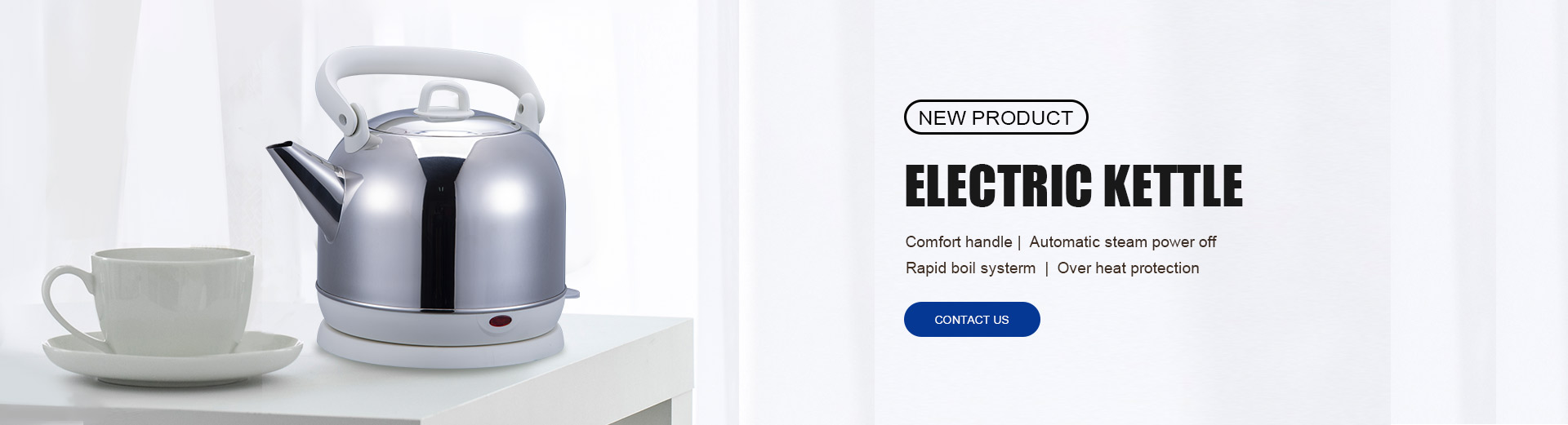
When developing a new electric kettle product, choosing between OEM and ODM manufacturing models is one of the most important decisions. The difference is not only about who provides the design, but also affects product development process, customization level, investment cost, intellectual property ownership, and production management.
A professional electric kettle manufacturer should be able to support both OEM and ODM solutions, helping different projects choose the right development method based on product goals and market requirements.
SHENBAO specializes in the research, development, and manufacturing of stainless steel electric kettles, double wall anti-hot kettles, plastic kettles, and other stainless steel products. With capabilities including mold design and manufacturing, injection molding, metal stamping, assembly, and quality control, SHENBAO provides customized kettle manufacturing solutions from product concept to mass production. (shenbao-china.com)
OEM means Original Equipment Manufacturing. In an OEM project, the product concept, design specifications, technical requirements, or drawings are provided by the customer, and the manufacturer produces the kettle according to these requirements.
The factory mainly focuses on manufacturing execution, including:
Material preparation
Mold development
Production processing
Assembly
Quality inspection
Final delivery
OEM manufacturing is suitable for projects that require a high level of product uniqueness.
Typical OEM customization includes:
| Customization Area | OEM Possibility |
|---|---|
| Product structure | Fully customized |
| Appearance design | Customized based on drawings |
| Materials | Customer specified |
| Functions | Customized requirements |
| Packaging | Brand-specific design |
For example, a brand developing a unique Stainless Steel Kettle with a special handle structure, exclusive appearance, or customized functions may choose the OEM model.
ODM means Original Design Manufacturing. In an ODM project, the manufacturer provides existing product designs or development solutions, and customers can customize branding, appearance details, packaging, or selected functions.
ODM allows manufacturers to use existing engineering experience and production systems to shorten development time.
Common ODM customization includes:
Logo printing
Color adjustment
Packaging design
Minor structural changes
Feature upgrades
| ODM Advantage | Manufacturing Benefit |
|---|---|
| Existing design foundation | Faster product development |
| Mature production process | Lower development risk |
| Existing tooling | Reduced initial investment |
| Factory engineering support | Easier product optimization |
ODM is often suitable for companies that want to introduce electric kettle products quickly while reducing development complexity.
Although both models involve cooperation with manufacturers, their development methods are different.
| Comparison | OEM Electric Kettle | ODM Electric Kettle |
|---|---|---|
| Product design | Provided by customer | Provided by manufacturer |
| Customization level | High | Medium |
| Development process | Longer | Faster |
| Engineering involvement | Customer-led | Factory-supported |
| Mold investment | Usually required for new designs | May already exist |
| Product uniqueness | Higher | Based on existing solutions |
OEM provides greater control over product design, while ODM provides faster market entry with lower development complexity.
The development process is one of the biggest differences between OEM and ODM.
A typical OEM electric kettle project includes:
Product concept confirmation
Technical drawing review
Engineering evaluation
Mold development
Prototype production
Testing and modification
Mass production
Because the product is newly developed, OEM projects usually require more engineering communication.
ODM projects usually include:
Existing product selection
Design adjustment
Sample confirmation
Branding customization
Production preparation
Quality inspection
ODM can reduce development steps because the manufacturer already has a production foundation.
The manufacturing model also affects project investment.
| Cost Factor | OEM | ODM |
|---|---|---|
| Product design | Higher investment | Lower investment |
| Mold cost | May require new molds | Often reduced |
| Development time | Longer | Shorter |
| Engineering cost | Higher | Lower |
| Customization flexibility | Higher | Moderate |
Industry manufacturing analysis shows ODM projects generally require lower initial development costs because manufacturers can reuse existing designs and production resources, while OEM projects require more investment in design, tooling, and testing.
Regardless of choosing OEM or ODM, material standards remain critical for electric kettle quality.
Professional manufacturers evaluate:
| Material Factor | Importance |
|---|---|
| Stainless steel grade | Product durability |
| Material thickness | Structural strength |
| Surface treatment | Appearance quality |
| Food contact compliance | Product safety |
| Component quality | Long-term reliability |
Common materials used in electric kettles include:
304 stainless steel
Double wall stainless steel
Food grade plastic
Glass components
SHENBAO focuses on stainless steel electric kettle manufacturing and provides different product solutions including stainless steel kettles, double wall kettles, and large capacity kettles. (shenbao-china.com)
Whether a product is OEM or ODM, quality control is essential.
A professional factory should manage:
| Production Stage | Quality Check |
|---|---|
| Raw materials | Verify specifications |
| Mold production | Check accuracy |
| Sample testing | Confirm design |
| Assembly | Ensure component matching |
| Final inspection | Verify shipment quality |
For electric kettles, safety testing is especially important because products combine electrical components, heating systems, and water contact materials.
SHENBAO applies quality management systems and its products have obtained certifications including CE, CB, GS, ROHS, and LFGB according to different market requirements. (shenbao-china.com)
When choosing between OEM and ODM solutions, working directly with a manufacturer provides more technical advantages.
A factory can directly support:
Product development
Engineering optimization
Material selection
Manufacturing improvements
Quality control
A trader may provide sourcing support, but technical decisions usually depend on external suppliers.
For customized electric kettle projects, direct communication with a manufacturer helps improve efficiency and product consistency.
The right choice depends on product goals.
| Project Requirement | Recommended Model |
|---|---|
| Need a completely unique design | OEM |
| Want faster market launch | ODM |
| Require full design control | OEM |
| Need lower development cost | ODM |
| Testing a new product category | ODM |
| Building long-term differentiated products | OEM |
Before starting a project, confirm:
| Category | Information Required |
|---|---|
| Product concept | Application and target market |
| Design | Drawings or reference models |
| Materials | Stainless steel and component standards |
| Functions | Capacity, power, safety features |
| Customization | Logo, color, packaging |
| Quantity | Bulk production requirements |
| Certification | Export market requirements |
OEM and ODM are not competing options. They are different manufacturing strategies designed for different product development needs.
OEM provides maximum customization and product control, while ODM provides faster development and lower entry barriers. A capable electric kettle manufacturer should have both engineering development ability and production experience to support different project requirements.
With integrated capabilities in mold manufacturing, injection molding, metal stamping, assembly, and quality management, SHENBAO provides OEM and ODM electric kettle manufacturing solutions for global markets.