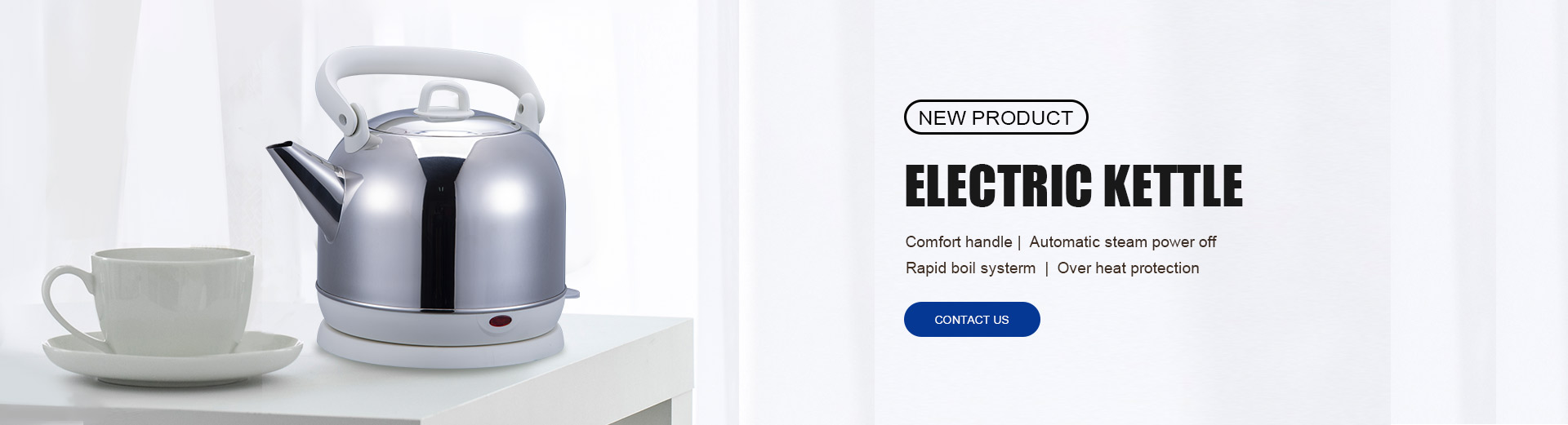
The answer lies in their specialized heating design, high power output, and direct-contact energy transfer.Below we’ll explore the science, components, and engineering features that allow electric kettles to work with such remarkable efficiency.
The answer depends on where you live, as voltage standards vary between regions. Most electric kettles, including those manufactured by Shenbao Electric Appliance Co., Ltd., operate on either 110–120 volts (in North America and Japan) or 220–240 volts (in Europe, Asia, and most other regions).
The answer is no. Electric kettles contain electrical components that should never be submerged in water or placed inside a dishwasher. Doing so can damage the heating system, cause short circuits, and void your warranty. However, that doesn’t mean cleaning your kettle is difficult — with proper care, you can keep it spotless and safe using simple manual methods.
The short answer is yes, but only if the surge protector is properly rated for high-power appliances. Electric kettles draw significant current during heating, and using the wrong type of power strip can cause overheating or tripping. Let’s explore how to use surge protectors safely with your kettle, and why Shenbao Electric Appliance Co., Ltd. always recommends careful connection practices.
The short answer is no—most electric kettles today do not whistle. Instead, they rely on automatic shut-off systems and indicator lights to tell you when the water has boiled. Let’s explore why that is, how the technology works, and what advantages this silent evolution brings to your daily routine.
The short answer is no—electric kettles are among the most efficient small appliances for heating water. Their power consumption depends on wattage, usage frequency, and boiling volume. Let’s break down how they work, how much electricity they actually use, and what you can do to save even more energy.
Electric kettles have become one of the most common small appliances in modern kitchens. They heat water faster and more efficiently than traditional stovetop kettles. However, many users wonder: do electric kettles turn off automatically? The answer is yes—modern electric kettles, especially those made by manufacturers like Shenbao Electric Appliance Co., Ltd., are equipped with advanced automatic shut-off mechanisms that ensure both convenience and safety.
In this guide, we’ll explain the difference between exposed and concealed heating elements, their pros and cons, and why concealed designs have become the industry standard for safety, efficiency, and hygiene.
In this guide, we’ll explain why electric kettles should not go in the dishwasher, how to clean them safely by hand, and how Shenbao designs its kettles for easy, safe, and hygienic maintenance.
In this article, we’ll explain why kettles shouldn’t share power with surge protectors, what to check if you must use one, and how Shenbao electric kettles are engineered for safe, efficient power usage on standard wall outlets.
In this guide, we’ll explain when it’s safe to leave your kettle plugged in, when you shouldn’t, and how Shenbao designs its electric kettles with advanced safety systems to minimize these risks.
In this article, we’ll explain why electric kettles boil water faster, compare them to traditional stovetop heating, and explore how Shenbao uses advanced technology to make its kettles both quick and energy-efficient.