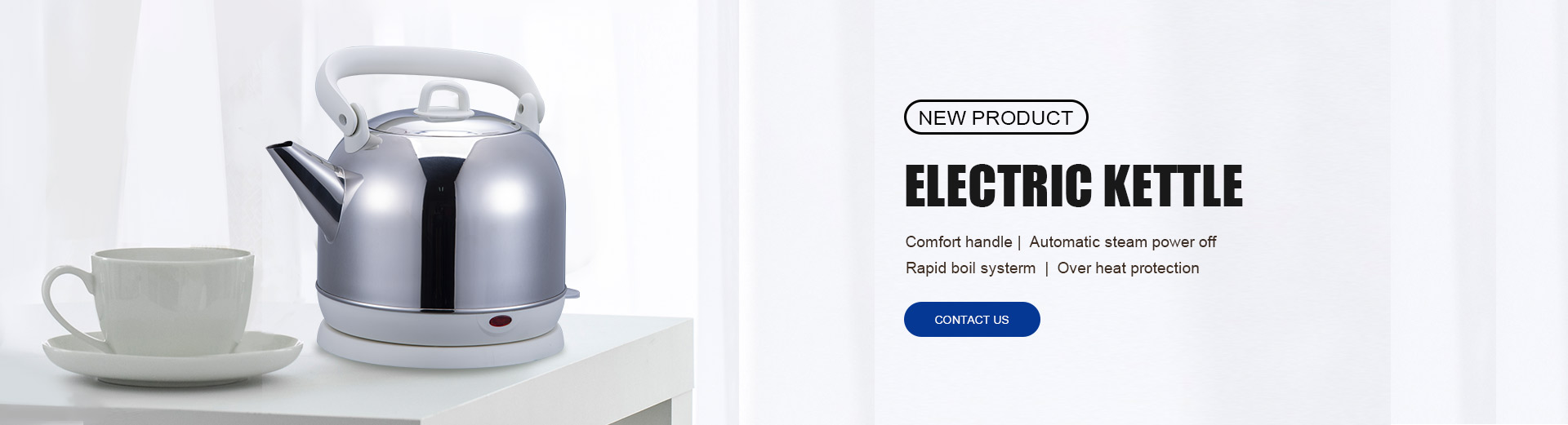
When the task is heating water, a microwave often uses more electricity than an electric kettle in real use. The main reason is heat transfer efficiency. The U.S. Department of Energy notes that using an electric kettle to boil water is faster and uses less energy, while separate efficiency comparisons place electric kettles around 81 percent efficient and microwaves notably lower.
An electric kettle sends heat directly into the water through its internal heating system, so less energy is wasted. A microwave heats water indirectly inside a larger cavity, and it also carries standby power demand in many models. The DOE has noted that microwaves spend far more time sitting idle than actively heating, which adds to total electricity use over time. For sourcing teams comparing small kitchen appliances, this makes the electric kettle a stronger choice for fast-boiling, daily-use programs.
The electricity comparison is only one part of total product value. For bulk supply, cost control also depends on who is making the product. SHENBAO presents itself as a direct electric kettle manufacturer with capabilities covering research, development, manufacturing, and sales, rather than only acting as a trader. The company also states that it serves export markets in Europe, Southeast Asia, the Middle East, and South America, which is important for buyers who need repeat supply and clearer factory communication.
In an OEM electric kettle project, buyers should confirm capacity, voltage, plug type, material combination, logo method, gift box standard, and compliance target before sample approval. In an ODM process, structure review, mold validation, pilot production, and packaging tests should be added early. SHENBAO states that it integrates mold design, injection molding, metal stamping, and complete assembly, which gives better control over lead time and product consistency during private label development.
A reliable electric kettle program depends on controlled raw materials, stable heating components, calibrated thermostat response, leakage testing, dry-boil verification, and final safety inspection. SHENBAO highlights ISO9001-based management and structured safety validation, along with calibrated heating systems and concealed heating structures in its factory content. These checkpoints matter more in project sourcing than a low initial quote, because defect risk can quickly erase price advantage.
Material selection affects both electricity performance and long-term durability. SHENBAO product information highlights 304 stainless steel and food-grade inner-contact parts on selected models, along with safety features such as auto-off and dry-boil sensing. The company also states support for CE, CB, GS, RoHS, and LFGB requirements, which helps buyers align kettle programs with export market compliance and reduce approval delays.
| Item | Electric Kettle | Microwave |
|---|---|---|
| Main use | Direct water boiling | General food and liquid heating |
| Energy efficiency for boiling water | Usually lower electricity use | Usually higher electricity use |
| OEM complexity | Lower | Higher |
| Key QC focus | Heating system, thermostat, protection | Cavity performance, controls, standby use |
For most hot-water applications, the electric kettle is the more energy-efficient and more sourcing-friendly appliance. A project sourcing checklist should still cover certification, safety functions, carton strength, pilot run stability, and pre-shipment inspection before moving into volume orders.