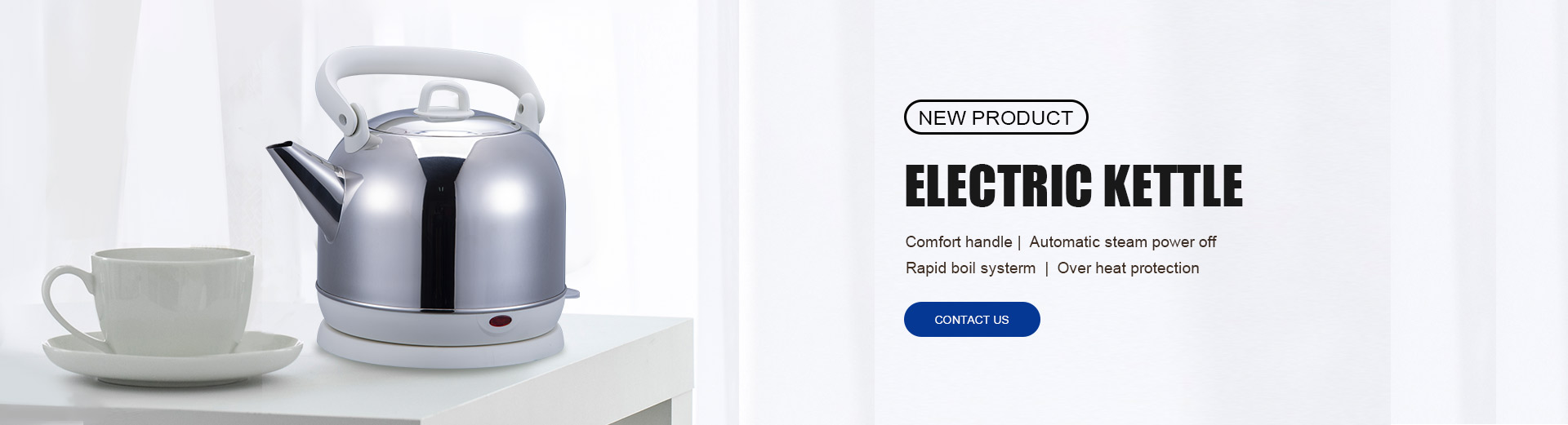
When buyers compare an electric kettle with a coffee machine, the answer depends on both wattage and working time. In most daily use cases, a coffee machine uses more electricity overall, especially when it includes a warming plate, insulated tank, or standby function. The U.S. Department of Energy notes that an electric kettle is a faster and lower-energy way to boil water, while ENERGY STAR states that certified commercial coffee brewers can be 27 percent more energy efficient than standard models, which shows how much energy loss can exist in regular coffee brewing equipment.
A kettle transfers heat directly into water and finishes the job quickly. One industry study cited by Freudenberg Sealing Technologies found that preparing one cup with an electric kettle used about 70 watt hours, while a drip coffee maker used about 100 watt hours per cup. That gap becomes important in hotel programs, office pantry projects, and retail appliance lines where energy cost, speed, and product simplicity all affect the final purchasing decision.
From a sourcing perspective, the more economical product is not only the one with lower electricity use. It is also the one with lower claim risk, easier compliance, and more stable mass production. SHENBAO operates as a direct manufacturer rather than a trading layer, with capabilities in mold design, injection molding, metal stamping, and final assembly. The company focuses on stainless steel electric kettles, double wall anti hot kettles, and plastic kettles, and exports to Europe, Southeast Asia, the Middle East, and South America.
For OEM electric kettle projects, buyers should confirm voltage, plug type, capacity, body material, heating structure, logo method, carton standard, and target market certification before sampling. For ODM development, structure review, mold validation, pilot run inspection, and packaging approval should be part of the process. A clear project sourcing checklist usually shortens lead time and reduces rework during bulk supply. SHENBAO states that it can design and produce according to customer needs, which is important for private label and project-based sourcing.
A reliable kettle factory should control material selection, stamping accuracy, heating system calibration, thermostat response, leakage testing, and final safety inspection. SHENBAO highlights triple safety protection including automatic steam power off, dry burning power off, and high temperature fuse power off. The company also notes experienced technical and quality teams plus dedicated detection capability, which matters when buyers need repeatable performance across large orders.
Material standards affect both safety and product life. SHENBAO states that it works under ISO9001 and that its products have obtained CE, CB, GS, RoHS, LFGB, and EMC related approvals or reports. For export market compliance, this helps buyers align product development with food-contact expectations, electrical safety requirements, and regional import standards. In practical terms, a well-made electric kettle often offers a better balance of energy efficiency, compliance readiness, and supply stability than a typical coffee machine for many volume purchasing programs.
| Item | Electric kettle | Coffee machine |
|---|---|---|
| Main energy use | Direct water heating | Water heating plus brewing system |
| Typical efficiency result | Faster and lower energy for boiling water | Higher total use when warming or standby is involved |
| Easier for OEM projects | Yes | Usually more complex |
| Quality control focus | Heating plate, thermostat, safety cut off | Brewing temperature, holding heat, internal flow system |
The better long-term value usually comes from a manufacturer that can control process, materials, certification, and shipment consistency from the start.