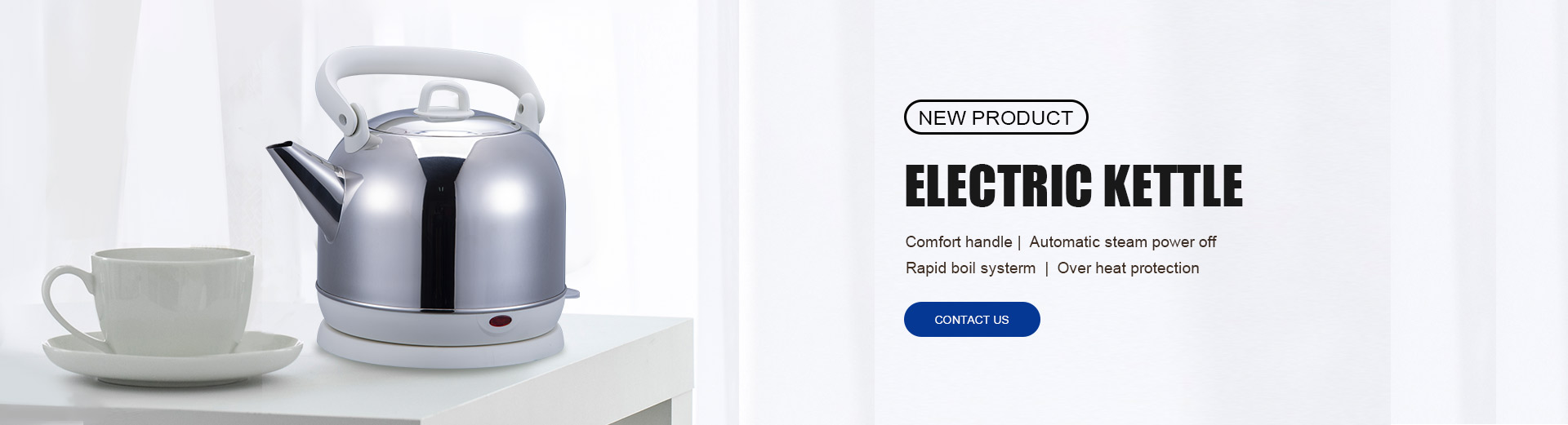
Cooking chicken in an electric kettle is possible, but it should be handled as a controlled heating task rather than a normal daily kettle application. Chicken must reach a safe internal temperature of 165°F or 74°C, according to USDA food safety guidance, and that is the key point buyers should remember when evaluating any electric kettle used beyond simple water boiling.
A stainless steel electric kettle can heat small chicken pieces in water until fully cooked, but the process depends on capacity, thermostat behavior, and heating stability. Boneless cuts work better than large bone-in portions because heat can move through the meat more evenly. The real issue is not whether chicken can be cooked in a kettle, but whether the kettle can maintain stable heating and allow the food to reach the required safe temperature without overflow, residue buildup, or shut-off problems.
For project sourcing, a direct manufacturer usually gives better technical support than a trader. SHENBAO describes itself as an electric kettle manufacturer with integrated mold design, injection molding, metal stamping, and complete assembly. It also states that it operates under ISO9001 and supports CE, CB, GS, RoHS, and LFGB requirements. That matters in bulk supply because structure, thermostat calibration, and material control all affect whether a kettle performs consistently in repeated use.
In an OEM electric kettle program, buyers should confirm capacity, inner material, concealed heating structure, thermostat range, plug standard, logo method, packaging, and destination compliance before sample approval. In an ODM process, the checklist should go deeper into structural adjustment, lid sealing, vent path, and easy-clean design. SHENBAO states that OEM and ODM cooperation may include color, packaging, structural changes, capacity adjustments, and functional improvements, which is valuable for commercial-grade development and private label planning.
A reliable kettle factory should control stainless steel forming, plastic injection, heating plate installation, thermostat fitting, leakage inspection, and final assembly. Quality control checkpoints should include heating consistency, auto shut-off response, dry-boil protection, wiring safety, and cleaning review after repeated cycles. SHENBAO emphasizes calibrated heating systems, concealed heating structures, and structured safety validation, which supports more stable production results in export programs.
Material standards are critical when food contact and repeated heating are involved. SHENBAO notes food-grade stainless steel interior use in its kettle guidance, alongside heat-resistant components and certification support. For export market compliance, the company states that its kettle lines support CE, CB, GS, RoHS, and LFGB frameworks, helping reduce approval risk in international shipment planning.
| Check item | Why it matters |
|---|---|
| Food-grade inner tank | Supports hygienic contact with heated contents |
| Concealed heating plate | Easier cleaning after protein residue |
| Thermostat calibration | Helps maintain stable heating |
| Auto shut-off system | Improves operating safety |
| Certification package | Supports export compliance |
| Pilot sample review | Confirms actual heating performance |
| Pre-shipment inspection | Reduces batch quality risk |
A kettle used for cooking chicken should be evaluated by process control, safety design, and compliance readiness, not by quotation alone. In volume procurement, the better long-term result usually comes from a manufacturer that can control every stage from materials to final inspection.