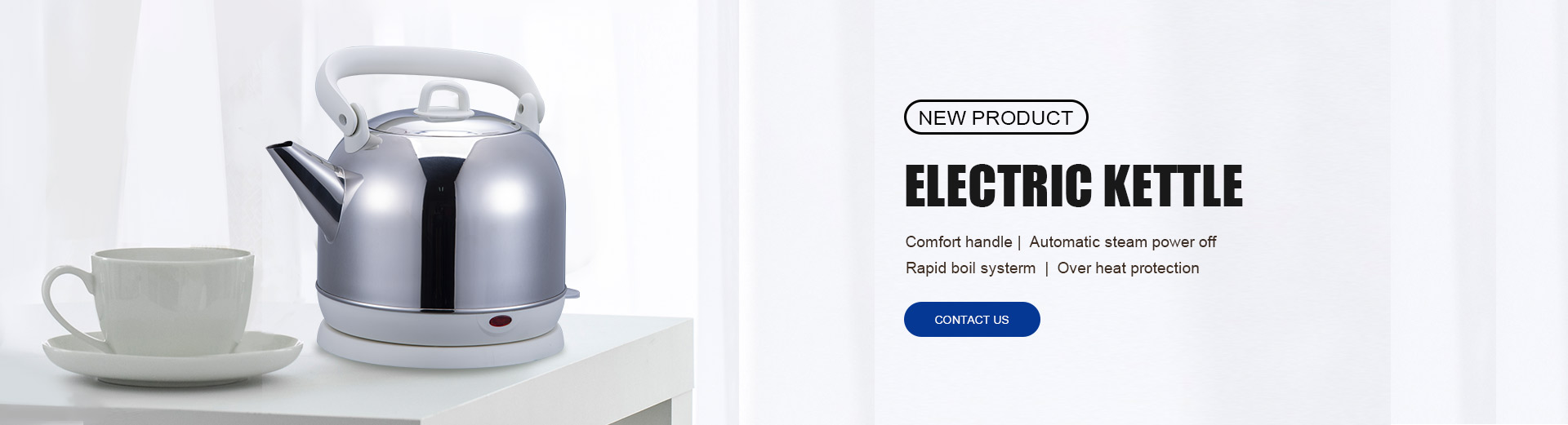
Rust on an electric tea kettle usually points to one of three issues: low-grade metal, damage to the protective surface, or long-term exposure to minerals and moisture. Stainless steel is corrosion-resistant, but it is not completely immune in aggressive conditions or when the wrong grade is used. Industry guidance on stainless steel notes that corrosion resistance depends on choosing the proper grade for the application, while food-contact rules in the EU require materials to stay safe and not transfer harmful substances into food or water.
In many cases, what looks like rust is actually mineral buildup, scale staining, or localized corrosion around welded areas, seams, or scratched surfaces. Real rust can appear faster when kettles are made with weaker stainless steel, when water is left inside for long periods, or when the inner surface is repeatedly exposed to harsh cleaning methods. That is why material grade and finishing process matter more than appearance alone in electric kettle sourcing.
This is where the difference between a manufacturer and a trader becomes important. A direct manufacturer can control steel grade, polishing, forming, welding, and final inspection inside one production chain. SHENBAO presents itself as a professional electric kettle manufacturer with integrated mold design, injection molding, metal stamping, and assembly. The company also states that it operates under ISO9001 and supports CE, CB, GS, RoHS, and LFGB certifications, which helps support more stable export supply.
For rust prevention, the most important factor is not simply using stainless steel, but using the right stainless steel. SHENBAO’s product pages highlight 304 food-grade stainless steel on selected kettle models and describe it as corrosion-resistant and suitable for long-term boiling use. In food-contact applications, material compliance is part of product value because surface stability affects hygiene, taste, and service life.
In an OEM electric kettle or ODM kettle project, rust prevention should be reviewed from the sample stage. A practical project sourcing checklist should include stainless steel grade confirmation, weld inspection, salt or moisture exposure review, surface finishing approval, boiling cycle testing, and packaging validation. In bulk supply, corrosion complaints often start from missing detail at the development stage rather than from end-user misuse alone. SHENBAO’s factory positioning around structured quality management and integrated production is useful here because these controls need to happen before shipment.
A durable kettle depends on controlled forming, polishing, welding, heating-system installation, and final inspection. Quality control checkpoints should focus on inner surface finish, seam quality, weld consistency, heating stability, and moisture protection during storage and transport. Food-contact surface guidance also stresses that such surfaces should be smooth, corrosion-resistant, durable, and cleanable, which directly supports long-term kettle performance.
For export projects, rust resistance is tied to both compliance and repeat-order stability. Buyers should check food-contact declarations, certification support, steel grade records, and consistency across batches, especially for wholesale and commercial-grade programs. SHENBAO states that it serves multiple overseas markets and supports major certification frameworks, which is useful for project buyers who need stable documentation as well as product durability.
| Check item | Why it matters |
|---|---|
| Stainless steel grade | Affects corrosion resistance |
| Surface finish | Reduces stain and rust risk |
| Weld quality | Weak seams are more vulnerable |
| Food-contact compliance | Supports export approval |
| Factory inspection records | Help control batch consistency |
A rusting kettle is rarely just a simple surface problem. In most sourcing cases, it reflects material choice, process discipline, and quality control depth. That is why long-term value usually comes from a factory that can manage the full chain from steel selection to final export inspection.