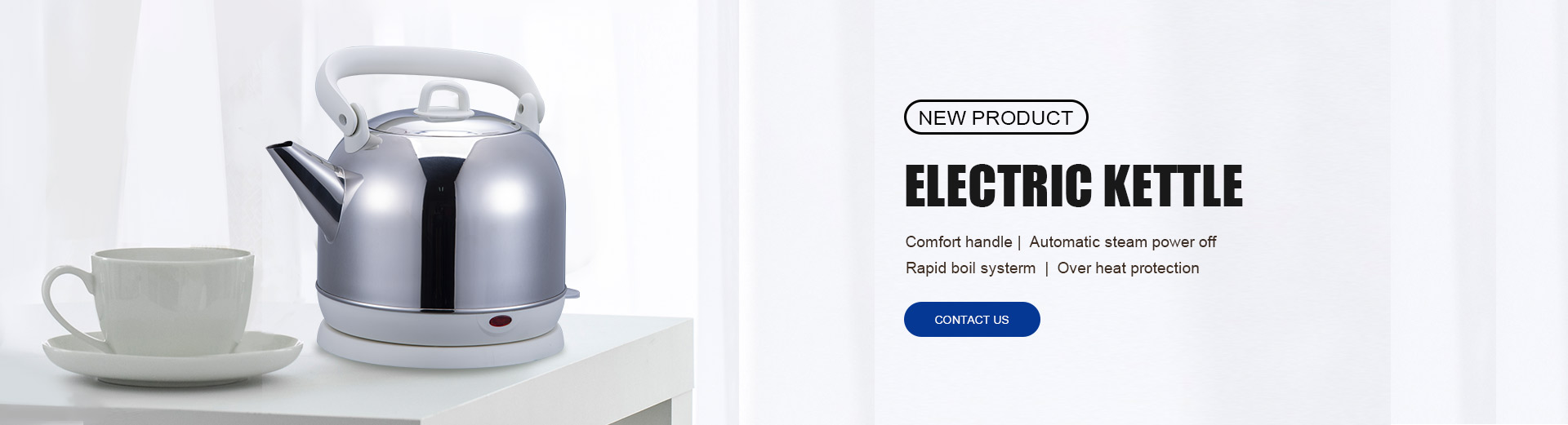
Boiling milk in an electric kettle is usually a poor choice because milk does not behave like water. Under heat, milk proteins denature and interact with fat, which can create a surface film, trap steam, and increase the chance of sudden foaming or overflow. Safety standards for appliances used for heating liquids are covered by IEC 60335-2-15, but standard kettle structures are still mainly optimized for water, not for sticky and protein-rich liquids.
When milk is heated to a boil, the biggest risk is not only spillover. It is also the residue left behind on the inner wall, lid area, vent path, and heating base. That residue can scorch, affect smell, and make the next cleaning cycle much harder. SHENBAO’s own milk-heating guidance recommends gentler control at about 60 to 70 degrees Celsius rather than taking milk to a full boil, which reflects how differently milk performs compared with plain water.
This is where manufacturer capability matters more than quotation alone. SHENBAO positions itself as a direct electric kettle manufacturer with in-house mold design, injection molding, metal stamping, and complete assembly. The company also states that it works under ISO9001 and supports CE, CB, GS, RoHS, and LFGB compliance. For sourcing teams, that matters because a kettle used in wider application scenarios needs better control over concealed heating structure, thermostat response, food-contact materials, and safety validation.
A trader can supply a finished unit, but a manufacturer can usually go deeper into structure changes and risk control. In an OEM or ODM electric kettle project, buyers should review inner material, steam path, lid fit, heating plate design, dry-boil protection, and cleaning convenience before approving samples. A practical project sourcing checklist should also include pilot testing, packaging validation, repeated boiling tests, and pre-shipment inspection. These steps are especially important when the product may be used for milk, soup, or other non-water liquids.
A reliable kettle program depends on more than exterior appearance. Stainless steel forming, plastic injection accuracy, thermostat installation, leakage inspection, and final assembly all affect whether the product remains stable after repeated heating. Quality control checkpoints should include auto shut-off, dry-boil response, connector durability, residue-cleaning evaluation, and food-contact material verification. SHENBAO highlights calibrated heating systems, concealed heating structures, and structured safety validation, which are useful strengths for bulk supply programs and commercial-grade product lines.
For export projects, material standards used inside the kettle are just as important as electrical certification. Since milk contacts the inner surface directly and leaves more deposits than water, food-contact compliance and heat resistance both matter. SHENBAO’s stated certification framework helps support export market compliance, but buyers should still confirm destination-market requirements, declarations for food-contact parts, and batch consistency before volume shipment.
| Check item | Why it matters |
|---|---|
| Concealed heating structure | Easier cleaning after milk use |
| Thermostat calibration | Better control before milk reaches full boil |
| Food-contact inner material | Supports safety and cleaner taste |
| Dry-boil protection | Reduces misuse risk |
| OEM and ODM review | Helps match real market application |
| Factory inspection records | Supports stable bulk supply |
Boiling milk in an electric kettle is usually not recommended because it increases overflow risk, cleaning difficulty, and long-term performance pressure. For sourcing work, the better solution is a kettle program developed by a manufacturer that can control process detail, material standards, compliance documentation, and quality checkpoints from the start.