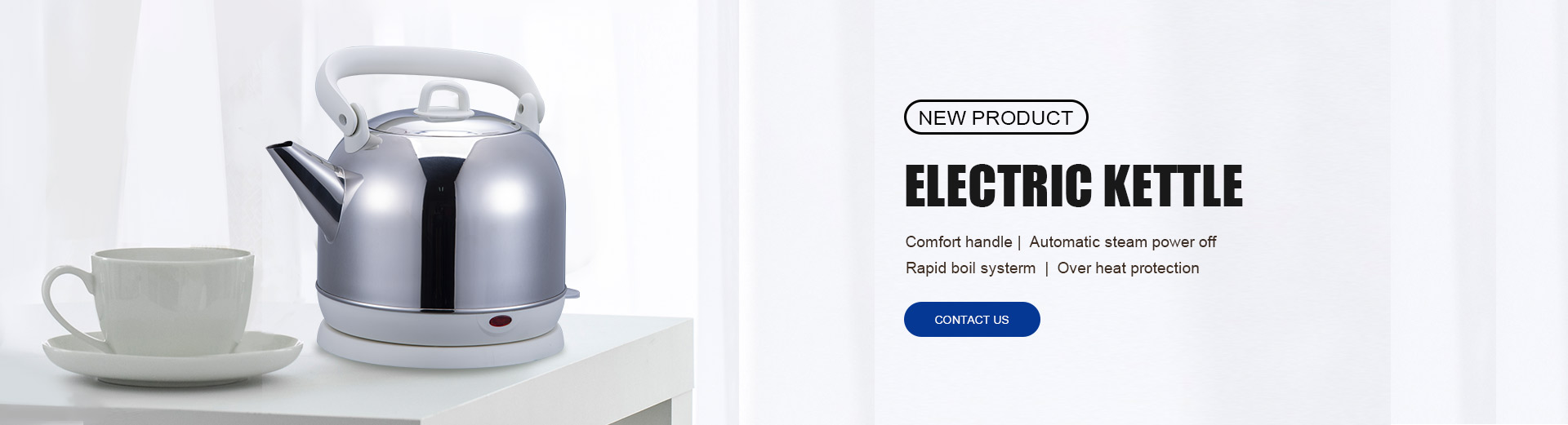
Choosing between a plastic kettle and a steel kettle is not only about appearance. In most sourcing situations, a steel electric kettle is the better option when the priority is stronger durability, higher product confidence, and a more premium market position. A plastic kettle can still be a practical choice for lightweight and cost-sensitive programs, but material control becomes much more important when plastic parts are exposed to repeated heat and steam. For export-oriented kettle development, electrical safety is generally evaluated under IEC 60335-2-15, while plastic food-contact parts for the EU market are specifically regulated under Regulation EU No 10/2011.
A steel electric kettle usually offers stronger resistance to heat exposure, better long-term appearance retention, and a more stable premium feel in daily use. In sourcing terms, that often translates into lower complaint risk for odor, deformation, or surface aging when compared with low-grade plastic alternatives. Stainless steel also tends to support a stronger quality image in retail, hospitality, and commercial-grade procurement. This is why steel kettles are commonly chosen when the goal is not just entry-level pricing, but a more dependable long-term product program.
Plastic kettles are usually lighter and can be more price-competitive, which makes them suitable for value-focused programs and high-volume entry segments. The real issue is not that plastic is automatically bad. The issue is whether the plastic is heat-resistant, food-contact compliant, and well controlled during molding and assembly. If the plastic sits near the steam path, lid area, or hot water contact zone without proper material discipline, buyers may face more risk in odor complaints, discoloration, or long-term durability concerns. That is why plastic kettle projects need tighter material review from the beginning.
This comparison becomes much clearer when buyers work directly with a manufacturer rather than a trader. SHENBAO presents itself as a professional electric kettle manufacturer with integrated capabilities in mold design, injection molding, metal stamping, and final assembly. The company also states that it implements ISO9001 quality management and supports CE, CB, GS, ROHS, and LFGB certifications. That kind of integrated factory control is especially important when deciding between plastic and steel because the final result depends on real process capability, not only on catalog description.
In an OEM electric kettle project, the material decision should be made early together with capacity, voltage, plug standard, finish, logo method, and target certification. In an ODM process, the evaluation should go deeper into body structure, steam path, lid fit, handle heat behavior, and long-term cleaning convenience. A practical project sourcing checklist should include sample approval, food-contact material confirmation, heating test, dry-boil protection test, repeated-cycle test, and packaging validation. For bulk supply considerations, this process helps avoid the common mistake of choosing a cheaper material first and trying to solve performance issues later.
A steel kettle and a plastic kettle follow different manufacturing priorities. Steel kettle production depends heavily on metal forming, welding or joining quality, polishing, and corrosion control. Plastic kettle production depends more on resin selection, mold accuracy, wall thickness control, and heat-aging stability. In both cases, strong quality control checkpoints should include heating performance, auto shut-off, dry-boil protection, leakage inspection, connector durability, and final appearance review. SHENBAO’s published factory content emphasizes calibrated heating systems, concealed heating structures, and structured safety validation, which are critical for keeping either material option stable in mass production.
For export market compliance, material choice is never only a design issue. Plastic parts that contact water or steam in the EU market must align with Regulation EU No 10/2011, while the overall kettle as an appliance must meet electrical safety expectations under IEC 60335-2-15. SHENBAO states that its kettle lines support CE, CB, GS, ROHS, and LFGB certifications, which is useful for buyers who need better compliance preparation across multiple regions. In practical terms, steel usually gives a stronger compliance and quality position for premium programs, while plastic can work well when the material file and test control are strong enough.
| Item | Plastic kettle | Steel kettle |
|---|---|---|
| Weight | Lighter | Heavier |
| Cost position | Usually lower | Usually higher |
| Premium feel | More limited | Stronger |
| Heat and steam confidence | Depends heavily on plastic grade | Usually better |
| Long-term perception | Can vary by material quality | Often more stable |
| Best fit | Entry-level programs | Higher-value programs |
For most long-term sourcing projects, a steel electric kettle is the better choice because it supports a stronger product image, better heat confidence, and more dependable durability. A plastic kettle can still be the right option for certain cost-driven programs, but only when the manufacturer has solid control over resin quality, molding precision, and compliance documentation. SHENBAO’s integrated manufacturing model, ISO9001 system, and export certification support make that evaluation more practical for buyers comparing both material routes in real supply planning.