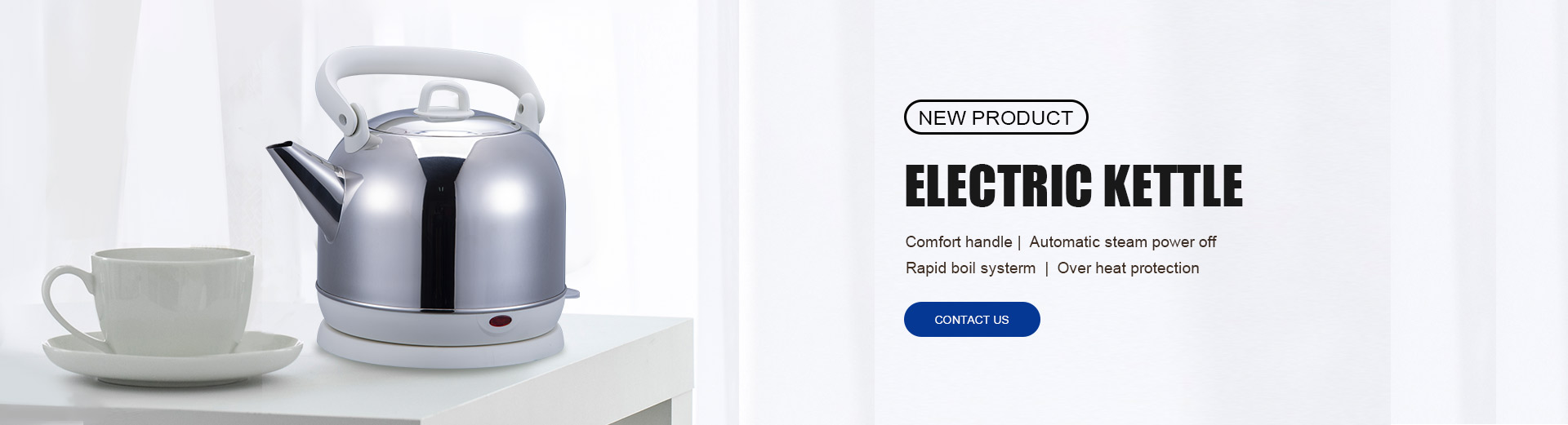
Choosing between an electric kettle and a stove top kettle depends on the product goal, but for most modern sourcing programs, the electric kettle is the better option. The U.S. Department of Energy states that using an electric kettle to boil water is faster and uses less energy. That gives the electric kettle a clear advantage in daily-use categories where speed, convenience, and operating efficiency influence product value.
An electric kettle is a complete appliance with its own heating system, auto shut-off, and dry-boil protection. A stove top kettle still depends on an external heat source, so performance can vary with the cooktop, user habits, and kitchen setup. In retail, hospitality, and office pantry projects, that difference matters because the electric kettle offers a more standardized user experience and easier product positioning. The safety scope for appliances used to heat liquids is covered by IEC 60335-2-15:2024, which reflects how important built-in protection and controlled operation are in this category.
A stove top kettle can still work for buyers who prefer a simpler non-electric item or want compatibility across different cooking systems. It may also appeal in decorative kitchen lines. But from a project sourcing checklist perspective, a stove top kettle usually offers less control over heating speed, less convenience, and fewer built-in safety functions than an electric kettle. For long-term volume programs, that often makes the electric kettle more practical.
This comparison becomes more meaningful when buyers work directly with a manufacturer instead of a trader. SHENBAO describes itself as a professional electric kettle manufacturer with integrated mold design and manufacturing, injection molding, metal stamping, and assembly. The company also states that it operates under ISO9001 and supports CE, CB, GS, RoHS, and LFGB certifications. That kind of factory integration helps buyers manage OEM electric kettle projects, ODM development, bulk supply considerations, and export market compliance more efficiently.
For an electric kettle, the real value is not only the heating result but the production consistency behind it. SHENBAO highlights calibrated heating systems, concealed heating structures, and structured safety validation in its published factory content. These quality control checkpoints are important because stable thermostat response, auto shut-off, leakage inspection, and material consistency all affect long-term supply performance. Compared with a stove top kettle, the electric kettle demands more technical control, but it also gives more room for product differentiation and higher-value positioning.
| Item | Electric kettle | Stove top kettle |
|---|---|---|
| Heating method | Built-in electric heating | External stove heat |
| Boiling speed | Usually faster | Usually slower |
| Energy use for boiling water | Lower in typical use | Higher in typical use |
| Safety functions | Auto shut-off and dry-boil protection possible | Depends on user attention |
| OEM / ODM potential | Higher | More limited |
For most sourcing programs, the electric kettle is better than a stove top kettle because it combines faster boiling, lower energy use, easier standardization, and stronger OEM / ODM potential. A stove top kettle still has value in certain niche applications, but the electric kettle is usually the stronger choice for buyers who care about scalable production, quality control checkpoints, material standards used, and export-ready compliance. SHENBAO’s integrated manufacturing model makes that path more reliable for long-term supply planning.