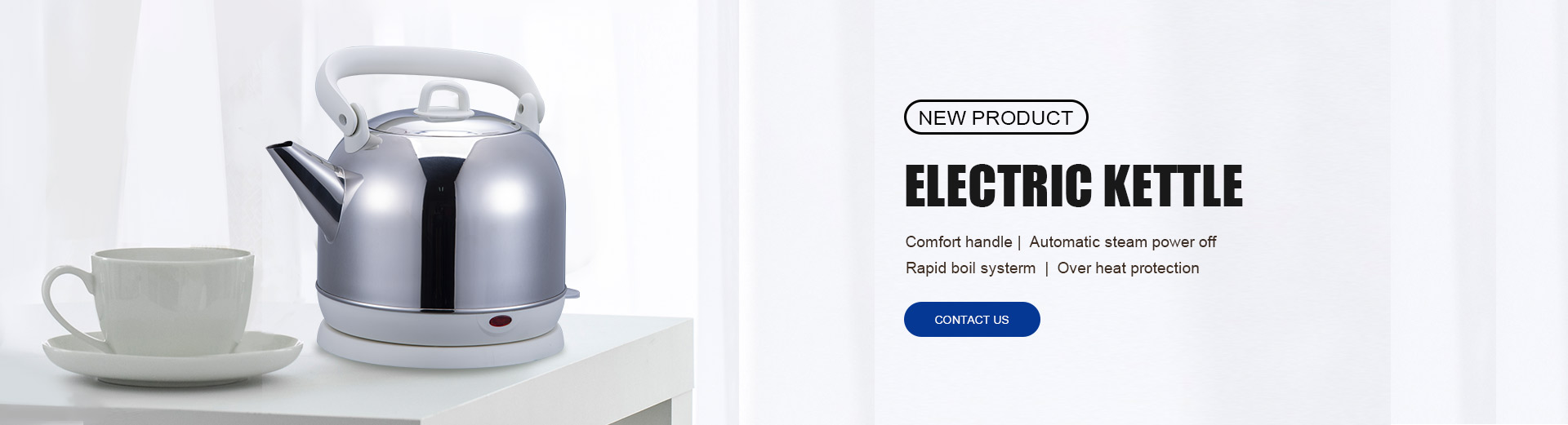
electric kettles may leak because of poor sealing, weak welding, loose bottom structure, cracked plastic parts, damaged lids, or incorrect assembly. For high-frequency use in homes, offices, hotels, and retail channels, even a small leakage issue can lead to complaints, returns, and safety concerns. Appliance safety guidelines also treat water leakage near electrical parts as a serious risk, so leakage control must be checked before shipment.
| Leakage Area | Possible Cause |
|---|---|
| Bottom joint | Weak sealing or poor assembly |
| Spout | Poor forming or overflow design issue |
| Lid area | Loose lid fitting or steam backflow |
| Water window | Aging seal or poor bonding |
| Body seam | Welding or molding defect |
Why Do electric kettles Leak is not only a user question. It is closely related to manufacturing control. A manufacturer can manage stainless steel forming, plastic injection, sealing structure, heating plate assembly, welding quality, and leakage testing during production. A trader may provide finished products, but usually has limited control over mold accuracy, sealing material, assembly pressure, and repeat batch quality.
SHENBAO focuses on electric kettle manufacturing, including stainless steel electric kettle, double wall anti-hot kettle, plastic kettle, and water kettle products. Our work covers product development, material selection, production assembly, quality checking, and export supply. This helps support stable production for Europe, Southeast Asia, the Middle East, South America, and other markets.
During the OEM / ODM process, buyers should confirm capacity, wattage, voltage, plug type, body material, lid design, spout structure, water window position, seal material, logo method, packaging, user manual, carton marks, and inspection standards before sample approval. For bulk supply, a clear leakage test standard should be confirmed before mass production.
Manufacturing process overview includes incoming material inspection, plastic injection, stainless steel forming, welding or body fitting, heating plate assembly, thermostat installation, boiling test, leakage test, appearance checking, packaging, and final inspection.
Key quality control checkpoints should include bottom sealing, spout flow, lid fitting, water window bonding, handle strength, dry-boil protection, automatic shut-off, power base connection, and carton protection.
For export market compliance, buyers should review electrical safety, food-contact material requirements, voltage version, plug type, warning labels, user instructions, packaging language, and destination market documents. A kettle with strong leakage control can reduce after-sales risk, protect brand reputation, and support smoother repeat orders.