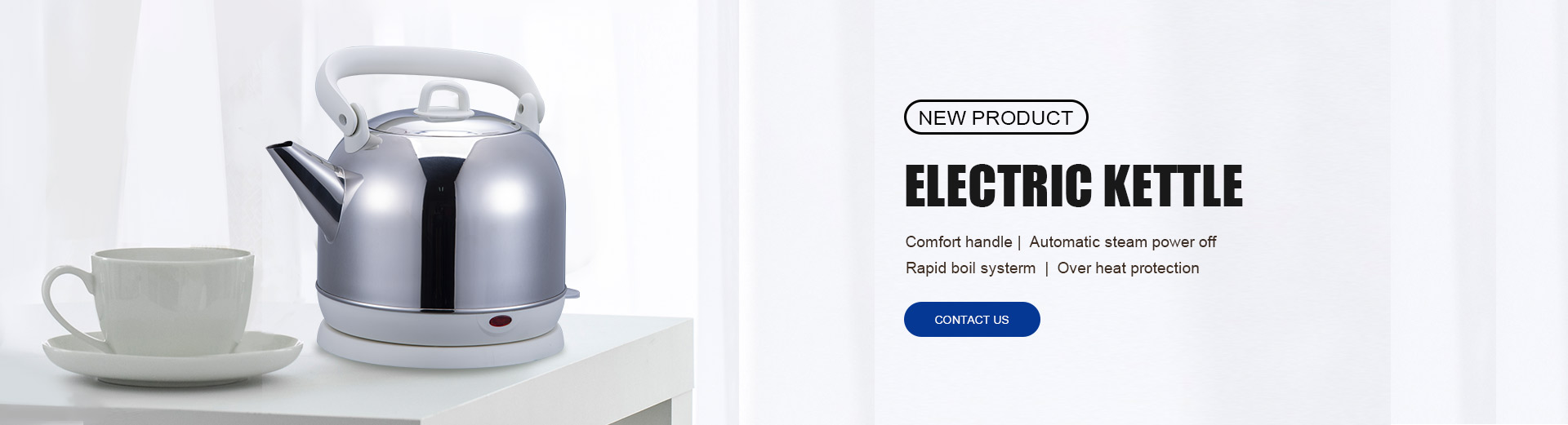
An electric kettle and a microwave both use electricity, but they heat water in different ways. A kettle transfers heat directly through a heating plate or concealed element, while a microwave heats water through microwave energy inside a cup. Energy efficiency studies on household appliances often show that electric kettles are usually more efficient for boiling water because less heat is lost to the container and surrounding air.
For normal hot water use, a 1500W to 2200W electric kettle often boils water faster than a microwave. A microwave may use 700W to 1200W, but the heating time can be longer, especially when heating several cups of water.
| Item | Electric Kettle | Microwave |
|---|---|---|
| Main use | Boiling water | Heating food and drinks |
| Heating speed | Usually faster | Usually slower for water |
| Energy use | Lower for repeated boiling | Higher when time is longer |
| Safety control | Auto shut-off available | Depends on user operation |
| Project use | Better for rooms and offices | Less focused on hot water supply |
When comparing which uses more electricity kettle or microwave, the product structure should also be reviewed. A manufacturer can control heating plate quality, thermostat matching, stainless steel forming, plastic molding, handle insulation, lid fitting, and base stability. A trader may offer ready-made models, but usually has limited control over internal components and repeat batch consistency.
SHENBAO focuses on electric kettle manufacturing, including stainless steel electric kettle, double wall anti-hot kettle, plastic kettle, and water kettle products. Our production experience covers product development, material control, assembly, inspection, and export supply for markets such as Europe, Southeast Asia, the Middle East, and South America.
During the OEM / ODM process, buyers should confirm capacity, wattage, voltage, plug type, body material, thermostat, lid design, handle structure, logo method, packaging, user manual, carton marks, and inspection standards before sample approval. For bulk supply, stable materials and repeatable testing help reduce after-sales risk.
Manufacturing process overview includes material inspection, plastic injection, stainless steel forming, heating plate assembly, thermostat installation, boiling test, leakage test, appearance checking, packaging, and final inspection. Quality control checkpoints should cover automatic shut-off, dry-boil protection, plastic odor, lid fitting, handle strength, power base connection, electrical safety, and carton protection.
For export market compliance, buyers should review voltage version, plug type, food-contact material requirements, safety documents, warning labels, packaging language, and destination market standards. A well-made electric kettle can provide faster hot water, lower unnecessary energy waste, and smoother repeat orders.