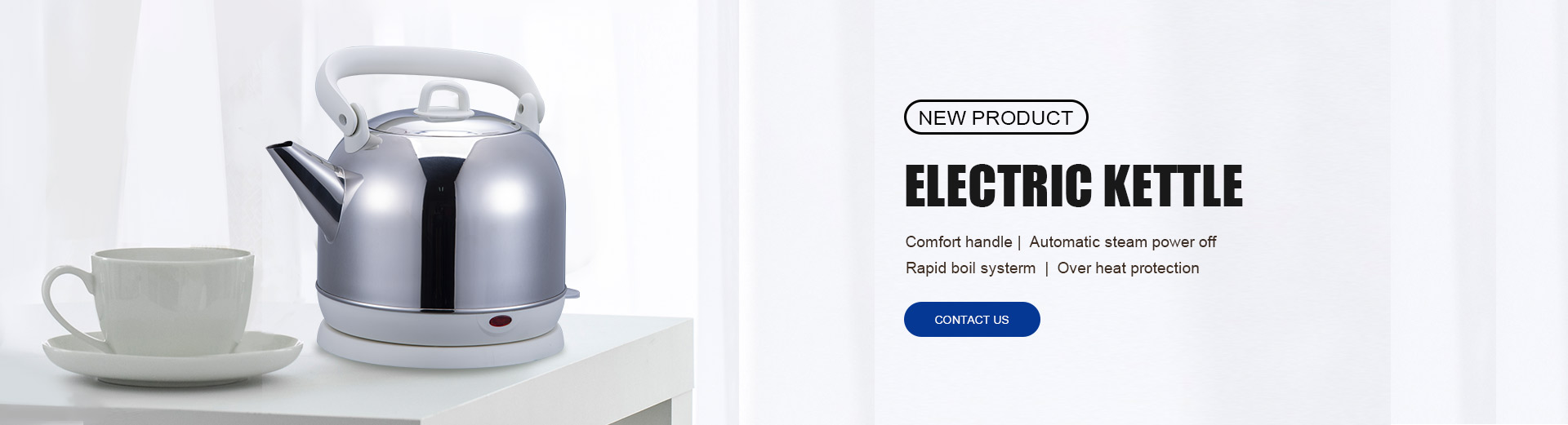
An electric kettle may break easily because of poor thermostat quality, weak heating plate connection, low-grade plastic, loose lid structure, unstable power base, water leakage, or poor assembly control. Many electric kettles work at around 1500W to 2200W, so internal parts must handle frequent heating, steam, moisture, and power cycles. Appliance safety guidance treats automatic shut-off, dry-boil protection, and insulation as key safety points for electric water-heating products.
| Failure Point | Possible Reason |
|---|---|
| Thermostat | Poor temperature control |
| Heating plate | Weak contact or unstable assembly |
| Power base | Loose connection after repeated use |
| Lid and handle | Poor fitting or weak material |
| Body leakage | Sealing or welding defect |
Why Electric kettle Broken So Easily is also a sourcing quality question. A manufacturer can control material selection, plastic injection, stainless steel forming, heating plate assembly, thermostat matching, leakage testing, and repeat batch inspection. A trader may offer many finished models, but usually has limited control over internal components and long-term quality stability.
SHENBAO focuses on electric kettle manufacturing, including stainless steel electric kettle, double wall anti-hot kettle, plastic kettle, and water kettle products. Our work covers product development, material selection, assembly, inspection, and export supply for Europe, Southeast Asia, the Middle East, South America, and other markets.
During the OEM / ODM process, buyers should confirm capacity, wattage, voltage, plug type, thermostat, heating plate, body material, lid design, handle structure, base connection, logo method, packaging, user manual, carton marks, and inspection standards before sample approval.
Manufacturing process overview includes material inspection, plastic injection, stainless steel forming, heating plate assembly, thermostat installation, boiling test, leakage test, dry-boil test, appearance checking, packaging, and final inspection.
Quality control checkpoints should cover electrical safety, automatic shut-off, dry-boil protection, power base connection, lid fitting, handle strength, plastic odor, leakage control, boiling stability, carton protection, and final random inspection.
For export market compliance, buyers should review voltage version, plug type, food-contact material requirements, safety documents, warning labels, user instructions, packaging language, and destination market standards. A durable electric kettle depends on stable components, proper assembly, and strict testing before shipment.