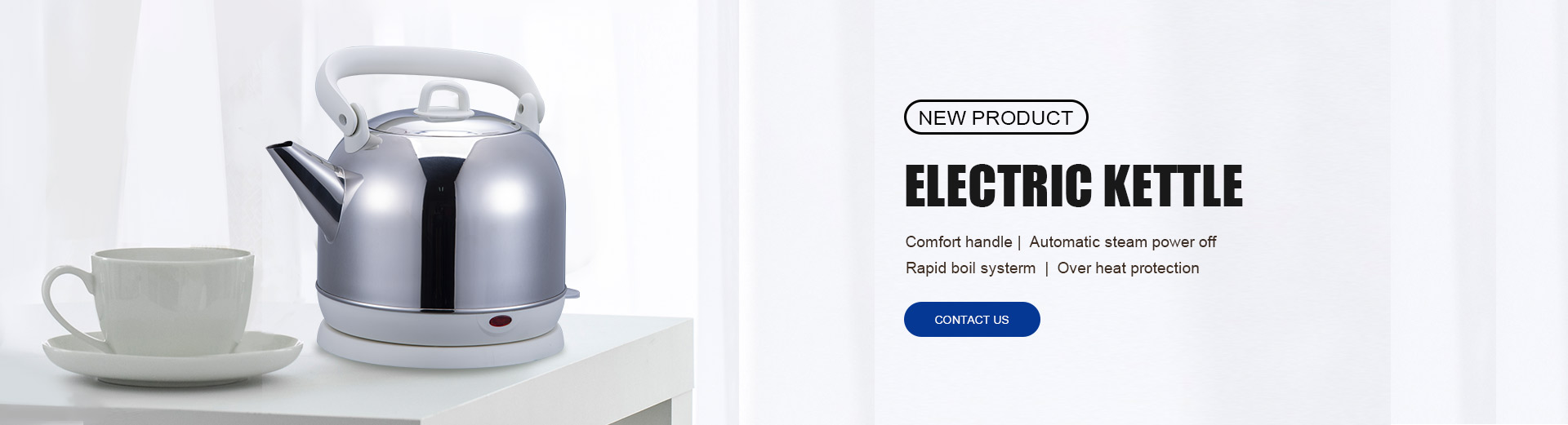
An electric kettle can sound loud because water moves rapidly when it is heated by a high-power heating plate. Many electric kettles are rated around 1500W to 2200W, so water temperature rises quickly. As water approaches about 100°C at normal atmospheric pressure, steam bubbles form, collapse, and create strong rumbling noise. Mineral scale can make the sound louder because it causes uneven heat transfer.
| Cause | What It Means |
|---|---|
| High wattage | Faster boiling with stronger sound |
| Mineral scale | Uneven heating and extra noise |
| Thin body wall | More sound transmission |
| Loose lid | Vibration during boiling |
| Poor base contact | Buzzing or shaking sound |
Why Is Electric kettle So Loud is also a manufacturing quality question. A manufacturer can control heating plate fitting, body thickness, lid structure, base connection, thermostat matching, stainless steel forming, plastic molding, and assembly accuracy. A trader may offer finished models, but usually has limited control over internal structure and repeated batch consistency.
SHENBAO focuses on electric kettle manufacturing, including stainless steel electric kettle, double wall anti-hot kettle, plastic kettle, and water kettle products. Our work covers product development, material selection, assembly, inspection, and export supply for Europe, Southeast Asia, the Middle East, South America, and other markets.
During the OEM / ODM process, buyers should confirm capacity, wattage, voltage, plug type, body material, heating plate, thermostat, lid design, handle structure, base stability, logo method, packaging, user manual, carton marks, and inspection standards before sample approval.
Manufacturing process overview includes material inspection, plastic injection, stainless steel forming, heating plate assembly, thermostat installation, boiling test, noise observation, leakage test, appearance checking, packaging, and final inspection.
Quality control checkpoints should cover boiling noise, base connection stability, lid fitting, body balance, heating plate contact, automatic shut-off, dry-boil protection, handle strength, plastic odor, leakage control, and carton protection.
For export market compliance, buyers should review voltage version, plug type, food-contact material requirements, safety documents, warning labels, packaging language, and destination market standards. Better structure control helps reduce abnormal noise complaints and supports smoother repeat orders.