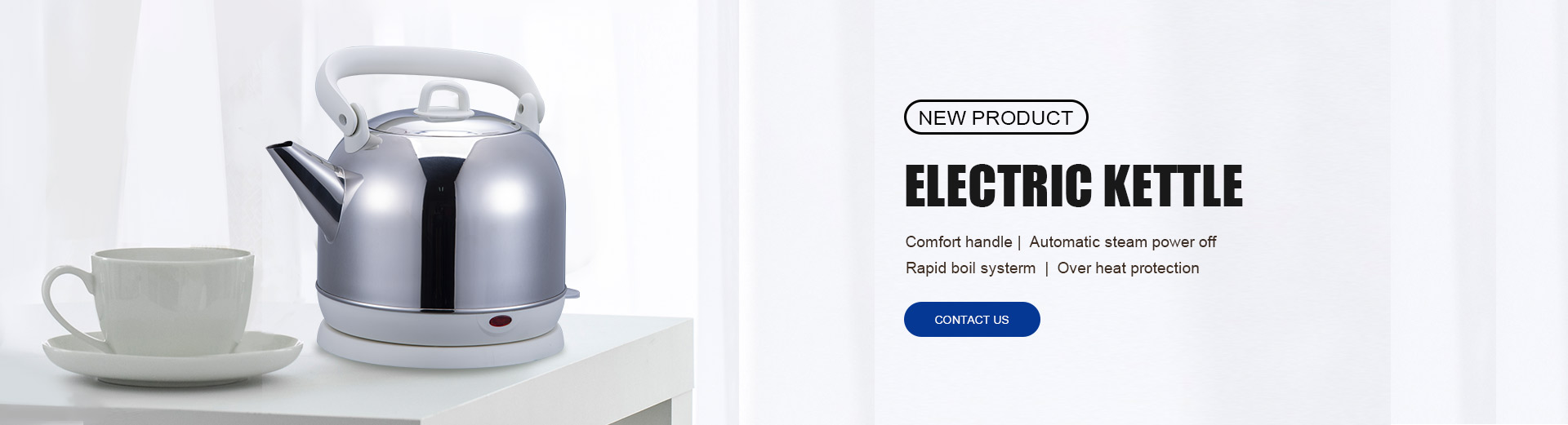
An electric kettle is one of the most commonly used small kitchen appliances for heating water quickly and safely. It is widely used in homes, offices, hotels, dormitories, and hospitality environments. Most modern electric kettles operate between 1500W and 2200W, allowing water to reach boiling temperature much faster than many traditional heating methods. According to appliance efficiency studies, electric kettles can convert a high percentage of electrical energy directly into water heating, making them a practical solution for daily hot water preparation.
Using an electric kettle correctly helps improve safety, efficiency, and product lifespan.
| Step | Action |
|---|---|
| 1 | Fill water between minimum and maximum marks |
| 2 | Close the lid securely |
| 3 | Place the kettle on the power base |
| 4 | Connect power and switch on |
| 5 | Wait for automatic shut-off |
| 6 | Pour water carefully after boiling |
The minimum and maximum water marks are important because they help prevent dry boiling and overflowing. Most electric kettles include automatic shut-off and dry-boil protection to improve user safety.
Many users focus only on appearance when selecting an electric kettle. However, performance depends on several engineering factors, including heating plate efficiency, thermostat accuracy, body material, insulation design, and sealing structure.
A well-designed stainless steel electric kettle can provide stable heating, lower maintenance requirements, and longer service life. Double-wall anti-hot kettles also help reduce external surface temperatures, improving safety during operation.
When sourcing electric kettles, understanding the difference between a manufacturer and a trader is important.
A manufacturer controls product development, mold production, material sourcing, assembly, testing, and quality management. This allows better control over heating performance, safety systems, material standards, and batch consistency.
A trader may offer a wide product selection, but often has limited control over internal components, manufacturing processes, and long-term product stability.
For projects requiring repeat orders, custom branding, and stable quality standards, direct factory cooperation usually provides stronger supply chain control.
For OEM and ODM electric kettle projects, buyers should evaluate the complete development process before production begins.
Important items include:
Capacity selection
Wattage configuration
Voltage requirements
Plug standards
Body material
Thermostat specification
Color customization
Logo application
Packaging design
User manual preparation
Carton marking requirements
Clear communication during sample development helps reduce production risks and improves delivery efficiency.
A professional electric kettle factory typically follows several production stages:
Raw material inspection
Plastic injection molding
Stainless steel body forming
Heating plate assembly
Thermostat installation
Wiring and electrical assembly
Boiling performance testing
Leakage testing
Appearance inspection
Packaging and final verification
Each stage directly affects product safety, durability, and user experience.
Quality control is essential for bulk electric kettle supply.
Key inspection areas include:
Heating efficiency
Automatic shut-off accuracy
Dry-boil protection
Electrical insulation
Leakage prevention
Lid fitting accuracy
Handle strength
Base connection stability
Surface finish quality
Carton drop resistance
Comprehensive testing helps reduce warranty claims and improves long-term product reliability.
Electric kettle exports must comply with different market requirements.
Buyers should verify:
Voltage compatibility
Plug configuration
Electrical safety standards
Food-contact material compliance
Product labeling requirements
Warning instructions
Packaging language requirements
Import certification requirements
Proper compliance preparation can help avoid customs delays and market entry issues.
Learning how to use an electric kettle correctly is only part of the equation. Product quality, manufacturing control, material standards, and compliance management all influence long-term performance. A reliable manufacturing partner can help ensure that every electric kettle delivers safe operation, efficient heating, and consistent quality from sampling through mass production.