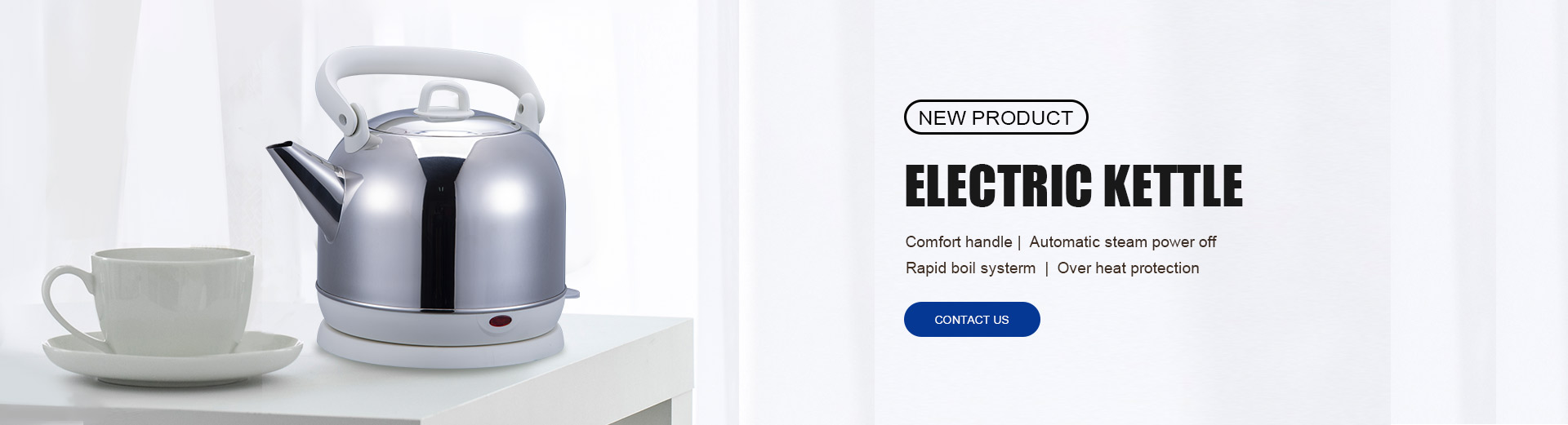
An electric kettle automatically switching off is usually related to safety protection, temperature control, power connection, or internal component performance. Automatic shut-off is an important function designed to protect users and improve appliance safety, but frequent switching off before boiling may indicate a product or usage issue.
From a manufacturer’s perspective, electric kettle shutdown behavior is closely connected with product engineering, heating system design, thermostat accuracy, and manufacturing quality. A reliable electric kettle should stop at the correct time while maintaining stable heating performance.
According to electrical appliance safety standards, automatic protection systems are essential for preventing overheating and abnormal operation. For electric kettle manufacturers, safety features must be developed together with efficient heating technology and strict quality control.
Several factors may cause an electric kettle to stop repeatedly.
| Possible Cause | Impact |
|---|---|
| Low water level | Activates dry boil protection |
| Scale buildup | Affects temperature detection |
| Faulty thermostat | Stops heating too early |
| Poor electrical connection | Interrupts power supply |
| Component aging | Reduces operating stability |
Understanding these causes helps identify whether the issue comes from maintenance, operating conditions, or product performance.
Modern electric kettles are designed with multiple safety functions to reduce risks during operation.
Common protection features include:
When water reaches boiling temperature, steam activates the control system and automatically stops heating.
If there is insufficient water inside the kettle, the system stops operation to prevent overheating.
A thermal fuse provides additional protection when abnormal temperatures occur.
SHENBAO specializes in research, development, manufacturing, and sales of stainless steel electric kettles, double wall anti-hot kettles, plastic kettles, and other stainless steel products. The company develops electric kettles with automatic steam power off, dry boil power off, and high temperature fuse protection systems. (SHENBAO)
For users requiring reliable safety performance, the Stainless Steel Kettle with Automatic Shut-off provides automatic control functions designed for safe daily operation.
An electric kettle that switches off at the correct time requires precise coordination between different components.
Important design factors include:
Accurate temperature detection
Stable heating elements
Reliable electrical components
Durable materials
Consistent assembly quality
Manufacturers must carefully test each component because small differences in thermostat response or electrical connections can affect product performance.
Material selection influences durability, safety, and long-term operation.
Common materials include:
| Material | Purpose |
|---|---|
| Stainless steel | Provides durability and corrosion resistance |
| Food-grade materials | Supports safe water contact |
| Heat-resistant plastic | Improves insulation protection |
| Electrical components | Controls heating and safety |
For export markets, manufacturers must ensure materials meet relevant safety and compliance requirements.
SHENBAO implements ISO9001 quality management systems, and its products have obtained CE, CB, GS, ROHS, and LFGB certifications to support different international markets. (SHENBAO)
Stable electric kettle performance depends on strict control throughout manufacturing.
The production process usually includes:
Product design
Mold development
Stainless steel processing
Metal stamping
Injection molding
Component assembly
Electrical testing
Final inspection
Quality control checkpoints include:
| Inspection Stage | Purpose |
|---|---|
| Material inspection | Confirm raw material quality |
| Heating system testing | Verify heating stability |
| Assembly inspection | Ensure component accuracy |
| Electrical safety testing | Check protection functions |
| Final inspection | Maintain product consistency |
SHENBAO has comprehensive production capabilities including mold design and manufacturing, injection molding, metal stamping, and assembly, allowing better control over product quality and production efficiency. (SHENBAO)
Different markets require different kettle capacities, designs, electrical specifications, and safety functions.
Working with a manufacturer allows customized development through:
Product design
Engineering optimization
Prototype testing
Function improvement
Mass production
The OEM and ODM process usually includes:
Requirement analysis
Product development
Sample confirmation
Performance testing
Production launch
SHENBAO provides customized electric kettle solutions according to customer requirements, supporting different product designs and manufacturing needs. (SHENBAO)
For large-volume orders, stable operation and consistent quality are essential.
Important evaluation factors include:
| Evaluation Item | Purpose |
|---|---|
| Factory capability | Support production demand |
| Quality management | Maintain product consistency |
| Testing equipment | Verify safety performance |
| Certification support | Meet market standards |
| Export experience | Support international delivery |
SHENBAO products are exported to Europe, Southeast Asia, the Middle East, South America, and other overseas markets, supporting different regional requirements. (SHENBAO)
Electric kettles are electrical appliances that require strict compliance management.
Manufacturers need to consider:
Electrical safety standards
Voltage compatibility
Material requirements
Certification documentation
Packaging standards
Professional manufacturers manage these requirements from product development through mass production.
An electric kettle switching off is often caused by its built-in safety system, but frequent shutdown problems may indicate issues with maintenance, components, or product design.
Reliable electric kettles require accurate temperature control, durable materials, strict testing, and professional manufacturing processes.
With integrated R&D, manufacturing capabilities, quality management systems, and OEM/ODM experience, SHENBAO provides stainless steel electric kettle solutions designed for global markets.