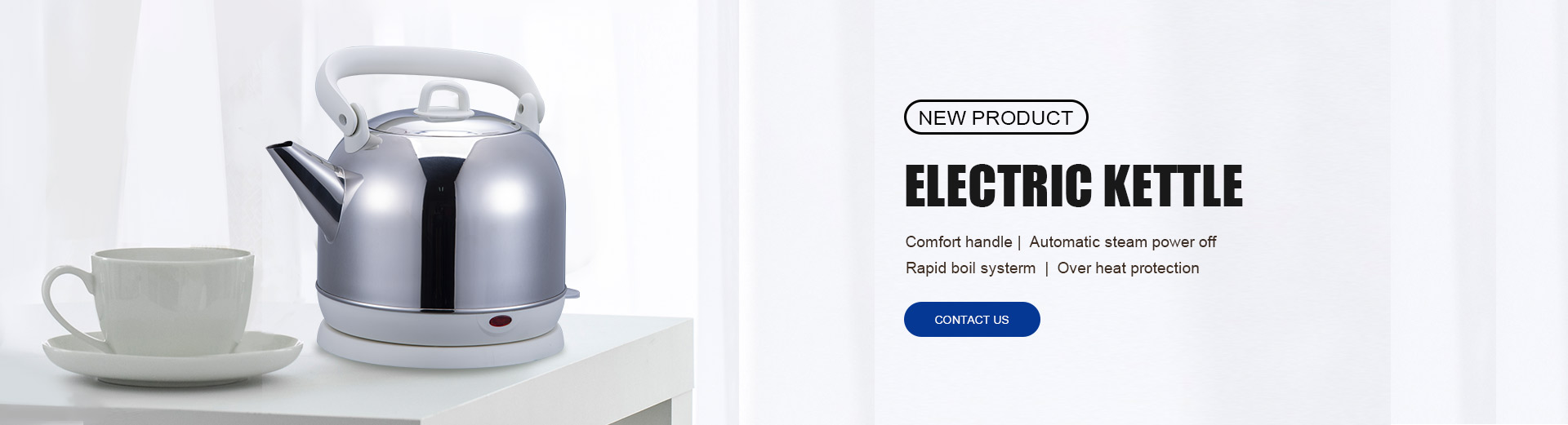
Minimum order quantity, also known as MOQ, is an important consideration when developing a custom electric kettle project. The MOQ is not only determined by production volume but also affected by customization requirements, material purchasing, tooling investment, manufacturing processes, and quality control needs.
For an electric kettle manufacturer, setting a reasonable MOQ helps balance production efficiency, material costs, and product consistency. A professional factory should provide flexible solutions based on product design, customization level, and project requirements instead of applying the same MOQ standard to every order.
SHENBAO specializes in the research, development, and manufacturing of stainless steel electric kettles, double wall anti-hot kettles, plastic kettles, and other stainless steel products. With integrated capabilities including mold design and manufacturing, injection molding, metal stamping, assembly, and quality management, SHENBAO supports OEM and ODM electric kettle production for different market needs.
MOQ refers to the minimum quantity a manufacturer requires for one production order.
In electric kettle manufacturing, MOQ is influenced by:
| Factor | Impact on MOQ |
|---|---|
| Product design | New structures usually require higher quantities |
| Material purchasing | Raw materials often require minimum purchase volumes |
| Mold investment | New molds need production volume to recover costs |
| Customization level | More customization increases preparation requirements |
| Production efficiency | Larger batches improve manufacturing efficiency |
For example, an existing kettle model with simple logo customization may require a lower MOQ, while a completely new design with customized molds and structures usually requires a higher MOQ.
Custom electric kettles involve multiple manufacturing processes.
Before production begins, factories need to prepare:
Stainless steel materials
Plastic components
Electrical parts
Packaging materials
Production tooling
Quality inspection plans
Each preparation stage creates initial costs.
A manufacturer needs sufficient order quantity to ensure:
| Production Requirement | Reason |
|---|---|
| Material preparation | Suppliers often require minimum purchase quantities |
| Mold production | Tooling costs need to be distributed across products |
| Production setup | Machine adjustment and labor preparation require resources |
| Quality testing | Testing costs need to be included in production planning |
This is why customized electric kettle MOQ is usually higher than standard products.
The customization model directly affects MOQ requirements.
| Manufacturing Model | Typical MOQ Situation |
|---|---|
| Existing model with logo | Lower MOQ |
| Existing model with packaging customization | Medium MOQ |
| Appearance customization | Higher MOQ |
| New product development | Higher MOQ |
OEM projects usually require more customization because the product is developed according to specific requirements.
ODM projects may have lower development complexity because manufacturers can use existing designs and production experience.
A factory that supports both OEM and ODM services can provide different solutions depending on project goals. ODM manufacturing often helps reduce initial development investment by using existing production resources. (中国准亿)
MOQ is not fixed. Manufacturers usually evaluate several project factors.
A simple modification requires fewer production preparations.
Examples:
| Customization Type | MOQ Impact |
|---|---|
| Logo printing | Lower impact |
| Color adjustment | Medium impact |
| New handle design | Higher impact |
| New kettle structure | Higher impact |
Complex designs require additional engineering, tooling, and testing.
Material requirements can influence MOQ.
For stainless steel electric kettles, manufacturers consider:
Stainless steel grade
Thickness requirements
Surface finishing
Component specifications
Common materials include:
| Material | Application |
|---|---|
| 304 Stainless Steel | Durable kettle bodies |
| Double Wall Stainless Steel | Heat insulation structures |
| Food Grade Plastic | Handles and external parts |
| Glass | Transparent kettle designs |
Large-scale material purchasing usually improves cost efficiency but requires higher order quantities.
A professional factory evaluates MOQ based on production feasibility.
The evaluation usually includes:
| Evaluation Area | Key Consideration |
|---|---|
| Product type | Existing model or new development |
| Tooling | New mold requirement |
| Materials | Minimum purchasing quantity |
| Production capacity | Factory scheduling |
| Quality requirements | Testing standards |
| Packaging | Customized packaging quantity |
This project evaluation helps determine a realistic MOQ instead of simply setting a fixed number.
Some customers need to test a market before large-scale production.
In this situation, manufacturers may provide options such as:
Existing model customization
Small sample production
Pilot orders
Limited customization
A common approach is to start with an existing product platform and customize:
Logo
Packaging
Color
Selected functions
After market validation, production can move toward larger customized orders.
SHENBAO provides different electric kettle solutions including Stainless Steel Kettles, double wall kettles, and other product options that can support different project development stages.
For large-volume electric kettle orders, manufacturers focus on production stability.
Before confirming bulk production, factories usually evaluate:
| Supply Factor | Importance |
|---|---|
| Production capacity | Ensures delivery ability |
| Material supply | Maintains production continuity |
| Quality system | Keeps product consistency |
| Manufacturing process | Improves efficiency |
| Packaging preparation | Protects products during shipment |
A reliable factory should have the ability to maintain the same quality standard from the first batch to repeated orders.
Quality control requirements also influence MOQ.
Electric kettles require multiple inspection stages because they combine electrical components, heating systems, and water contact materials.
A complete quality process includes:
| Inspection Stage | Testing Focus |
|---|---|
| Raw materials | Verify specifications |
| Component inspection | Check accuracy |
| Assembly inspection | Confirm installation |
| Functional testing | Verify operation |
| Final inspection | Approve shipment |
SHENBAO operates ISO9001 quality management systems and its products have obtained certifications including CE, CB, GS, ROHS, and LFGB according to different market requirements.
International markets may require different compliance standards.
Before production, manufacturers need to confirm:
Destination country
Voltage requirements
Plug standards
Safety certifications
Packaging requirements
Different certification and testing requirements may increase preparation work, especially for new product development.
SHENBAO products are exported to Europe, Southeast Asia, the Middle East, South America, and other overseas markets, supporting different international market requirements.
When discussing MOQ, direct communication with a manufacturer provides better understanding of production requirements.
| Comparison | Manufacturer | Trader |
|---|---|---|
| MOQ explanation | Based on production factors | Depends on supplier information |
| Technical support | Direct engineering communication | Limited technical involvement |
| Customization | More flexible | Depends on factory resources |
| Cost analysis | Production-based | May include additional service costs |
A manufacturer can explain why a specific MOQ is required and suggest ways to optimize production costs.
Before starting a project, confirm:
| Category | Information Needed |
|---|---|
| Product model | Existing or new design |
| Customization | Logo, color, structure |
| Materials | Stainless steel and components |
| Quantity | Expected order volume |
| Packaging | Customized requirements |
| Certification | Target market standards |
| Delivery | Production schedule |
The right MOQ depends on product goals, customization level, and production planning.
A lower MOQ may be suitable for market testing, while larger quantities usually provide better production efficiency and cost advantages.
A professional electric kettle manufacturer should help evaluate the best production strategy based on product requirements, quality expectations, and long-term supply plans.
With integrated manufacturing capabilities covering mold development, injection molding, metal stamping, assembly, and quality control, SHENBAO provides OEM and ODM electric kettle manufacturing solutions from product development to bulk production.