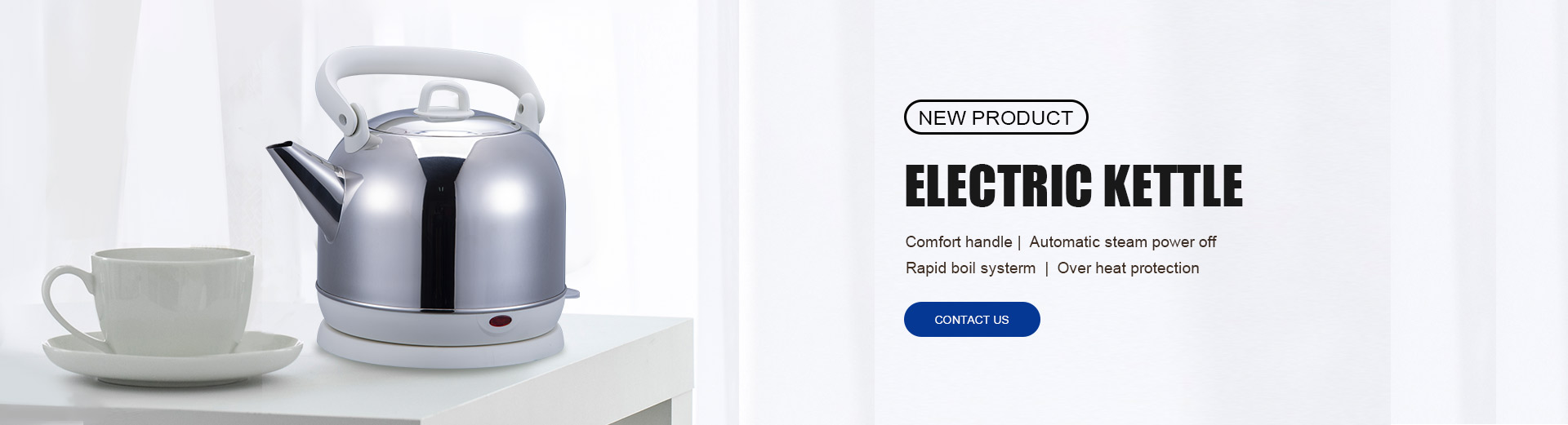
Developing a customized electric kettle requires a complete process that connects product ideas, engineering design, manufacturing technology, and quality control. A professional OEM electric kettle manufacturer does not simply produce finished products but helps transform concepts into reliable products ready for global markets.
From the first design discussion to mass production, every stage affects product appearance, functionality, cost, and delivery efficiency. A complete OEM process usually includes product evaluation, engineering development, prototype testing, manufacturing preparation, quality inspection, and final production.
SHENBAO focuses on electric kettle research, development, and manufacturing, providing OEM and ODM solutions for Stainless Steel Kettles, double wall anti-hot kettles, plastic kettles, and other kettle products. With capabilities covering mold development, injection molding, metal stamping, assembly, and quality management, SHENBAO supports customized electric kettle projects from concept to production.
Every OEM electric kettle project begins with a clear product concept.
Before manufacturing starts, the factory needs detailed information including:
| Project Information | Manufacturing Purpose |
|---|---|
| Product positioning | Defines design direction |
| Target market | Determines certification requirements |
| Capacity | Affects structure and materials |
| Functions | Determines internal components |
| Appearance style | Guides product design |
For example, a premium household kettle may focus on stainless steel appearance, temperature control, and insulation performance, while a commercial kettle may require larger capacity and stronger durability.
A professional manufacturer evaluates whether the idea is technically achievable and provides suggestions to optimize the design.
After confirming the product concept, the next stage is engineering development.
The factory team evaluates:
Product structure
Material selection
Component compatibility
Manufacturing feasibility
Production cost
| Engineering Stage | Main Objective |
|---|---|
| 3D design | Create product structure |
| Engineering review | Identify production risks |
| Material evaluation | Confirm suitable materials |
| Prototype preparation | Verify design performance |
OEM manufacturing requires close cooperation between the brand and factory because customized products usually involve new structures or specific requirements.
Unlike a trader that mainly coordinates suppliers, a direct manufacturer can provide engineering support and production optimization during the development stage.
Before mass production, manufacturers usually create prototypes to verify the design.
The prototype stage helps confirm:
| Testing Area | Purpose |
|---|---|
| Appearance | Check design details |
| Structure | Verify assembly accuracy |
| Function | Test heating performance |
| Safety | Confirm protection features |
| User experience | Improve product usability |
electric kettles require special attention because they combine electrical components, heating systems, and water contact materials.
Common tests include:
Boiling performance testing
Leakage testing
Temperature control testing
Dry boil protection testing
Electrical safety testing
Early testing helps identify problems before bulk production and reduces manufacturing risks.
For customized electric kettles, mold development is an important manufacturing stage.
Depending on product design, factories may need molds for:
Kettle body components
Handles
Lids
Plastic parts
Structural accessories
A professional manufacturer manages mold accuracy because it directly affects:
| Mold Quality Factor | Production Impact |
|---|---|
| Precision | Product consistency |
| Durability | Long-term production stability |
| Design accuracy | Appearance quality |
| Maintenance | Production efficiency |
SHENBAO integrates mold design and manufacturing capabilities, allowing better control over customized product development and production preparation.
After prototype approval, production moves into the manufacturing stage.
A typical OEM electric kettle production process includes:
| Manufacturing Process | Quality Focus |
|---|---|
| Material preparation | Confirm material standards |
| Metal stamping | Maintain shape accuracy |
| Injection molding | Control plastic component quality |
| Surface treatment | Ensure appearance consistency |
| Assembly | Ensure component matching |
| Final testing | Verify product performance |
For stainless steel electric kettles, material selection is especially important. Stainless steel containing at least 10.5% chromium provides corrosion resistance through a protective passive layer, making it widely used in applications requiring durability and hygiene.
Common materials include:
304 stainless steel
Food grade plastic
Glass components
Heat-resistant silicone parts
Quality control is a key part of OEM electric kettle manufacturing.
A reliable factory should monitor quality from incoming materials to final shipment.
| Quality Control Stage | Inspection Content |
|---|---|
| Incoming inspection | Material verification |
| Production inspection | Process consistency |
| Assembly inspection | Component installation |
| Functional testing | Product performance |
| Final inspection | Shipment approval |
SHENBAO applies quality management systems and focuses on production control, functional testing, and product reliability to maintain consistent quality during mass manufacturing.
Electric kettle products sold in international markets must meet different safety and compliance requirements.
Before shipment, manufacturers should confirm:
Destination market
Electrical standards
Certification requirements
Packaging regulations
Product documentation
Common certifications may include:
| Certification | Market Purpose |
|---|---|
| CE | European safety requirements |
| CB | International electrical safety |
| GS | Product safety evaluation |
| ROHS | Material compliance |
| LFGB | Food contact safety |
A manufacturer with export experience can help reduce compliance risks and improve project efficiency.
After approval, the product enters mass production.
During bulk supply, manufacturers focus on:
Production scheduling
Raw material availability
Quality consistency
Delivery management
Packaging preparation
A complete manufacturing system helps ensure that the first production batch and future repeat orders maintain the same quality standards.
OEM and ODM are two common approaches for electric kettle customization.
| Comparison | OEM | ODM |
|---|---|---|
| Design source | Customer provides design | Manufacturer provides design support |
| Customization level | Higher | Moderate |
| Development time | Longer | Faster |
| Engineering involvement | Customer-led | Factory-supported |
OEM is suitable for unique product concepts requiring full customization. ODM is suitable for projects that need faster development using existing manufacturing experience.
Before starting production, confirm:
| Category | Required Information |
|---|---|
| Product concept | Usage and market positioning |
| Design | Drawings or reference samples |
| Materials | Stainless steel and component standards |
| Functions | Heating, safety, and control features |
| Certification | Target market requirements |
| Quantity | Bulk production plan |
| Packaging | Brand requirements |
OEM electric kettle customization is a complete development process that combines design, engineering, manufacturing, and quality management.
Choosing a capable electric kettle manufacturer allows projects to move smoothly from initial ideas to finished products. A factory with integrated production capabilities can provide better control over product quality, customization flexibility, and supply stability.
With experience in mold manufacturing, injection molding, metal stamping, assembly, and quality management, SHENBAO provides OEM and ODM electric kettle solutions for global markets.