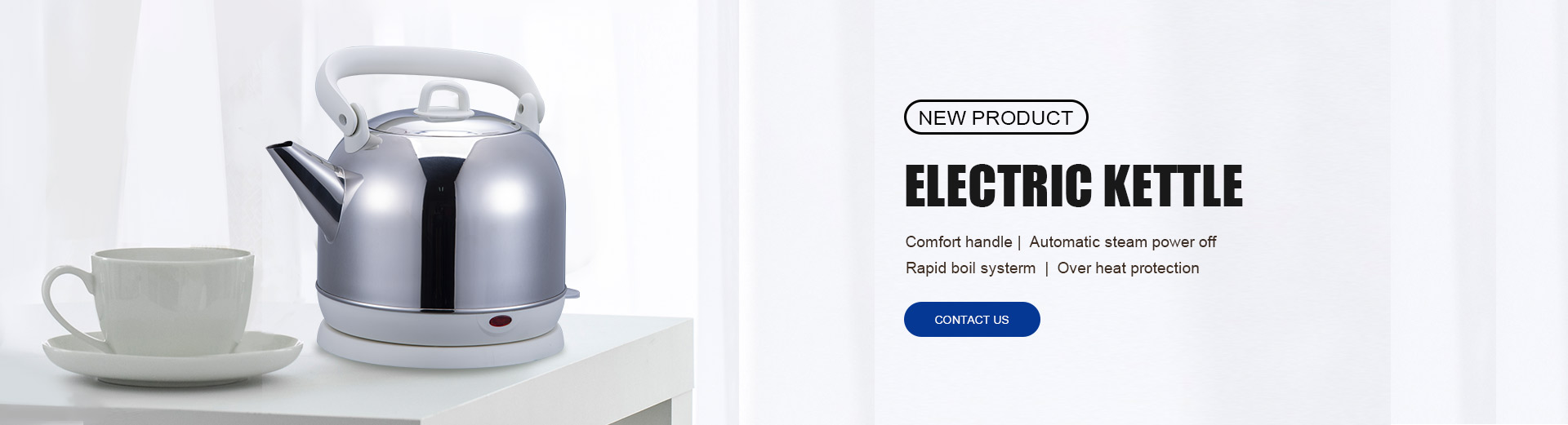
When developing a new electric kettle product, choosing between OEM and ODM manufacturing is an important decision. Although both models involve cooperation with an electric kettle manufacturer, they have different approaches in product design, development responsibility, customization level, investment requirements, and production management.
Understanding the difference between OEM and ODM helps companies choose the right development strategy based on product goals, market positioning, and customization requirements.
SHENBAO specializes in the research, development, and manufacturing of stainless steel electric kettles, double wall anti-hot kettles, plastic kettles, and other stainless steel products. The company provides customized manufacturing solutions with capabilities including mold design and manufacturing, injection molding, metal stamping, assembly, and quality management. (SHENBAO)
OEM means Original Equipment Manufacturing. Under an OEM model, the product requirements, design concepts, or technical specifications are provided by the customer, while the manufacturer is responsible for turning these requirements into finished products.
In an OEM electric kettle project, the manufacturer mainly focuses on:
Engineering evaluation
Production preparation
Material sourcing
Manufacturing process control
Quality inspection
Bulk production
OEM is suitable for projects that require a unique product design or specific brand positioning.
| OEM Project Element | Manufacturer Responsibility |
|---|---|
| Technical drawings | Production feasibility review |
| Product structure | Engineering optimization |
| Materials | Production according to requirements |
| Manufacturing | Complete production process |
| Quality control | Ensure consistency |
For example, a brand developing a unique Stainless Steel Kettle with a special handle structure, exclusive appearance, or customized function may choose the OEM model.
ODM means Original Design Manufacturing. In an ODM project, the manufacturer provides existing product designs or development solutions, and customization is made based on available production experience.
ODM manufacturing usually includes:
Existing product selection
Design adjustment
Function improvement
Logo customization
Packaging customization
| ODM Project Element | Manufacturing Advantage |
|---|---|
| Existing design | Faster development |
| Mature structure | Lower production risk |
| Existing tooling | Reduced initial investment |
| Factory experience | Better technical support |
ODM is suitable for projects that need faster product development and efficient market entry.
SHENBAO provides different electric kettle solutions including stainless steel kettles, double wall kettles, Glass Kettles, and traditional large kettles with OEM and ODM support. (SHENBAO)
Although OEM and ODM both rely on professional manufacturers, the development process is different.
| Comparison | OEM Manufacturing | ODM Manufacturing |
|---|---|---|
| Product design | Provided by customer | Provided by manufacturer |
| Customization level | Higher | Moderate |
| Development time | Longer | Shorter |
| Engineering involvement | Customer and factory cooperation | Factory-led development |
| Tooling requirement | Usually higher | May already exist |
| Product uniqueness | Higher | Based on existing solutions |
OEM focuses on creating a product according to specific requirements, while ODM focuses on improving and customizing existing manufacturing solutions.
The biggest difference between OEM and ODM is the product development process.
A typical OEM process includes:
Product concept confirmation
Technical drawing review
Engineering evaluation
Mold development
Prototype production
Product testing
Mass production
OEM requires more communication during the early stages because the product may be completely new.
A typical ODM process includes:
Existing product evaluation
Design customization
Sample confirmation
Branding adjustment
Production preparation
Quality inspection
ODM reduces development time because the manufacturer already has production experience and technical solutions.
The manufacturing model also influences project investment.
| Cost Factor | OEM | ODM |
|---|---|---|
| Product design | Higher investment | Lower investment |
| Mold development | Often required | May already exist |
| Engineering cost | Higher | Lower |
| Development cycle | Longer | Shorter |
| Customization flexibility | Higher | Moderate |
OEM products usually require more investment because new structures, molds, and testing processes may be required.
ODM products can reduce initial costs by using existing designs and manufacturing experience.
Regardless of choosing OEM or ODM, material standards remain important.
Common materials used in electric kettle manufacturing include:
| Material | Features |
|---|---|
| 304 Stainless Steel | Durable and corrosion resistant |
| Double Wall Stainless Steel | Improved insulation |
| Food Grade Plastic | Lightweight design |
| Glass | Transparent appearance |
Manufacturers evaluate:
Material safety
Product durability
Heat resistance
Surface quality
Food contact requirements
For stainless steel electric kettles, material selection affects not only appearance but also long-term performance.
SHENBAO focuses on stainless steel electric kettle production and applies strict material and production management throughout the manufacturing process. (SHENBAO)
Both OEM and ODM products require controlled manufacturing processes.
A complete electric kettle production process includes:
| Production Stage | Quality Focus |
|---|---|
| Material preparation | Confirm specifications |
| Metal stamping | Maintain shape accuracy |
| Injection molding | Control plastic components |
| Surface treatment | Ensure appearance quality |
| Assembly | Match components correctly |
| Final testing | Verify safety and performance |
SHENBAO has comprehensive processing capabilities covering mold design and manufacturing, injection molding, metal stamping, and assembly, allowing better control of customized production projects. (SHENBAO)
Quality control is essential for both manufacturing models.
Electric kettles require inspection because they combine electrical components, heating systems, and water-contact materials.
Important quality checkpoints include:
| Inspection Stage | Testing Purpose |
|---|---|
| Incoming materials | Verify quality standards |
| Prototype testing | Confirm product design |
| Production inspection | Maintain consistency |
| Functional testing | Check heating performance |
| Final inspection | Approve shipment |
SHENBAO implements ISO9001 quality management systems, and its products have obtained certifications including CE, CB, GS, ROHS, and LFGB according to different market requirements. (SHENBAO)
For international markets, OEM and ODM electric kettles must meet different compliance requirements.
Before production, manufacturers should confirm:
Destination market
Voltage requirements
Plug standards
Certification requirements
Packaging regulations
SHENBAO products have been exported to Europe, Southeast Asia, the Middle East, South America, and other overseas markets, with experience supporting different export requirements. (SHENBAO)
The difference between a manufacturer and trader is especially important for customized projects.
| Comparison | Manufacturer | Trader |
|---|---|---|
| Product development | Direct engineering support | Depends on suppliers |
| Customization | More flexible | Limited by factory resources |
| Quality control | Direct production management | Requires coordination |
| Technical communication | Faster response | Indirect communication |
| Production optimization | Available | Usually limited |
Working directly with a manufacturer provides better control over product development, production quality, and supply stability.
The right choice depends on project requirements.
| Requirement | Suitable Model |
|---|---|
| Unique product design | OEM |
| Faster product launch | ODM |
| Full design control | OEM |
| Lower development investment | ODM |
| Existing product improvement | ODM |
| Exclusive product structure | OEM |
Before starting production, confirm:
| Category | Required Information |
|---|---|
| Product concept | Application and target market |
| Design | Drawings or reference samples |
| Materials | Stainless steel and component standards |
| Functions | Heating and safety requirements |
| Quantity | Bulk production plan |
| Certification | Export requirements |
| Packaging | Brand specifications |
OEM and ODM are different paths toward product development. OEM provides stronger customization and control, while ODM provides faster development with lower complexity.
A capable electric kettle manufacturer should support both models with strong engineering ability, production experience, quality control systems, and export knowledge.
With integrated capabilities in mold manufacturing, injection molding, metal stamping, assembly, and quality management, SHENBAO provides OEM and ODM electric kettle manufacturing solutions for global markets.