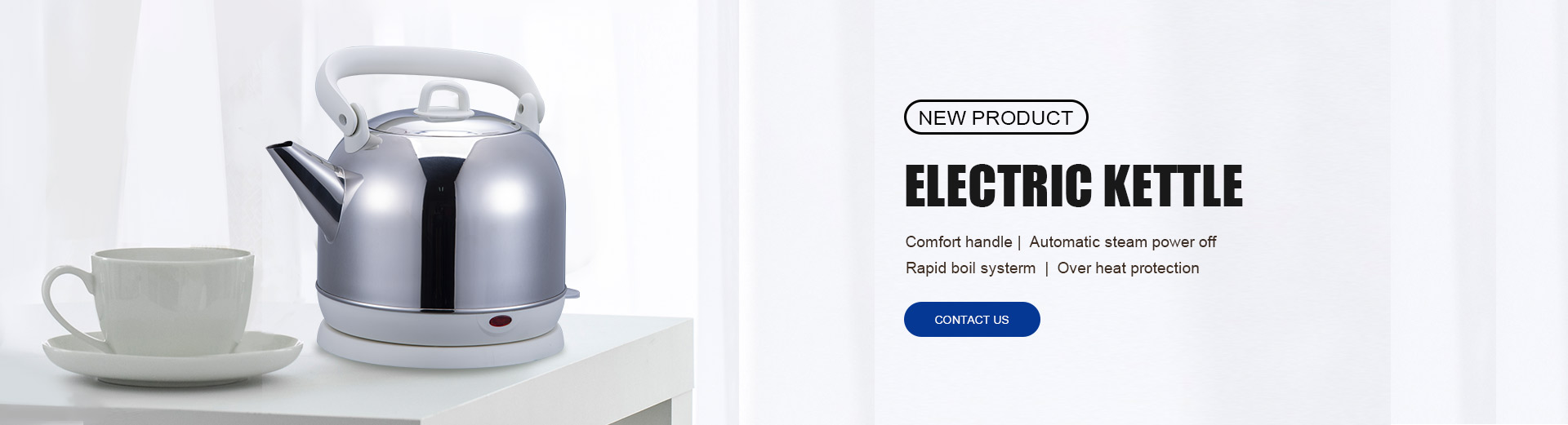
The development time of a custom electric kettle depends on product complexity, customization requirements, engineering workload, testing procedures, and production preparation. Unlike standard products, customized kettles require multiple stages from concept evaluation and prototype development to tooling, testing, and mass production.
A professional electric kettle manufacturer should provide a structured development process to control project progress, reduce risks, and ensure the final product meets quality and market requirements.
SHENBAO specializes in the research, development, and manufacturing of stainless steel electric kettles, double wall anti-hot kettles, plastic kettles, and other stainless steel products. With capabilities covering mold design and manufacturing, injection molding, metal stamping, assembly, and quality management, SHENBAO supports customized electric kettle projects from design concepts to bulk production. (SHENBAO)
A complete custom electric kettle development project usually includes several stages.
| Development Stage | Estimated Time | Main Activities |
|---|---|---|
| Product concept evaluation | 1–2 weeks | Requirement analysis and feasibility review |
| Design development | 2–4 weeks | Structure design and engineering optimization |
| Prototype production | 2–6 weeks | Sample manufacturing and testing |
| Mold development | 4–8 weeks | Tooling production and adjustment |
| Testing and approval | 2–4 weeks | Performance and safety verification |
| Mass production preparation | 2–4 weeks | Material preparation and production setup |
The actual timeline varies depending on whether the project uses an existing product platform or requires completely new development.
The first step in custom electric kettle development is defining the product requirements.
Before engineering begins, manufacturers need information such as:
| Requirement | Development Impact |
|---|---|
| Product style | Determines appearance direction |
| Capacity | Affects structure and material usage |
| Power and voltage | Determines electrical design |
| Functions | Influences component selection |
| Target market | Defines certification requirements |
Clear requirements help manufacturers evaluate production feasibility and provide suitable solutions.
For example, a simple customization based on an existing Stainless Steel Kettle may move quickly, while a completely new kettle design requires more engineering evaluation.
After confirming requirements, engineers begin product development.
This stage usually includes:
3D product design
Structural analysis
Component selection
Manufacturing feasibility review
Cost evaluation
A professional manufacturer does not only focus on appearance. Engineers also consider:
Assembly efficiency
Material usage
Product durability
Production difficulty
Future mass production stability
This step is important because design decisions directly affect manufacturing cost and delivery time.
Prototype production allows manufacturers to verify whether the design works before mass production.
The prototype process usually includes:
| Prototype Type | Purpose |
|---|---|
| Appearance sample | Check product design |
| Engineering sample | Verify structure |
| Functional sample | Test performance |
| Final approval sample | Confirm mass production version |
During testing, manufacturers evaluate:
Heating performance
Automatic shut-off function
Leakage prevention
Handle strength
Lid fitting
User operation experience
Electric kettles require special attention because they combine electrical components, heating systems, and water-contact materials.
For new electric kettle designs, mold development is one of the most time-consuming stages.
Mold preparation may include:
Kettle body molds
Plastic component molds
Handle molds
Lid structure molds
| Mold Factor | Influence |
|---|---|
| Product complexity | Affects development time |
| Structure accuracy | Influences product quality |
| Mold testing | Ensures stable production |
| Modification requirements | May extend timeline |
A manufacturer with in-house mold development capability can better control this stage.
SHENBAO has comprehensive processing capabilities including mold design and manufacturing, injection molding, metal stamping, and assembly, allowing customized products to move more efficiently from design to production. (SHENBAO)
Before mass production begins, manufacturers prepare materials and production processes.
Common electric kettle materials include:
| Material | Application |
|---|---|
| 304 Stainless Steel | Durable kettle body |
| Food Grade Plastic | Handle and external parts |
| Glass | Transparent kettle design |
| Silicone Components | Sealing and heat resistance |
Material preparation time depends on:
Material availability
Product quantity
Custom specifications
Supplier coordination
For export projects, manufacturers also need to confirm material compliance requirements before production.
Quality control is an essential part of the development timeline.
Electric kettle manufacturers typically conduct inspections throughout production.
| Quality Checkpoint | Purpose |
|---|---|
| Raw material inspection | Confirm material standards |
| Component inspection | Ensure consistency |
| Prototype testing | Verify design performance |
| Assembly inspection | Check product structure |
| Final testing | Confirm shipment quality |
Common tests include:
Heating test
Electrical safety test
Leakage test
Temperature control test
Dry boil protection test
SHENBAO implements ISO9001 quality management systems. Its products have obtained certifications including CE, CB, GS, ROHS, and LFGB according to different market requirements. (SHENBAO)
The customization model directly affects development speed.
| Development Model | Typical Timeline |
|---|---|
| Existing model with logo customization | Shorter |
| ODM with design modification | Medium |
| OEM with new structure | Longer |
ODM projects are usually faster because manufacturers already have:
Existing product structures
Production experience
Mature manufacturing processes
Customization may focus on:
Logo
Color
Packaging
Selected functions
OEM projects usually take longer because they may require:
New product design
New molds
Engineering testing
Multiple prototype adjustments
However, OEM provides higher customization flexibility and stronger product differentiation.
Several factors may affect the final schedule.
| Factor | Possible Impact |
|---|---|
| Complex product design | Requires more engineering work |
| New mold development | Extends preparation time |
| Multiple modifications | Increases testing cycles |
| Certification requirements | Adds verification time |
| Special materials | Requires additional sourcing |
Clear communication and complete project planning can help reduce unnecessary delays.
When developing customized electric kettles, choosing between a manufacturer and a trader affects project efficiency.
| Comparison | Manufacturer | Trader |
|---|---|---|
| Engineering support | Direct factory communication | Depends on suppliers |
| Design adjustment | Faster response | Requires coordination |
| Production control | Direct management | Indirect control |
| Quality improvement | Factory-level optimization | Limited technical influence |
A manufacturer with integrated production capability can respond faster during design changes and production adjustments.
Before starting development, prepare:
| Category | Required Information |
|---|---|
| Product concept | Application and target users |
| Design | Drawings or reference samples |
| Materials | Stainless steel and component requirements |
| Functions | Heating and safety features |
| Quantity | Production volume plan |
| Certification | Target market standards |
| Packaging | Brand requirements |
A faster development process depends on proper preparation.
Manufacturers recommend:
Providing clear product requirements
Confirming specifications early
Selecting suitable materials
Reducing unnecessary design changes
Completing sample approval quickly
Preparing certification requirements in advance
A well-planned project can significantly improve development efficiency.
The timeline of a custom electric kettle project depends on many factors, including design complexity, customization level, production technology, and quality requirements.
A capable electric kettle manufacturer should provide complete support from concept evaluation and engineering development to prototype testing, mass production, and export preparation.
With integrated capabilities in mold manufacturing, injection molding, metal stamping, assembly, and quality control, SHENBAO helps customers develop customized electric kettle products with stable quality and reliable production support.