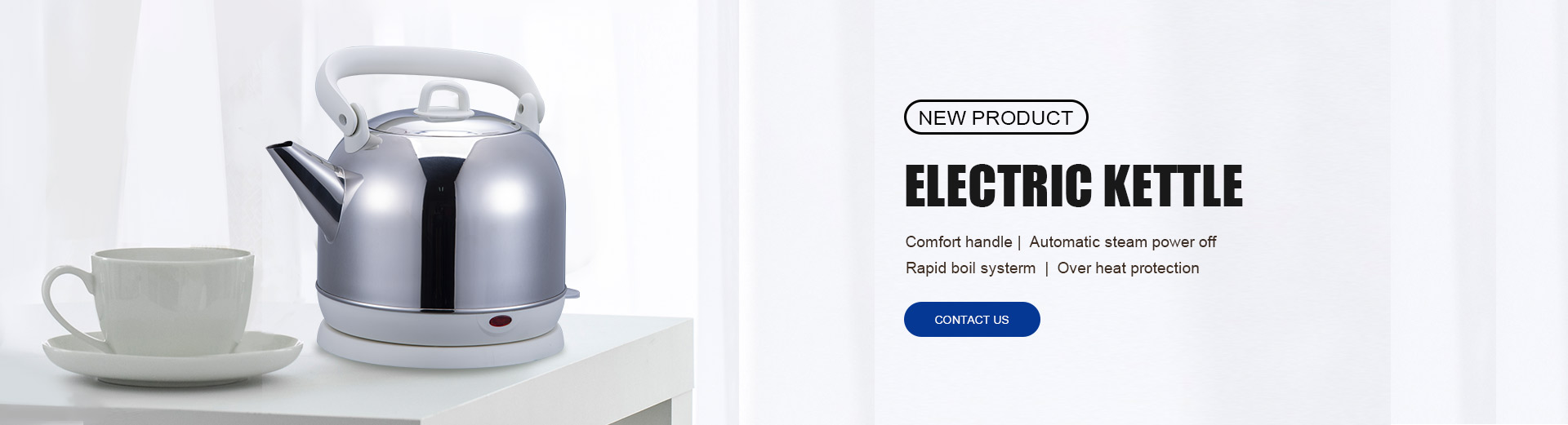
Choosing the right manufacturing model is an important decision when developing electric kettle products. Working with an OEM electric kettle manufacturer provides more than production capacity. It offers engineering support, customization flexibility, quality control, cost management, and long-term supply stability.
The global electric kettle market continues to grow as consumers demand convenient and energy-efficient kitchen appliances. Industry research shows that the global electric kettle market was valued at around USD 1.77 billion in 2023 and is expected to reach USD 2.58 billion by 2030, with increasing demand for customized and upgraded products.
SHENBAO specializes in electric kettle research, development, and manufacturing, providing OEM and ODM solutions for Stainless Steel Kettles, double wall anti-hot kettles, plastic kettles, and other stainless steel products. With integrated capabilities including mold design and manufacturing, injection molding, metal stamping, assembly, and quality management, SHENBAO supports complete product development from concept to mass production.
One of the biggest advantages of working with an OEM electric kettle manufacturer is direct technical communication.
Unlike a trader that mainly coordinates between different suppliers, an OEM factory has its own engineering team that understands:
Product structure
Material selection
Manufacturing feasibility
Production optimization
Quality requirements
During the development process, engineers can evaluate product concepts and provide suggestions before production begins.
| Engineering Support | Project Benefit |
|---|---|
| Structure evaluation | Reduce production risks |
| Material recommendation | Improve product performance |
| Design optimization | Lower manufacturing difficulty |
| Process improvement | Increase production efficiency |
This technical involvement helps transform product ideas into practical manufacturing solutions.
OEM manufacturing allows products to be developed according to specific requirements.
Customization options may include:
Kettle body design
Handle structure
Lid style
Capacity options
Surface finishing
Color customization
Packaging design
| Custom Element | OEM Advantage |
|---|---|
| Appearance | Create unique product identity |
| Structure | Adjust according to requirements |
| Functions | Add specific features |
| Materials | Select suitable solutions |
For brands looking to develop differentiated electric kettle products, OEM manufacturing provides more control over the final design.
A professional OEM electric kettle manufacturer manages the complete production process internally.
A typical manufacturing process includes:
| Production Stage | Manufacturing Control |
|---|---|
| Mold development | Ensure design accuracy |
| Metal stamping | Control stainless steel forming |
| Injection molding | Maintain component consistency |
| Surface treatment | Improve appearance quality |
| Assembly | Ensure proper installation |
| Final inspection | Verify product performance |
SHENBAO has integrated manufacturing capabilities covering mold development, injection molding, metal stamping, and assembly, allowing better control over production quality and delivery schedules.
electric kettles combine electrical systems, heating components, and water-contact materials, making quality control especially important.
An experienced OEM manufacturer establishes quality checkpoints throughout production.
| Quality Control Stage | Inspection Purpose |
|---|---|
| Raw material inspection | Confirm material standards |
| Component inspection | Check consistency |
| Prototype testing | Verify design performance |
| Assembly inspection | Ensure correct installation |
| Final testing | Confirm product safety |
SHENBAO applies ISO9001 quality management systems and supports different market certification requirements, including CE, CB, GS, ROHS, and LFGB according to product specifications.
OEM manufacturers provide professional suggestions on material selection.
Common electric kettle materials include:
| Material | Application |
|---|---|
| 304 Stainless Steel | Durable inner and outer structure |
| Double Wall Stainless Steel | Heat insulation performance |
| Food Grade Plastic | Handle and external parts |
| Glass | Transparent kettle design |
Stainless steel is widely used in kitchen appliances because chromium helps create a protective layer that improves corrosion resistance.
A factory with material experience can help balance:
Product durability
Safety requirements
Manufacturing cost
Market positioning
A capable OEM manufacturer usually supports both OEM and ODM projects.
OEM focuses on customized production based on specific requirements.
Advantages include:
Higher product uniqueness
Full design control
Customized structures
Exclusive solutions
ODM uses existing manufacturing experience with customization options.
Advantages include:
Faster development
Lower initial investment
Reduced production risks
| Comparison | OEM | ODM |
|---|---|---|
| Design source | Customer requirements | Factory solutions |
| Customization | High | Medium |
| Development speed | Slower | Faster |
| Engineering involvement | Strong | Factory-led |
Choosing the right development method helps optimize investment and production planning.
For large quantity orders, production stability is critical.
An OEM factory can better manage:
Raw material supply
Production scheduling
Quality consistency
Delivery planning
| Supply Capability | Importance |
|---|---|
| Production capacity | Supports larger orders |
| Process management | Maintains stability |
| Quality system | Reduces batch differences |
| Inventory planning | Improves delivery efficiency |
Direct cooperation with a manufacturer provides better visibility into production progress and supply planning.
Electric kettle products must meet different requirements in different regions.
An experienced OEM manufacturer can support:
Certification preparation
Electrical standards
Plug specifications
Packaging requirements
Shipping documentation
Common export requirements include:
| Requirement | Purpose |
|---|---|
| CE | European safety compliance |
| CB | International electrical standards |
| ROHS | Material restrictions |
| LFGB | Food contact safety |
| GS | Product safety evaluation |
Understanding export requirements during product development helps avoid delays during shipment.
Working directly with an OEM manufacturer reduces unnecessary communication steps.
| Cooperation Method | Communication Process |
|---|---|
| Direct manufacturer | Design → Engineering → Production |
| Trader model | Customer → Trader → Factory |
Direct factory cooperation provides:
Faster technical feedback
Clearer production information
Easier design adjustments
Better quality tracking
This is especially valuable for customized electric kettle projects where product details need frequent confirmation.
A strong OEM partner does not only manufacture products. It supports continuous product improvement.
Manufacturers can assist with:
New product development
Function upgrades
Material optimization
Cost improvement
Production efficiency
As kitchen appliance markets become more competitive, product innovation and manufacturing capability become important factors for long-term success.
Before starting cooperation, prepare:
| Category | Required Information |
|---|---|
| Product design | Drawings or reference samples |
| Functions | Heating and safety requirements |
| Materials | Required material standards |
| Quantity | Production volume plan |
| Certification | Target market requirements |
| Packaging | Brand specifications |
Working with an OEM electric kettle manufacturer provides advantages in customization, engineering support, production control, quality management, and supply stability.
A professional factory can support the complete process from product concept evaluation and prototype development to mass production and export compliance.
With integrated capabilities in mold manufacturing, injection molding, metal stamping, assembly, and quality management, SHENBAO provides reliable OEM and ODM electric kettle manufacturing solutions for global markets.