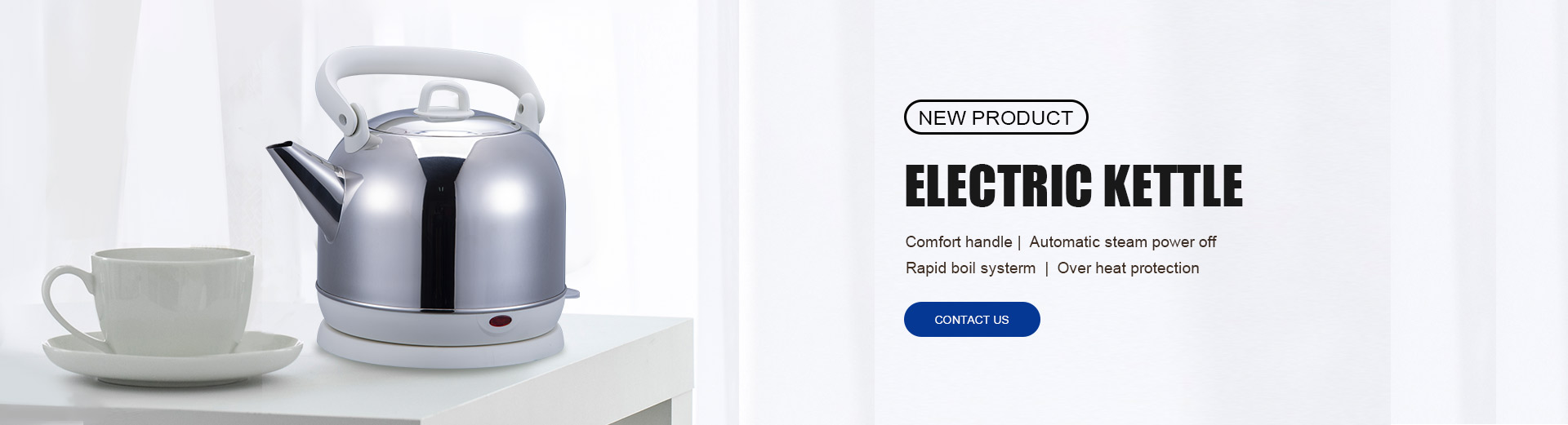
Private label electric kettle projects require more than adding a logo to an existing product. A successful private label solution needs support from product selection, design customization, manufacturing control, quality management, packaging development, and export compliance.
A professional electric kettle manufacturer helps transform an existing product platform or new product idea into a market-ready solution. By combining engineering experience and manufacturing capability, factories can help brands reduce development risks while maintaining product quality and supply stability.
SHENBAO specializes in the research, development, and manufacturing of stainless steel electric kettles, double wall anti-hot kettles, plastic kettles, and other stainless steel products. The company provides customization services with integrated capabilities including mold design and manufacturing, injection molding, metal stamping, assembly, and quality management. (SHENBAO)
A private label electric kettle project means using a manufacturer’s production capability to create products under a specific brand identity.
Unlike standard wholesale purchasing, private label projects usually involve customization in:
| Customization Area | Manufacturing Support |
|---|---|
| Brand logo | Product identification |
| Color design | Appearance customization |
| Packaging | Retail market preparation |
| Product functions | Feature adjustment |
| Product structure | Engineering optimization |
The level of customization depends on the project goal. Some projects require only branding changes, while others involve complete product redesign and development.
The first step in a private label project is choosing the right product direction.
Manufacturers usually help evaluate:
| Project Factor | Purpose |
|---|---|
| Target users | Define product functions |
| Market price level | Control production cost |
| Product style | Determine appearance direction |
| Capacity requirement | Select suitable structure |
| Sales market | Confirm compliance needs |
For example, a premium kitchen appliance line may focus on stainless steel appearance, temperature control, and elegant design, while hotel or commercial applications may prioritize larger capacity and durability.
SHENBAO provides multiple electric kettle solutions, including Stainless Steel Kettles, double wall kettles, Glass Kettles, and large capacity kettles to support different product positioning requirements. (SHENBAO)
A capable manufacturer provides technical support during the customization process.
Private label customization can include:
Logo application
Color adjustment
Surface finishing
Handle design
Packaging development
Functional improvements
| Design Element | Manufacturer Consideration |
|---|---|
| Product appearance | Production feasibility |
| Materials | Durability and safety |
| Components | Compatibility |
| Structure | Manufacturing efficiency |
| Packaging | Transportation protection |
A professional factory evaluates whether a design can be produced efficiently before moving into mass production.
This is an important difference between working with a manufacturer and a trader. A manufacturer can directly provide engineering suggestions and adjust designs based on actual production conditions.
Private label projects usually use OEM or ODM manufacturing models.
OEM means the manufacturer produces according to specific requirements.
The process usually includes:
Design confirmation
Engineering evaluation
Prototype development
Testing approval
Mass production
OEM is suitable for products requiring unique designs or exclusive structures.
ODM allows manufacturers to provide existing product designs with customization options.
The process may include:
Product selection
Appearance adjustment
Logo customization
Packaging design
Production preparation
| Comparison | OEM | ODM |
|---|---|---|
| Design source | Brand requirements | Manufacturer solutions |
| Customization level | Higher | Moderate |
| Development time | Longer | Faster |
| Initial investment | Higher | Lower |
A factory with both OEM and ODM experience can provide more flexible solutions based on project requirements.
Material selection is critical for private label electric kettles because it affects durability, safety, and customer experience.
Common materials include:
| Material | Application |
|---|---|
| 304 Stainless Steel | Durable kettle body |
| Double Wall Stainless Steel | Heat insulation design |
| Food Grade Plastic | External components |
| Glass | Transparent appearance |
Manufacturers evaluate:
Material standards
Corrosion resistance
Heat resistance
Surface quality
Food contact requirements
Stainless steel is widely used in kitchen appliances because its chromium content helps form a protective layer that improves corrosion resistance.
SHENBAO focuses on stainless steel electric kettle production and applies material control throughout the manufacturing process. (SHENBAO)
Before bulk production, manufacturers usually create prototypes to confirm product performance.
The prototype stage includes:
| Development Stage | Purpose |
|---|---|
| Appearance sample | Confirm design |
| Engineering sample | Check structure |
| Functional testing | Verify performance |
| Final sample | Approve production |
Manufacturers evaluate:
Heating performance
Safety functions
Assembly accuracy
Product appearance
User experience
Early testing helps reduce production risks before large quantities are manufactured.
A private label project requires stable production capability.
A complete electric kettle manufacturing process includes:
| Manufacturing Stage | Quality Focus |
|---|---|
| Mold development | Structural accuracy |
| Metal stamping | Stainless steel forming |
| Injection molding | Plastic component quality |
| Assembly | Component matching |
| Final inspection | Product reliability |
SHENBAO has comprehensive processing capabilities covering mold design and manufacturing, injection molding, metal stamping, and assembly, helping control product quality from production preparation to finished products. (SHENBAO)
Quality control is one of the most important responsibilities of a private label manufacturer.
Electric kettles require strict inspection because they combine electrical systems, heating elements, and water-contact materials.
Important checkpoints include:
| Quality Stage | Inspection Purpose |
|---|---|
| Raw materials | Confirm specifications |
| Component inspection | Maintain consistency |
| Assembly testing | Ensure proper installation |
| Functional testing | Verify operation |
| Final inspection | Approve shipment |
SHENBAO implements ISO9001 quality management systems. Its products have obtained certifications including CE, CB, GS, ROHS, and LFGB according to different market requirements. (SHENBAO)
Private label products must meet requirements in different countries.
Manufacturers should support:
Certification preparation
Electrical standard confirmation
Packaging requirements
Product documentation
Shipping compliance
Common certifications include:
| Certification | Purpose |
|---|---|
| CE | European market safety |
| CB | International electrical standards |
| GS | Safety evaluation |
| ROHS | Material compliance |
| LFGB | Food contact requirements |
SHENBAO products have been exported to Europe, Southeast Asia, the Middle East, South America, and other overseas markets, supporting different regional requirements. (SHENBAO)
Before starting cooperation, prepare:
| Category | Required Information |
|---|---|
| Product type | Selected kettle model |
| Branding | Logo and packaging design |
| Materials | Required standards |
| Functions | Product features |
| Quantity | Bulk order plan |
| Certification | Target market requirements |
| Delivery | Production schedule |
Choosing the right partner affects the entire private label project.
| Comparison | Manufacturer | Trader |
|---|---|---|
| Engineering support | Direct factory communication | Limited technical support |
| Customization | More flexible | Depends on suppliers |
| Quality control | Direct production management | Indirect control |
| Production adjustment | Faster response | Requires coordination |
| Cost transparency | Clear manufacturing process | Less production visibility |
Direct cooperation with a manufacturer provides better control over product development, quality standards, and supply planning.
A successful private label electric kettle project requires a complete manufacturing partner that can support every stage from product selection and customization to production and export.
A professional electric kettle manufacturer should provide not only production capacity but also engineering support, quality control, material management, and supply stability.
With integrated capabilities in mold manufacturing, injection molding, metal stamping, assembly, and quality management, SHENBAO supports private label electric kettle projects with reliable OEM and ODM manufacturing solutions.