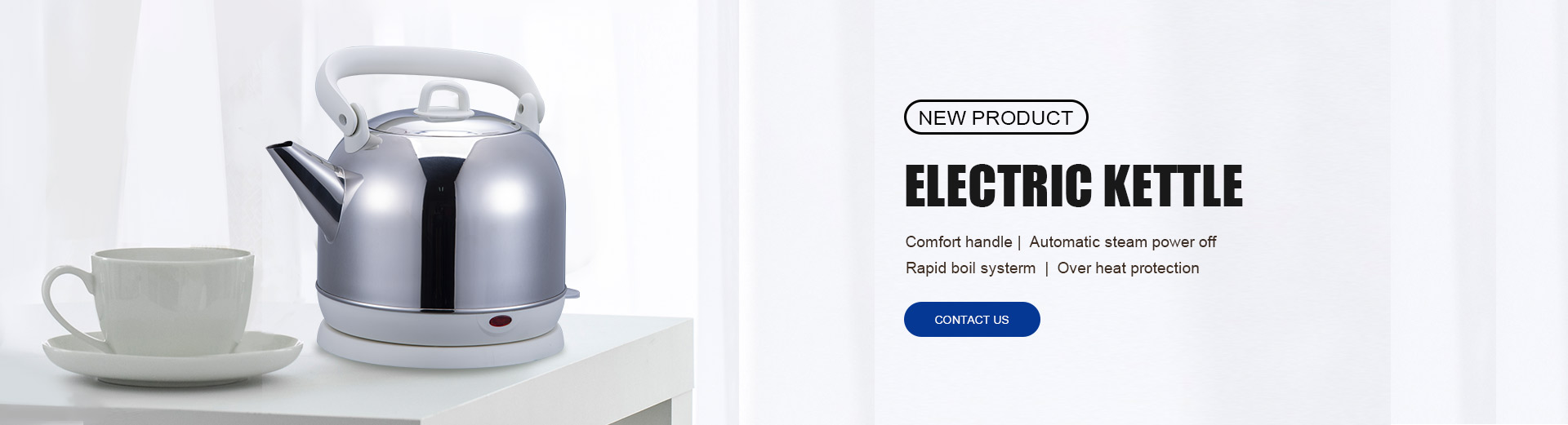
A successful custom electric kettle project requires more than an attractive design. It depends on the combination of product planning, engineering capability, manufacturing experience, quality control, and supply chain management.
For manufacturers, a successful project means transforming an idea into a stable product that meets market expectations, production requirements, and export standards. The global electric kettle market continues to expand, with the market estimated at around USD 1.77 billion in 2023 and expected to reach USD 2.58 billion by 2030. Growing demand for energy-efficient kitchen appliances and upgraded product designs is creating more opportunities for customized electric kettle development.
SHENBAO specializes in electric kettle research, development, and manufacturing, providing OEM and ODM solutions for Stainless Steel Kettles, double wall anti-hot kettles, plastic kettles, and other stainless steel products. With integrated capabilities including mold design and manufacturing, injection molding, metal stamping, assembly, and quality management, SHENBAO supports complete product development from concept to mass production.
Every successful custom electric kettle project starts with a clear product direction.
Before development begins, manufacturers need to understand:
| Project Element | Influence on Development |
|---|---|
| Target market | Determines design and certification requirements |
| Product positioning | Affects materials and functions |
| Price range | Influences manufacturing solutions |
| Usage scenario | Defines capacity and structure |
| Sales channel | Determines packaging and compliance needs |
For example, a premium household kettle may focus on stainless steel appearance, temperature control, and elegant design. A commercial kettle may require stronger durability and higher frequency usage capability.
A clear product positioning helps manufacturers recommend suitable solutions and avoid unnecessary design changes.
The development model directly affects project efficiency.
Most custom electric kettle projects use OEM or ODM manufacturing.
OEM focuses on producing products according to specific requirements.
The process usually includes:
Product concept confirmation
Engineering evaluation
Custom design development
Prototype production
Testing approval
Mass production
OEM is suitable for projects requiring unique structures, exclusive designs, or customized functions.
ODM uses the manufacturer's existing product platforms and manufacturing experience.
The process usually includes:
Existing product selection
Design adjustment
Function customization
Packaging development
Production preparation
| Comparison | OEM | ODM |
|---|---|---|
| Design source | Customer requirements | Manufacturer solutions |
| Customization level | Higher | Moderate |
| Development speed | Longer | Faster |
| Initial investment | Higher | Lower |
Choosing the right model helps balance product uniqueness, development time, and investment.
A successful custom electric kettle project requires technical cooperation, not only production.
Professional manufacturers help evaluate:
Product structure
Material selection
Component compatibility
Production feasibility
Cost optimization
A factory with engineering experience can identify potential issues before production begins.
For example, changing handle structure, kettle body design, or internal components may affect:
Mold development
Assembly efficiency
Production cost
Product durability
Early engineering evaluation helps create a more practical product.
A good design must balance appearance, function, and manufacturability.
Common customization options include:
| Custom Area | Development Purpose |
|---|---|
| Kettle body shape | Create unique appearance |
| Handle design | Improve comfort and strength |
| Surface finishing | Enhance visual quality |
| Color selection | Match brand identity |
| Capacity options | Fit different applications |
| Packaging | Improve market presentation |
Manufacturers should evaluate whether a design can achieve stable production before moving into mass manufacturing.
Material selection has a direct impact on product quality and customer experience.
Common electric kettle materials include:
| Material | Advantages |
|---|---|
| 304 Stainless Steel | Corrosion resistance and durability |
| Double Wall Stainless Steel | Better heat insulation |
| Food Grade Plastic | Lightweight and flexible design |
| Glass | Transparent and modern appearance |
Stainless steel remains one of the most widely used materials in electric kettle production. Market research shows stainless steel accounted for the largest material segment in the electric kettle market due to durability and consumer preference for reliable kitchen appliances.
A professional manufacturer evaluates:
Material safety
Heat resistance
Surface quality
Production compatibility
Export requirements
A successful project requires stable manufacturing capability.
The electric kettle production process usually includes:
| Production Stage | Main Purpose |
|---|---|
| Mold development | Create accurate product structure |
| Metal stamping | Form stainless steel components |
| Injection molding | Produce plastic parts |
| Surface treatment | Improve appearance |
| Assembly | Combine components |
| Final inspection | Verify product performance |
SHENBAO integrates mold manufacturing, injection molding, metal stamping, and assembly capabilities, allowing better control over production quality and delivery schedules.
Quality management should start from the earliest development stage.
Important quality checkpoints include:
| Quality Stage | Inspection Focus |
|---|---|
| Raw materials | Confirm material standards |
| Prototype testing | Verify product design |
| Component inspection | Ensure consistency |
| Assembly testing | Check product function |
| Final inspection | Confirm shipment quality |
electric kettles require strict testing because they combine electrical systems, heating elements, and water-contact materials.
Typical tests include:
Heating performance testing
Leakage testing
Temperature control testing
Dry boil protection testing
Electrical safety testing
SHENBAO applies ISO9001 quality management systems and supports different certification requirements including CE, CB, GS, ROHS, and LFGB according to market needs.
A successful prototype does not automatically guarantee successful mass production.
Before bulk supply begins, manufacturers should confirm:
| Production Factor | Importance |
|---|---|
| Production capacity | Ensures delivery stability |
| Material supply | Maintains continuous production |
| Process standards | Controls product consistency |
| Quality system | Reduces production risks |
| Packaging preparation | Protects products during shipment |
Manufacturers need to consider production scalability during the design stage.
A product that looks good but is difficult to manufacture may create problems during large-volume production.
International markets have different requirements for electric appliances.
Before production, manufacturers should confirm:
Target countries
Voltage standards
Plug requirements
Certification needs
Packaging regulations
Common compliance requirements include:
| Certification | Purpose |
|---|---|
| CE | European safety requirements |
| CB | International electrical standards |
| ROHS | Material compliance |
| LFGB | Food contact safety |
| GS | Product safety evaluation |
Understanding compliance requirements early helps avoid shipment delays.
Communication is another important factor in project success.
A complete project checklist should include:
| Category | Required Information |
|---|---|
| Product concept | Application and target users |
| Design | Drawings or reference samples |
| Functions | Required features |
| Materials | Quality standards |
| Quantity | Production plan |
| Certification | Export requirements |
| Packaging | Brand requirements |
Compared with working through a trader, direct cooperation with a manufacturer provides faster technical communication and better control over production adjustments.
A successful custom electric kettle project depends on choosing a manufacturing partner with complete capabilities.
A professional electric kettle manufacturer should support:
Product development
Engineering optimization
Prototype testing
Material management
Manufacturing process control
Quality inspection
Export preparation
With integrated capabilities in mold manufacturing, injection molding, metal stamping, assembly, and quality management, SHENBAO helps develop customized electric kettle products with stable performance and reliable production support.