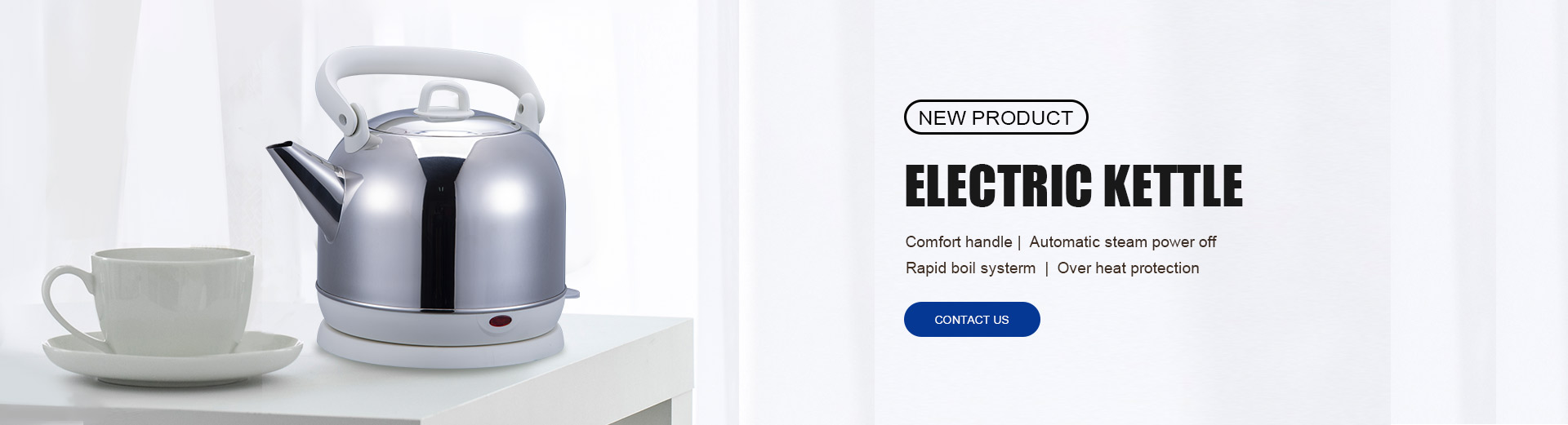
Improving custom kettle product development efficiency requires more than shortening production time. A successful development process needs better engineering planning, faster decision-making, stable manufacturing processes, and effective quality management.
For a professional electric kettle manufacturer, efficiency means reducing unnecessary design changes, improving communication between engineering and production teams, optimizing manufacturing processes, and delivering reliable products faster. SHENBAO integrates research and development, mold manufacturing, injection molding, metal stamping, assembly, and quality management to support customized electric kettle projects from concept development to mass production. (SHENBAO)
One of the most common reasons for delays in custom kettle development is unclear product requirements.
Before engineering begins, manufacturers should confirm:
| Project Information | Development Impact |
|---|---|
| Product positioning | Defines design direction |
| Capacity and power | Determines internal structure |
| Materials | Influences production process |
| Functions | Affects component selection |
| Target market | Determines certification needs |
A detailed project brief allows engineers to evaluate feasibility earlier and avoid repeated modifications during later stages.
A complete requirement checklist usually includes:
Product appearance
Capacity specification
Voltage and plug type
Heating performance
Safety functions
Surface treatment
Packaging requirements
Clear communication at the beginning helps reduce development cycles.
The choice between OEM and ODM directly affects product development efficiency.
OEM focuses on creating products according to specific requirements.
The process usually includes:
Concept confirmation
Structural design
Prototype development
Testing approval
Mass production preparation
OEM provides higher customization but usually requires more engineering time.
ODM uses existing product platforms and manufacturing experience to accelerate development.
The process usually includes:
Existing product evaluation
Design customization
Sample confirmation
Production preparation
| Development Model | Efficiency Advantage |
|---|---|
| OEM | Maximum customization control |
| ODM | Faster development and lower risk |
For projects that require faster market entry, ODM can reduce unnecessary development steps while maintaining customization options.
A strong engineering team plays an important role in improving custom kettle development efficiency.
Manufacturers can optimize:
| Engineering Area | Efficiency Improvement |
|---|---|
| Structure design | Reduce production problems |
| Material selection | Avoid unsuitable components |
| Component matching | Improve assembly efficiency |
| Cost evaluation | Balance design and budget |
Experienced engineers understand the connection between product design and manufacturing reality.
For example, a handle design may look attractive but create difficulties during injection molding or assembly. Early engineering review helps adjust the design before tooling begins.
Prototype development is a key stage between design and mass production.
An efficient prototype process includes:
| Prototype Stage | Purpose |
|---|---|
| Appearance sample | Confirm visual design |
| Engineering sample | Check structure |
| Functional sample | Test performance |
| Final sample | Approve production |
Rapid prototype verification helps identify:
Assembly issues
Heating performance problems
Material problems
Safety concerns
Reducing unnecessary prototype revisions can significantly improve the overall development timeline.
A factory with complete manufacturing capabilities can improve project efficiency by reducing dependence on multiple suppliers.
A complete electric kettle manufacturing process includes:
| Production Process | Efficiency Benefit |
|---|---|
| Mold development | Faster tooling adjustment |
| Metal stamping | Stable stainless steel forming |
| Injection molding | Consistent plastic components |
| Assembly | Better production coordination |
| Quality testing | Faster problem identification |
SHENBAO has integrated processing capabilities including mold design and manufacturing, injection molding, metal stamping, and assembly, allowing better control over customized kettle production. (SHENBAO)
Compared with working through a trader, direct cooperation with a manufacturer allows faster technical communication and more efficient production adjustments.
Material selection should be confirmed during the early development stage.
Common electric kettle materials include:
| Material | Application |
|---|---|
| 304 Stainless Steel | Inner and outer kettle body |
| Double Wall Stainless Steel | Heat insulation structure |
| Food Grade Plastic | Handle and external parts |
| Glass | Transparent kettle design |
Early material confirmation helps manufacturers optimize:
Product durability
Production process
Cost control
Certification preparation
Material standards are especially important for export markets because food-contact and safety requirements may vary by region.
Quality control should not start only after mass production. It should be integrated throughout the development process.
Important checkpoints include:
| Quality Stage | Inspection Purpose |
|---|---|
| Material inspection | Confirm raw material standards |
| Prototype testing | Verify design performance |
| Component inspection | Ensure consistency |
| Assembly testing | Check product function |
| Final inspection | Confirm shipment quality |
electric kettles require strict testing because they combine electrical systems, heating elements, and water-contact materials. SHENBAO applies ISO9001 quality management systems and supports certifications including CE, CB, GS, ROHS, and LFGB according to market requirements. (SHENBAO)
Efficient development should consider future mass production from the beginning.
A product design that is difficult to manufacture may create problems during bulk production.
Manufacturers should evaluate:
| Production Factor | Purpose |
|---|---|
| Production capacity | Ensure delivery stability |
| Material supply | Maintain continuous production |
| Tooling capability | Support product consistency |
| Assembly efficiency | Reduce production time |
| Quality system | Maintain batch stability |
Good product development connects design decisions with future production requirements.
Certification and compliance requirements should be considered before final production.
Manufacturers should confirm:
Destination market
Voltage standard
Plug type
Certification requirements
Packaging regulations
Common requirements include:
| Certification | Purpose |
|---|---|
| CE | European safety compliance |
| CB | International electrical standard |
| ROHS | Material compliance |
| LFGB | Food contact requirement |
| GS | Product safety evaluation |
Early compliance planning prevents delays during shipment preparation.
Successful custom kettle development requires coordination between design, engineering, production, and quality teams.
A practical project checklist includes:
| Category | Key Information |
|---|---|
| Product concept | Application and market positioning |
| Design files | Drawings or reference samples |
| Materials | Required standards |
| Functions | Product specifications |
| Quantity | Production forecast |
| Certification | Export requirements |
| Packaging | Brand requirements |
A manufacturer with complete project management capability can shorten communication cycles and improve overall efficiency.
Custom electric kettle development efficiency depends on the combination of engineering experience, manufacturing integration, quality control, and project management.
A reliable electric kettle manufacturer should provide support throughout the entire process:
Product concept evaluation
OEM and ODM development
Prototype testing
Material selection
Manufacturing process optimization
Quality inspection
Bulk production
With integrated capabilities in mold manufacturing, injection molding, metal stamping, assembly, and quality management, SHENBAO helps customers develop customized electric kettle products with improved efficiency and stable production performance. (SHENBAO)