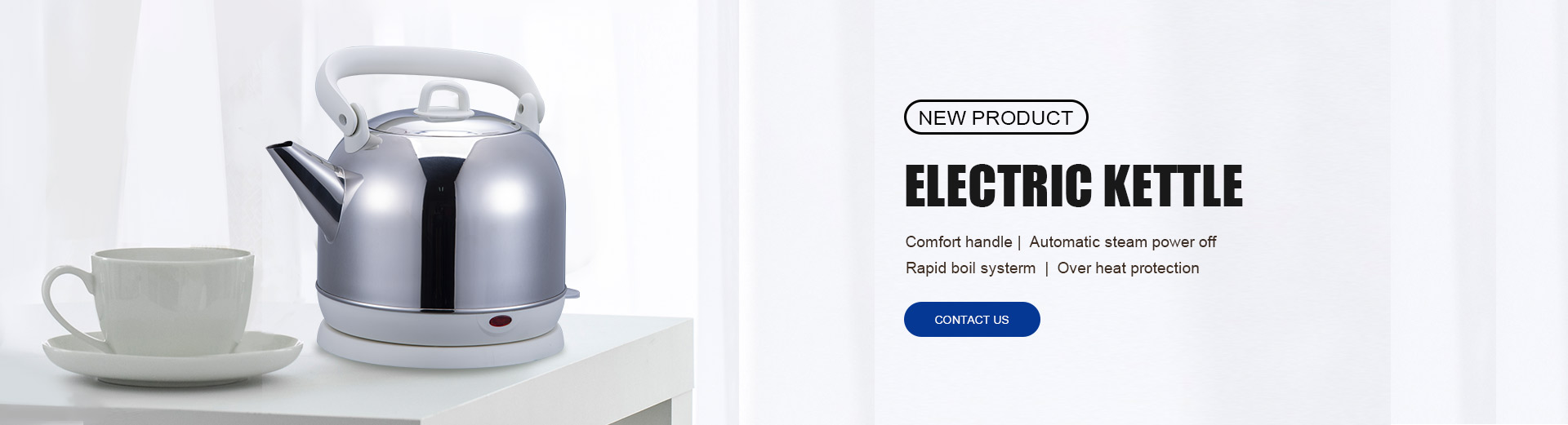
Electric kettle products are not designed the same way for every market. Different regions have different consumer habits, electrical standards, usage scenarios, price expectations, and design preferences.
A successful custom electric kettle design requires manufacturers to adjust product structure, materials, functions, appearance, and compliance requirements according to the target market.
The global electric kettle market continues to grow, with stainless steel remaining one of the most popular materials because of its durability, corrosion resistance, and premium appearance. Industry data shows stainless steel accounted for around 45% to 58% of the electric kettle market depending on research scope, reflecting strong demand for durable and high-quality kettle products.
SHENBAO specializes in electric kettle research, development, and manufacturing, providing OEM and ODM solutions for Stainless Steel Kettles, double wall anti-hot kettles, plastic kettles, and other stainless steel products. With capabilities covering mold development, injection molding, metal stamping, assembly, and quality management, SHENBAO helps develop electric kettles adapted to different market requirements.
Before starting customization, manufacturers need to understand the target market.
Different markets may have different requirements:
| Market Factor | Design Influence |
|---|---|
| Consumer habits | Determines product functions |
| Climate conditions | Affects insulation requirements |
| Electrical standards | Determines voltage and plug design |
| Price level | Influences material selection |
| Lifestyle | Defines product appearance |
For example, some markets prefer compact kettles for small kitchens, while others prefer larger capacity models for families or commercial use.
Market research shows that 1.0 to 1.5 liter electric kettles represent one of the largest capacity segments, while smaller kettles are growing due to urban living and space-saving demand. (Mordor Intelligence)
Capacity is one of the first design elements manufacturers adjust for different markets.
Common options include:
| Capacity Type | Suitable Application |
|---|---|
| Small capacity | Single users, offices, small kitchens |
| Medium capacity | Household daily use |
| Large capacity | Hotels, commercial applications |
The internal structure also needs adjustment according to capacity.
Manufacturers evaluate:
Heating power
Water heating speed
Product size
Material usage
Transportation efficiency
A compact kettle requires space optimization, while a larger kettle requires stronger structural design.
Material selection plays an important role in product positioning.
Different markets may prefer different combinations of cost, appearance, and durability.
| Material | Market Application |
|---|---|
| 304 Stainless Steel | Premium and durable products |
| Double Wall Stainless Steel | Heat insulation models |
| Food Grade Plastic | Lightweight and cost-effective models |
| Glass | Modern design-focused products |
stainless steel kettles remain widely preferred because they provide durability, easy maintenance, and resistance to rust and corrosion.
For premium markets, manufacturers often focus on:
Brushed stainless steel finishes
Double wall insulation
High-quality components
Elegant appearance
For price-sensitive markets, manufacturers may optimize:
Material usage
Production efficiency
Component selection
Appearance customization helps electric kettle products match different market styles.
Manufacturers can customize:
Body shape
Handle design
Lid structure
Surface finishing
Product colors
Logo placement
| Design Element | Customization Options |
|---|---|
| Body shape | Modern, classic, compact designs |
| Surface finish | Matte, polished, brushed |
| Color | Brand-specific colors |
| Handle | Different ergonomic structures |
| Packaging | Retail-focused designs |
For example, premium markets may prefer minimalist stainless steel designs, while younger consumer markets may prefer colorful and personalized appearances.
Different markets often require different product functions.
Common customization options include:
| Function | Market Benefit |
|---|---|
| Temperature control | Supports tea and coffee preparation |
| Keep warm function | Improves convenience |
| Fast boiling | Saves preparation time |
| Dry boil protection | Improves safety |
| LED indicators | Enhances user experience |
Temperature control and smart functions are becoming more important as consumers look for more convenient kitchen appliances. Research indicates that smart and connected kettle segments are growing faster than traditional models due to demand for improved functionality.
Electrical requirements are different across countries.
Before production, manufacturers must confirm:
| Requirement | Purpose |
|---|---|
| Voltage | Match local power systems |
| Frequency | Ensure electrical compatibility |
| Plug type | Meet regional standards |
| Certification | Support market access |
Examples include:
110V systems in some regions
220V systems in many countries
Different plug designs across markets
Ignoring electrical differences can create shipment problems or require product modifications later.
Safety requirements may vary according to market regulations and consumer expectations.
Manufacturers can customize:
Automatic shut-off systems
Dry boil protection
Anti-hot exterior structures
Steam control systems
Child safety features
| Safety Feature | Function |
|---|---|
| Auto shut-off | Stops heating after boiling |
| Dry boil protection | Prevents damage without water |
| Double wall design | Reduces surface temperature |
| Stable base structure | Improves safety during use |
Safety functions are especially important for export markets where electrical appliance standards are strict.
Packaging is also part of market customization.
Manufacturers can adjust:
Box design
Language information
User manuals
Product labels
Shipping protection
| Packaging Element | Custom Requirement |
|---|---|
| Language | Match local consumers |
| Certification marks | Meet regulations |
| Product information | Explain functions |
| Protection structure | Prevent transportation damage |
A professional manufacturer considers packaging during product development rather than after production.
Different market strategies require different development approaches.
OEM is suitable when a product requires:
Unique appearance
Exclusive structure
Customized functions
Specific materials
The manufacturer develops the product according to detailed requirements.
ODM is suitable when faster development is needed.
The manufacturer provides:
Existing product platforms
Mature structures
Manufacturing experience
Customization options
| Comparison | OEM | ODM |
|---|---|---|
| Design source | Customer requirements | Manufacturer solutions |
| Development speed | Longer | Faster |
| Customization level | Higher | Moderate |
| Engineering support | Strong | Factory-led |
Choosing the right model helps balance customization needs and development efficiency.
Different markets may require different quality standards, but stable quality is always essential.
Manufacturers should control:
| Quality Stage | Focus |
|---|---|
| Material inspection | Confirm specifications |
| Prototype testing | Verify design |
| Component testing | Ensure consistency |
| Assembly inspection | Check functions |
| Final testing | Confirm shipment quality |
SHENBAO applies ISO9001 quality management systems and supports certifications including CE, CB, GS, ROHS, and LFGB according to product and market requirements.
A complete customized electric kettle production process includes:
| Manufacturing Stage | Main Purpose |
|---|---|
| Product design | Confirm market requirements |
| Mold development | Create customized structures |
| Metal stamping | Produce stainless steel parts |
| Injection molding | Manufacture plastic components |
| Assembly | Combine all parts |
| Testing | Verify performance |
A manufacturer with integrated production capability can respond faster to design adjustments and maintain better production consistency.
Before starting a custom electric kettle project, prepare:
| Category | Required Information |
|---|---|
| Target market | Country and consumer needs |
| Product positioning | Premium or cost-effective direction |
| Capacity | Required volume |
| Functions | Required features |
| Materials | Product standards |
| Certification | Export requirements |
| Packaging | Brand specifications |
Electric kettle design customization requires a deep understanding of different markets, manufacturing technology, and compliance requirements.
A capable electric kettle manufacturer should provide support in:
Market-based design adjustment
OEM and ODM development
Material selection
Manufacturing optimization
Quality control
Export compliance
With integrated capabilities in mold manufacturing, injection molding, metal stamping, assembly, and quality management, SHENBAO helps create customized electric kettle solutions for different global markets.