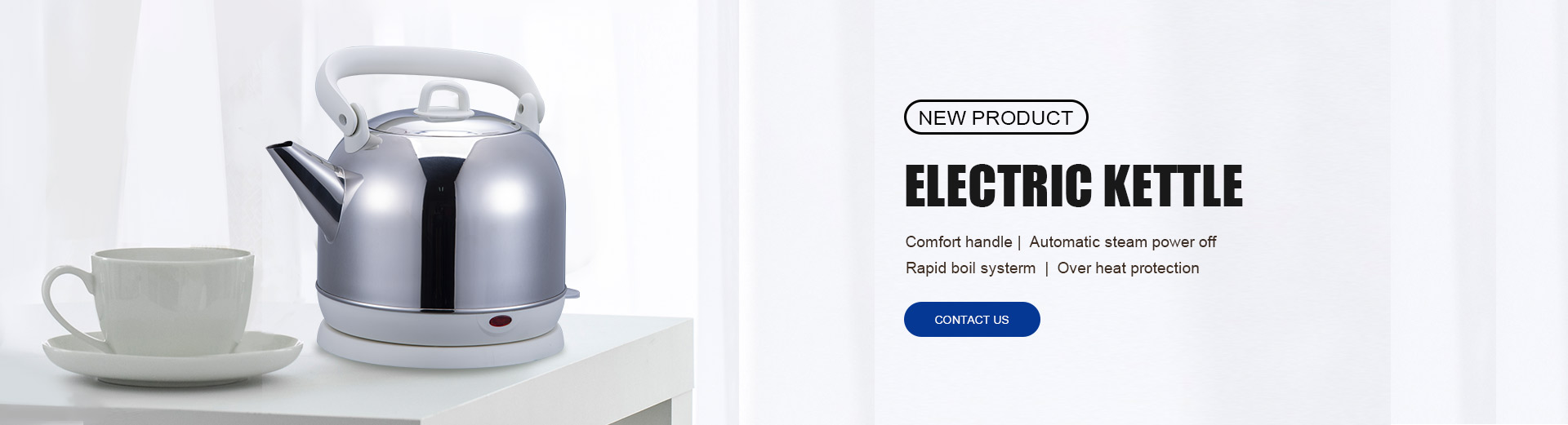
Customizing an electric kettle is not limited to adding a logo or changing the product color. A professional electric kettle manufacturer can customize multiple parts of the product, including appearance, structure, materials, functions, components, and packaging.
For brands developing unique kitchen appliances, understanding which parts can be customized helps create products that match market positioning while maintaining manufacturing feasibility.
The global electric kettle market continues to see strong demand for stainless steel products because of durability, corrosion resistance, and premium appearance. Stainless steel represented around 45% to 58% of the electric kettle market depending on research scope, showing its importance in modern kettle development.
SHENBAO specializes in electric kettle research, development, and manufacturing, providing OEM and ODM customization solutions for Stainless Steel Kettles, double wall anti-hot kettles, plastic kettles, and other stainless steel products. With capabilities covering mold development, injection molding, metal stamping, assembly, and quality management, SHENBAO supports customized kettle projects from design to mass production.
The kettle body is one of the most visible customization areas.
Manufacturers can adjust:
| Custom Part | Custom Options |
|---|---|
| Body shape | Round, square, modern, classic designs |
| Capacity | Different volume requirements |
| Wall structure | Single wall or double wall |
| Surface finish | Brushed, polished, matte finish |
| Color | Customized exterior colors |
The body design influences not only appearance but also production process, material usage, and product durability.
For example, double wall stainless steel structures can improve heat insulation performance and reduce surface temperature, making them suitable for premium product positioning.
Material selection directly affects kettle quality and user experience.
Common material options include:
| Material | Application |
|---|---|
| 304 Stainless Steel | Inner kettle body and water contact parts |
| Double Wall Stainless Steel | Heat insulation structure |
| Food Grade Plastic | Handle and external components |
| Glass | Transparent kettle design |
304 stainless steel is widely used in kitchen appliances because it provides good corrosion resistance and durability. Market research shows stainless steel remains one of the leading material choices in electric kettles because consumers value reliability and premium appearance.
A professional manufacturer can help evaluate:
Material grade
Food contact requirements
Surface treatment
Production feasibility
Cost balance
The handle is an important part that affects user comfort and safety.
Customization options include:
| Handle Feature | Purpose |
|---|---|
| Shape design | Improve appearance |
| Grip angle | Enhance comfort |
| Material selection | Improve heat resistance |
| Structure strength | Increase durability |
Manufacturers evaluate handle design through:
Strength testing
Assembly requirements
User operation experience
Production stability
A good handle design must balance appearance, comfort, and manufacturing efficiency.
The kettle lid can also be customized according to product requirements.
Possible adjustments include:
Opening method
Lid angle
Locking structure
Material selection
Steam release design
| Lid Customization | Manufacturing Consideration |
|---|---|
| Automatic opening | Requires mechanical accuracy |
| Manual opening | Focuses on durability |
| Larger opening angle | Improves cleaning convenience |
| Sealing structure | Prevents leakage |
For daily-use kitchen appliances, lid reliability directly affects product experience.
The spout influences pouring performance and product appearance.
Manufacturers can customize:
Spout shape
Water flow speed
Anti-drip structure
Filter design
Different applications may require different designs.
| Spout Type | Application |
|---|---|
| Standard spout | Daily household use |
| Precision spout | Coffee and tea preparation |
| Filter spout | Prevent scale particles |
A manufacturer with engineering experience can optimize the spout structure according to usage requirements.
Electric kettle functions can also be customized.
Common options include:
| Function | Purpose |
|---|---|
| Temperature control | Different beverage requirements |
| Keep warm function | Maintain water temperature |
| Auto shut-off | Improve safety |
| Dry boil protection | Prevent damage |
| LED indicator | Improve user interaction |
Functional customization requires engineering evaluation because electrical components, control systems, and safety features must work together.
The kettle base is another important customization area.
Manufacturers can adjust:
Base appearance
Control buttons
Power specifications
Cable design
Connector standards
Different markets require different electrical standards.
Before production, manufacturers should confirm:
| Requirement | Importance |
|---|---|
| Voltage | Match destination market |
| Plug type | Ensure compatibility |
| Power rating | Meet performance expectations |
| Certification | Support market entry |
Export market compliance should be considered during development rather than after production.
Brand identity is usually added through customized finishing processes.
Common options include:
| Branding Method | Application |
|---|---|
| Laser engraving | Permanent logo marking |
| Screen printing | Simple brand graphics |
| Label printing | Cost-effective branding |
| Embossing | Premium appearance |
Professional manufacturers can recommend suitable branding methods based on:
Product surface material
Production quantity
Durability requirements
Cost expectations
Packaging is an important part of a complete product solution.
Manufacturers can customize:
Color boxes
User manuals
Product labels
Inner protection structure
Shipping cartons
| Packaging Element | Purpose |
|---|---|
| Retail box | Improve shelf presentation |
| Protective inserts | Reduce transportation damage |
| Instructions | Support market requirements |
| Labels | Provide product information |
A complete OEM project includes both product customization and packaging preparation.
For completely new electric kettle designs, mold development may be required.
Customized molds can support:
Unique body shapes
Special handles
Customized covers
Exclusive structures
The mold development process includes:
Product design review
Engineering analysis
Mold production
Sample testing
Production approval
A factory with internal mold capability can improve communication efficiency and reduce development risks.
Customization should not reduce product reliability.
Professional manufacturers control quality throughout the development process.
| Quality Stage | Inspection Focus |
|---|---|
| Material inspection | Confirm specifications |
| Prototype testing | Verify design |
| Component inspection | Maintain consistency |
| Assembly testing | Check functions |
| Final inspection | Ensure shipment quality |
Electric kettles require strict quality control because they combine electrical systems, heating components, and water-contact materials.
Different customization levels require different manufacturing approaches.
| Project Requirement | Suitable Method |
|---|---|
| New product structure | OEM |
| Existing model improvement | ODM |
| Unique appearance | OEM |
| Faster launch | ODM |
| Customized functions | OEM or ODM |
A capable manufacturer can recommend the most suitable development method based on product goals.
Before starting development, prepare:
| Category | Information Needed |
|---|---|
| Product design | Drawings or references |
| Capacity | Required volume |
| Materials | Stainless steel standards |
| Functions | Required features |
| Quantity | Production plan |
| Certification | Target market requirements |
| Packaging | Brand specifications |
A successful custom electric kettle project depends on more than product appearance. It requires a manufacturer with engineering experience, production capability, quality control systems, and export knowledge.
A professional electric kettle manufacturer can support customization from body design and material selection to functional development, packaging, testing, and bulk production.
With integrated capabilities in mold manufacturing, injection molding, metal stamping, assembly, and quality management, SHENBAO provides complete OEM and ODM electric kettle solutions for global markets.