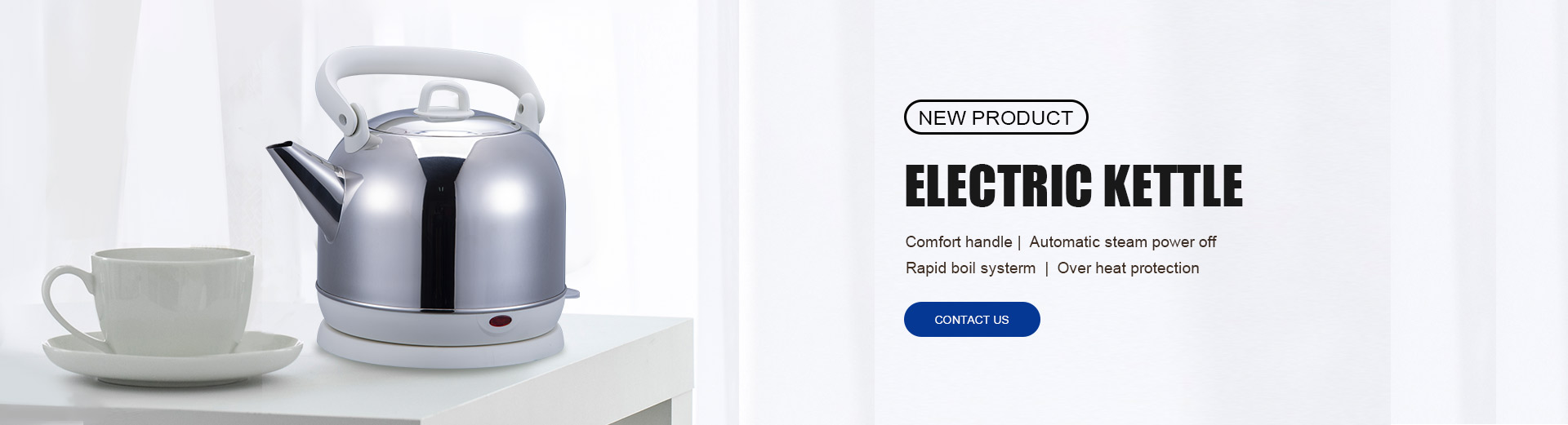
Optimizing electric kettle structure is not simply about changing the appearance. A well-designed kettle requires careful engineering of the body, heating system, insulation structure, handle, lid, and internal components to achieve better heating efficiency, safety, durability, and user experience.
For a professional electric kettle manufacturer, structural optimization begins during the product development stage. Every component must work together while also supporting stable mass production. SHENBAO focuses on OEM and ODM electric kettle development, combining mold design, injection molding, metal stamping, assembly, and quality control to create reliable customized kettle solutions.
Modern electric kettles are designed with multiple safety systems, including automatic shut-off, dry-boil protection, and thermal control mechanisms. These features have become important standards because electric kettles combine electrical components, heating elements, and water-contact materials in one appliance. (SHENBAO)
The kettle body is the core structure that affects heat transfer, capacity, durability, and appearance.
Manufacturers evaluate:
| Structural Element | Performance Impact |
|---|---|
| Body shape | Influences heating efficiency and appearance |
| Wall thickness | Affects strength and heat retention |
| Internal space | Determines capacity and component layout |
| Bottom structure | Influences heating stability |
A good kettle structure needs to balance:
Lightweight design
Strong durability
Efficient heat transfer
Easy assembly
Low material waste
For Stainless Steel Kettles, manufacturers usually optimize the inner chamber design to improve heat distribution while maintaining product strength.
Heating performance is one of the most important factors affecting user experience.
Manufacturers optimize:
| Heating Component | Optimization Goal |
|---|---|
| Heating plate | Improve heat transfer efficiency |
| Heating element | Increase boiling speed |
| Thermostat | Improve temperature control |
| Power system | Match market requirements |
A professional factory evaluates the relationship between:
Wattage
Capacity
Heating speed
Energy consumption
Safety protection
For export markets, voltage differences must also be considered. Many regions use different electrical standards, requiring manufacturers to adjust power systems and plug configurations during development.
Double wall structures are increasingly used in premium electric kettle designs because they improve insulation performance.
A double wall kettle typically includes:
| Structure | Function |
|---|---|
| Inner stainless steel layer | Water contact and heat transfer |
| Air insulation layer | Reduce heat loss |
| Outer shell | Improve safety and appearance |
The benefits include:
Lower exterior temperature
Better heat retention
Improved user safety
Premium product positioning
A well-designed insulation structure requires precise manufacturing control because gaps or poor assembly can reduce performance.
The handle directly affects how users interact with the kettle.
Manufacturers consider:
Grip angle
Weight balance
Heat resistance
Structural strength
Assembly stability
| Handle Design Factor | Purpose |
|---|---|
| Ergonomic shape | Improve comfort |
| Strong connection | Prevent damage |
| Heat-resistant material | Reduce safety risks |
| Balanced position | Improve pouring control |
During OEM / ODM development, engineers evaluate whether the handle design can maintain strength during long-term use.
The lid and spout influence pouring experience and product reliability.
Manufacturers optimize:
| Component | Key Consideration |
|---|---|
| Lid seal | Prevent water leakage |
| Opening angle | Improve filling convenience |
| Spout design | Control water flow |
| Filter structure | Improve water quality |
A poorly designed spout may cause dripping, while an unstable lid structure can affect safety during pouring.
Structural optimization helps improve:
Smooth pouring
Leakage prevention
Cleaning convenience
User satisfaction
Material selection directly affects kettle durability.
Common materials include:
| Material | Advantages |
|---|---|
| 304 Stainless Steel | Corrosion resistance and durability |
| Food Grade Plastic | Lightweight design |
| Glass | Modern appearance |
| Silicone Sealing Parts | Improve sealing performance |
Stainless steel remains one of the most common choices for electric kettle manufacturing because of its strength and resistance to corrosion. Food-contact regulations in different markets also require manufacturers to control material safety and compliance.
Manufacturers need to consider:
Material grade
Heat resistance
Food-contact requirements
Surface treatment
Export standards
Internal structure design affects both performance and production efficiency.
Engineers optimize:
| Internal Component | Optimization Purpose |
|---|---|
| Wiring layout | Improve electrical safety |
| Heating components | Increase stability |
| Controller position | Improve temperature control |
| Assembly structure | Reduce production difficulty |
A well-planned internal layout helps:
Reduce assembly time
Improve consistency
Simplify maintenance
Lower production risks
A good electric kettle structure must be suitable for mass production.
Manufacturers evaluate:
| Manufacturing Factor | Importance |
|---|---|
| Mold design | Determines production accuracy |
| Metal stamping | Controls body consistency |
| Injection molding | Ensures component stability |
| Assembly process | Improves production efficiency |
SHENBAO integrates mold development, injection molding, metal stamping, and assembly capabilities, allowing engineers to optimize designs according to actual manufacturing conditions.
Compared with working through a trader, direct cooperation with a manufacturer provides better control over structural adjustments, production feasibility, and quality improvement.
Structural optimization requires continuous testing.
Important quality checkpoints include:
| Test Item | Purpose |
|---|---|
| Heating test | Verify boiling performance |
| Leakage test | Check sealing reliability |
| Drop test | Evaluate structural strength |
| Electrical test | Confirm safety |
| Cycle test | Check long-term durability |
Electric kettle safety standards focus on areas such as insulation, temperature control, overheating protection, and safe operation.
Testing during development helps manufacturers identify problems before bulk production.
Different markets have different expectations for kettle structures.
Manufacturers adjust designs according to:
| Market Requirement | Structural Adjustment |
|---|---|
| Premium market | Stainless steel, insulation, advanced functions |
| Compact market | Smaller size and lightweight structure |
| Commercial market | Higher durability and larger capacity |
| Export market | Certification and electrical compliance |
A successful project sourcing checklist should include:
Target market
Product positioning
Capacity requirements
Material standards
Certification needs
Production quantity
Structural optimization is not only about adding more features.
Manufacturers must balance:
Product performance
Manufacturing cost
Production efficiency
Market competitiveness
For example, adding a double wall structure can improve insulation but may increase material usage and production complexity. Engineers need to find the best solution based on product positioning.
A professional OEM / ODM manufacturer helps improve kettle structure through:
Product evaluation
Engineering optimization
Prototype development
Material selection
Production testing
Quality improvement
ODM projects can use existing mature structures and improve development speed, while OEM projects allow deeper customization for unique product requirements.
Better electric kettle performance comes from optimized structural design, suitable materials, reliable manufacturing processes, and strict quality control.
A capable electric kettle manufacturer should not only produce products but also provide engineering solutions that improve heating efficiency, safety, durability, and production stability.
With integrated manufacturing capabilities covering mold development, injection molding, metal stamping, assembly, and quality management, SHENBAO supports customized electric kettle projects with optimized structures and reliable production performance.