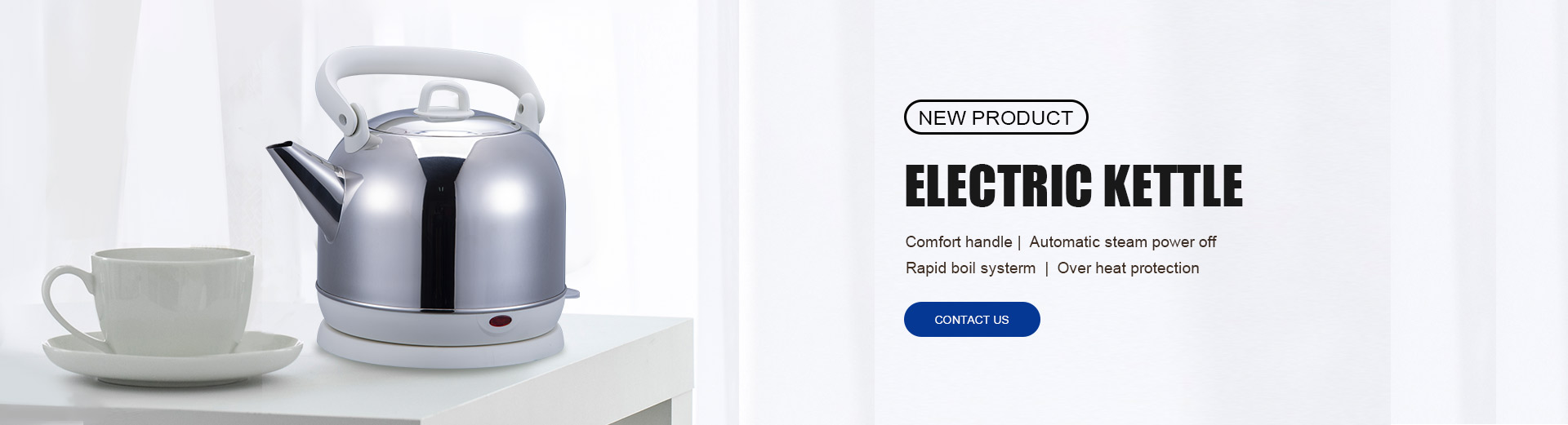
The user experience of an electric kettle depends on much more than boiling speed. A well-designed kettle should provide convenience, safety, comfort, durability, and visual appeal through thoughtful structural and functional features.
For a professional electric kettle manufacturer, improving user experience means optimizing every detail from the kettle body, handle, lid, spout, control system, and material selection to the final production process. Modern consumers increasingly expect kettles to provide faster heating, easier operation, better safety, and more personalized functions. Market research shows that rapid boiling, temperature control, automatic shut-off, ergonomic design, and insulation performance are becoming important product differentiation factors in the electric kettle market.
SHENBAO focuses on OEM and ODM electric kettle development, supporting customized designs through mold development, injection molding, metal stamping, assembly, and quality management. By combining engineering experience with manufacturing capability, SHENBAO helps create electric kettle products with improved usability and stable production performance.
The handle is one of the most important parts affecting daily use.
A good handle design should provide:
| Design Feature | User Benefit |
|---|---|
| Comfortable grip angle | Easier lifting and pouring |
| Balanced weight distribution | Reduces hand pressure |
| Heat-resistant materials | Improves safety |
| Strong connection structure | Increases durability |
A kettle may contain more than one kilogram of water when fully filled, so handle strength and balance directly influence user experience.
During OEM / ODM development, manufacturers evaluate:
Handle position
Grip thickness
Weight balance
Assembly strength
Material compatibility
A professional manufacturer considers both appearance and actual production requirements to ensure the handle remains comfortable and reliable during long-term use.
Heating speed is one of the most important factors users consider when choosing electric kettles.
A survey-based user research project found that boiling speed was one of the strongest purchase influence factors, with 56.1% of respondents selecting faster boiling as a key feature.
Manufacturers optimize heating performance through:
| Component | Optimization Goal |
|---|---|
| Heating element | Faster heat transfer |
| Heating plate | Better energy efficiency |
| Internal structure | Improved water circulation |
| Power system | Stable heating performance |
However, faster heating must also consider energy consumption and safety.
A well-designed electric kettle needs to balance:
Boiling speed
Power efficiency
Temperature control
Component lifespan
double wall electric kettle designs are becoming more popular because they improve insulation and reduce exterior temperature.
The structure usually includes:
| Layer | Function |
|---|---|
| Inner stainless steel layer | Water contact and heat transfer |
| Insulation layer | Reduces heat loss |
| Outer shell | Improves safety and appearance |
Benefits include:
Lower surface temperature
Better heat retention
Improved user safety
Premium product positioning
For families with children or users who frequently move the kettle after boiling, double wall structures provide a better experience.
traditional kettles mainly focus on boiling water, while modern products increasingly provide more precise temperature control.
Temperature-related features include:
| Function | Application |
|---|---|
| Temperature presets | Tea and coffee preparation |
| Keep warm function | Maintains water temperature |
| Digital display | Shows real-time temperature |
| Memory settings | Improves convenience |
Research shows that temperature control and smart functions are becoming important trends in electric kettle development as users look for more personalized beverage preparation options.
For manufacturers, adding functions requires careful evaluation of:
Electronic components
Control accuracy
Safety systems
Production stability
The spout directly affects how smoothly users pour water.
Important design considerations include:
| Spout Feature | User Experience |
|---|---|
| Anti-drip structure | Prevents water leakage |
| Controlled water flow | Improves pouring accuracy |
| Filter design | Reduces impurities |
| Smooth edge design | Improves safety |
For coffee and tea applications, precise pouring control becomes more important.
Manufacturers optimize spout structures through:
Product testing
Water flow evaluation
Structural adjustment
Prototype verification
The lid is often overlooked but has a major impact on usability.
A good lid design should provide:
Easy opening
Stable locking
Good sealing
Simple cleaning
| Lid Feature | Advantage |
|---|---|
| Wide opening | Easier water filling |
| Secure locking | Prevents accidental opening |
| Smooth structure | Easier maintenance |
| Strong hinge | Improves durability |
During custom kettle development, manufacturers test lid structures to ensure they can withstand repeated daily operation.
Clear water level indication helps users control the amount of water needed.
Common solutions include:
| Design Method | Benefit |
|---|---|
| External water gauge | Easy checking |
| Transparent window | Visual monitoring |
| Internal marking | Accurate filling |
This feature helps reduce water waste and improves daily convenience.
Material selection affects appearance, durability, safety, and maintenance.
Common electric kettle materials include:
| Material | User Experience Benefit |
|---|---|
| 304 Stainless Steel | Durable and premium appearance |
| Double Wall Stainless Steel | Better insulation |
| Food Grade Plastic | Lightweight design |
| Glass | Modern visual experience |
Stainless steel remains one of the most widely used materials in electric kettle manufacturing because of durability and corrosion resistance. Industry reports indicate stainless steel products continue to hold a leading position due to consumer preference for long-lasting and premium kitchen appliances.
Manufacturers must evaluate:
Material standards
Food contact safety
Surface treatment
Production feasibility
Noise reduction is becoming an important consideration for premium electric kettle designs.
Manufacturers can improve quiet operation through:
Heating structure optimization
Component adjustment
Internal design improvement
Material selection
A quieter kettle provides a better experience in:
Offices
Hotels
Apartments
Shared living spaces
Safety is a critical part of electric kettle design.
Common safety features include:
| Safety Feature | Purpose |
|---|---|
| Auto shut-off | Stops heating after boiling |
| Dry boil protection | Prevents damage without water |
| Thermal protection | Controls overheating |
| Stable base design | Improves operation safety |
Safety functions should be considered during the early OEM / ODM process instead of being added after production.
Improving user experience also requires considering manufacturing feasibility.
A practical product design should support:
| Manufacturing Factor | Importance |
|---|---|
| Mold design | Ensures production accuracy |
| Assembly process | Improves efficiency |
| Material usage | Controls cost |
| Quality inspection | Maintains consistency |
A manufacturer with integrated production capabilities can better balance user-focused design and mass production requirements.
Compared with working through a trader, direct cooperation with a factory allows faster engineering communication and better control over design improvements.
Good design must be supported by reliable manufacturing quality.
Important quality checkpoints include:
| Inspection Stage | Focus |
|---|---|
| Material inspection | Confirm safety standards |
| Prototype testing | Verify design performance |
| Component testing | Ensure reliability |
| Assembly inspection | Check product consistency |
| Final testing | Confirm shipment quality |
Electric kettles require strict testing because they combine electrical systems, heating components, and water-contact materials.
Before starting a custom electric kettle project, manufacturers should confirm:
| Category | Key Information |
|---|---|
| Target users | Usage scenarios |
| Product positioning | Premium or practical direction |
| Functions | Required features |
| Materials | Quality standards |
| Capacity | User requirements |
| Certification | Export market needs |
| Packaging | Brand requirements |
Improving electric kettle user experience requires a combination of industrial design, engineering capability, manufacturing control, and quality management.
A reliable electric kettle manufacturer should support:
Product design optimization
OEM and ODM development
Material selection
Structural improvement
Manufacturing process control
Quality testing
Export compliance
With integrated capabilities in mold development, injection molding, metal stamping, assembly, and quality management, SHENBAO helps develop customized electric kettles that deliver better user experience and stable production performance.