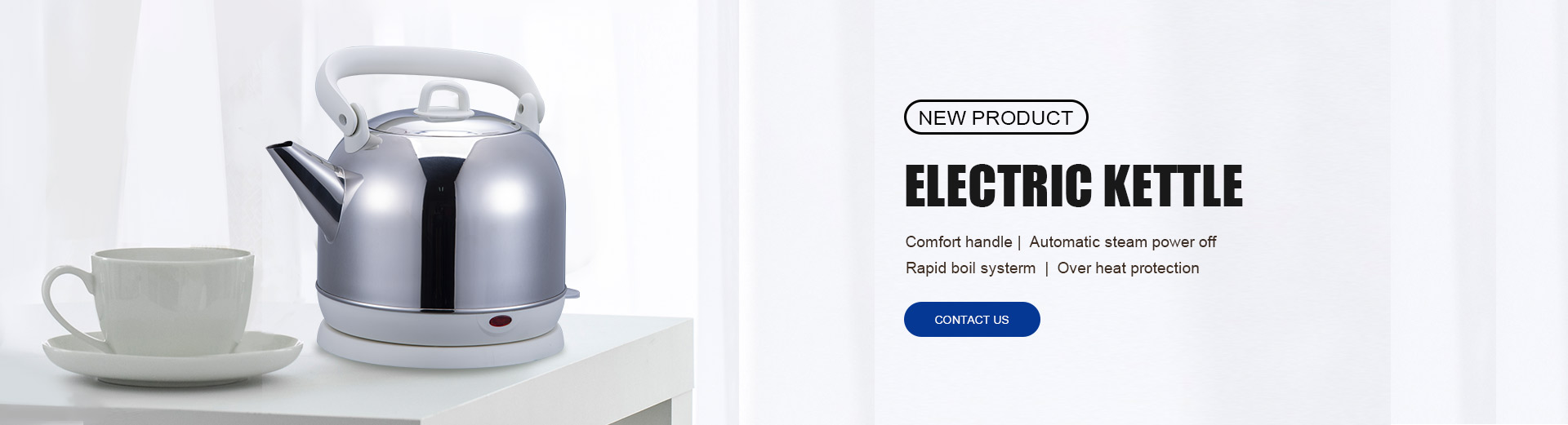
Stainless Steel Kettles can use finishes such as brushed, mirror polished, matte, powder coated, and laser-processed surfaces to achieve different appearances, durability, and market styles.
Surface finishing is not only an appearance treatment for stainless steel kettles. It also affects product durability, cleaning performance, scratch resistance, and the overall user experience.
For kitchen appliances, consumers often judge product quality through visible details such as surface texture, reflection, and touch feeling. A well-applied finish can improve the premium appearance of a kettle while protecting the stainless steel body during daily use.
During electric kettle manufacturing, surface finishing selection usually depends on:
Product positioning and target market
Desired appearance style
Production process requirements
Resistance against fingerprints and scratches
Cost and volume production considerations
Professional manufacturers evaluate both design requirements and practical performance to ensure that finishing processes remain consistent across large production quantities.
Brushed stainless steel is one of the most commonly used surface finishes for electric kettles. It creates a directional texture by applying controlled abrasion to the stainless steel surface.
The main advantages include:
Reduced visibility of fingerprints
Better resistance against minor scratches
Modern and professional appearance
Easier maintenance during daily use
Brushed finishes are widely applied to household and commercial electric kettles because they provide a balance between aesthetics and practicality.
The final appearance depends on factors such as brushing direction, surface uniformity, and processing precision. Consistent brushing quality is especially important for OEM production because uneven textures can affect the overall product appearance.
Mirror polishing creates a highly reflective surface by using multiple polishing processes to smooth the stainless steel.
This finish provides:
Premium visual appeal
Smooth surface texture
High-end kitchen appliance appearance
Strong light reflection effect
Mirror-Polished Stainless Steel Kettles are often used for products targeting premium markets where appearance differentiation is important.
However, mirror surfaces require careful handling because fingerprints, water marks, and scratches may become more noticeable compared with brushed finishes. Manufacturers usually combine polishing expertise with quality inspection to maintain a consistent reflective effect.
Matte finishing creates a soft, non-reflective surface that gives stainless steel kettles a simple and elegant appearance.
Compared with glossy surfaces, matte finishes can provide:
A smoother visual experience
Reduced reflection under strong lighting
Better fingerprint hiding performance
Contemporary design appeal
Matte finishes are suitable for minimalist kitchen appliance designs and markets that prefer understated product styles.
The manufacturing process requires precise surface treatment because inconsistent matte textures can create visible differences between production batches.
Yes. Stainless steel kettles can be customized with different colors through surface treatment technologies such as powder coating, spray coating, and other decorative processes.
Common customization options include:
| Finish Method | Features |
|---|---|
| Powder coating | Durable color layer with strong surface protection |
| Spray coating | Flexible color and appearance customization |
| Vacuum coating | Creates decorative metallic effects |
| Electrochemical coloring | Enhances stainless steel color without traditional paint |
Colored finishes allow brands to create products that match different kitchen styles, seasonal trends, and market preferences.
For OEM and ODM projects, color customization is often combined with logo placement, packaging design, and product structure adjustments to create differentiated product lines.
Surface finishing can influence how a stainless steel kettle performs during long-term use.
Different finishes provide different levels of protection:
| Surface Finish | Durability Characteristics |
|---|---|
| Brushed finish | Good scratch resistance and easy maintenance |
| Mirror finish | Premium appearance but requires careful cleaning |
| Matte finish | Good fingerprint control and modern appearance |
| Coated finish | Additional protection and color flexibility |
A suitable finishing choice should consider both appearance requirements and actual usage conditions. For example, commercial environments with frequent cleaning may prioritize practical finishes, while premium retail products may focus more on visual appeal.
Maintaining consistent surface quality requires professional processing equipment and strict inspection procedures.
A typical quality control process includes:
Manufacturers check texture consistency, polishing effect, color uniformity, and visible defects.
Different stainless steel grades and thicknesses require suitable finishing methods to ensure stable results.
Finished surfaces are tested for resistance against scratches, cleaning processes, and daily handling.
Large-volume manufacturing requires standardized processes to ensure every kettle maintains the same appearance and quality level.
These controls are especially important for global supply because customers expect stable product quality across repeated orders.
The best finish depends on product positioning and usage requirements.
| Application | Recommended Finish Direction |
|---|---|
| Everyday household kettles | Brushed or matte finish |
| Premium kitchen appliances | Mirror polishing or customized finishes |
| Hotel and office kettles | Durable and easy-clean finishes |
| Private label products | Customized colors and surface designs |
There is no single finish suitable for every market. Manufacturers need to balance appearance, durability, production efficiency, and customer expectations when developing stainless steel kettle products.
Surface finishing provides an important way for brands to differentiate their stainless steel kettles in competitive markets.
Through OEM and ODM manufacturing, companies can customize:
Stainless steel surface texture
Color appearance
Logo processing methods
Product style combinations
Packaging presentation
Experienced manufacturers combine engineering knowledge with finishing technology to help develop electric kettles that meet specific market requirements while maintaining reliable production quality.
Surface finishing determines how a stainless steel kettle looks, feels, and performs throughout its service life. The right finish can enhance product value, improve user experience, and support stronger market positioning.
By selecting suitable materials, applying precise finishing processes, and maintaining strict quality control, stainless steel kettle manufacturers can deliver products that combine attractive design with dependable performance.