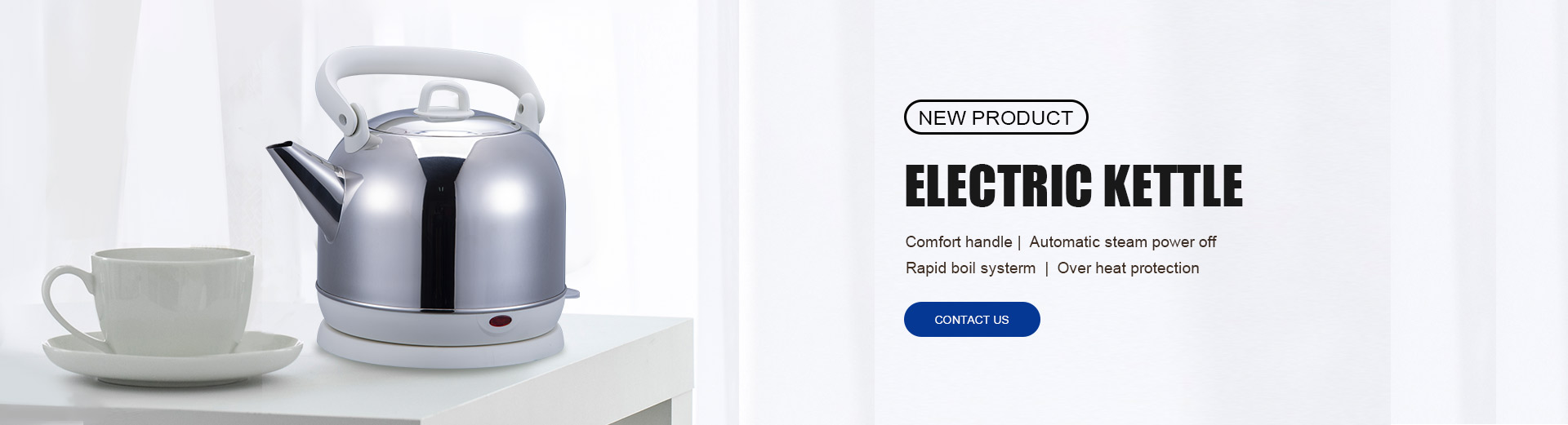
Electric kettle manufacturers customize materials and finishes by combining product requirements, market preferences, manufacturing processes, and quality standards to create differentiated products.
Material and finish selection directly influences an electric kettle’s appearance, durability, safety, and market positioning. A kettle is not only a heating appliance but also a product where users evaluate design quality through touch, visual appearance, and daily performance.
For global markets, different customers may require different combinations of materials and surface treatments. Some markets prefer premium stainless steel designs, while others focus on lightweight structures, transparent glass bodies, or customized colors that match kitchen styles.
Professional electric kettle manufacturers usually evaluate material selection based on:
Product positioning and target market
Safety and food-contact requirements
Production efficiency and cost control
Durability during long-term use
Compatibility with different finishing processes
A successful customization process balances visual appeal with manufacturing reliability to ensure consistent quality in large-volume production.
Electric kettle materials are selected according to performance requirements, design goals, and application scenarios. Different materials provide different advantages in appearance, strength, and user experience.
Stainless steel is widely used because of its strength, corrosion resistance, and modern appearance. Food-grade stainless steel materials are commonly selected for inner containers and exterior structures because they can withstand repeated heating cycles.
Material customization may include:
Different stainless steel grades
Various thickness specifications
Polished or brushed surface effects
Customized body structures
Stainless Steel Kettles are commonly used in households, hotels, offices, and commercial environments where durability and premium appearance are important.
Glass bodies provide clear visibility, allowing users to observe the boiling process directly. High borosilicate glass is often selected because of its thermal resistance and stability during rapid temperature changes.
Glass Kettle customization may focus on:
Glass thickness
Body shape
Handle combination
Decorative elements
This material is especially suitable for markets that value modern design and visual product experience.
Heat-resistant plastics are commonly used for handles, bases, lids, and external components. These materials provide design flexibility while reducing overall product weight.
Manufacturers can customize:
Plastic color options
Surface texture
Component structure
Assembly methods
The selection of plastic materials must consider temperature resistance, mechanical strength, and long-term reliability.
Surface finishing is an important part of electric kettle customization because it determines the product’s visual identity and user perception.
Common finishing methods include:
| Finish Type | Application Effect |
|---|---|
| Brushed stainless steel | Creates a professional and scratch-resistant appearance |
| Mirror polishing | Provides a premium reflective surface |
| Powder coating | Enables customized colors and durable surfaces |
| Spray coating | Supports various visual effects and designs |
| Plastic texture finishing | Improves grip and product appearance |
Different finishes require different production processes and quality controls. For example, stainless steel polishing requires consistent surface treatment to avoid uneven reflections, while colored coatings require adhesion and durability testing.
Customization decisions are often based on regional preferences, customer positioning, and usage environments.
For example:
Premium kitchen appliance markets may prefer stainless steel with refined polishing processes.
Modern home appliance brands may choose glass bodies with minimalist designs.
Commercial users may prioritize stronger structures and easy-maintenance finishes.
Private-label products may require customized colors, logos, and packaging appearance.
Manufacturers with OEM and ODM capabilities can adjust materials and finishes according to specific product concepts, allowing brands to develop unique electric kettle series instead of standard products.
Customized electric kettles require strict testing to ensure that appearance improvements do not affect product safety and performance.
Important inspection processes include:
Materials that contact water should meet relevant food safety requirements and maintain stability during repeated heating.
Components and finishes need to withstand continuous heating cycles without deformation, discoloration, or performance changes.
Finishes are evaluated for resistance against scratches, wear, and daily cleaning conditions.
Customized materials must maintain compatibility with heating elements, handles, lids, and other components during production.
These quality control steps help manufacturers maintain consistent performance across different customized product batches.
OEM and ODM manufacturing allows brands to customize electric kettles from concept development to finished production.
A complete customization process usually includes:
Product concept discussion and requirement analysis
Material and finish selection
Prototype development and testing
Manufacturing process optimization
Mass production and quality inspection
Experienced manufacturers can provide support in structural design, material selection, surface treatment, and production management. This approach helps customers create electric kettle products that match their market positioning while maintaining reliable manufacturing quality.
Before starting customization, several factors should be evaluated:
Target customer expectations
Product price positioning
Required certifications and standards
Production quantity requirements
Long-term maintenance and durability
The best customization solution is not always the most expensive material or the most complex finish. It should achieve the right balance between appearance, performance, production efficiency, and market value.
Electric kettle customization is a combination of engineering capability and design understanding. Materials determine product foundation, while finishes create differentiation in competitive markets.
Through professional material selection, advanced surface treatment, and strict quality management, manufacturers can develop electric kettles that meet different market demands while delivering reliable performance and attractive designs.