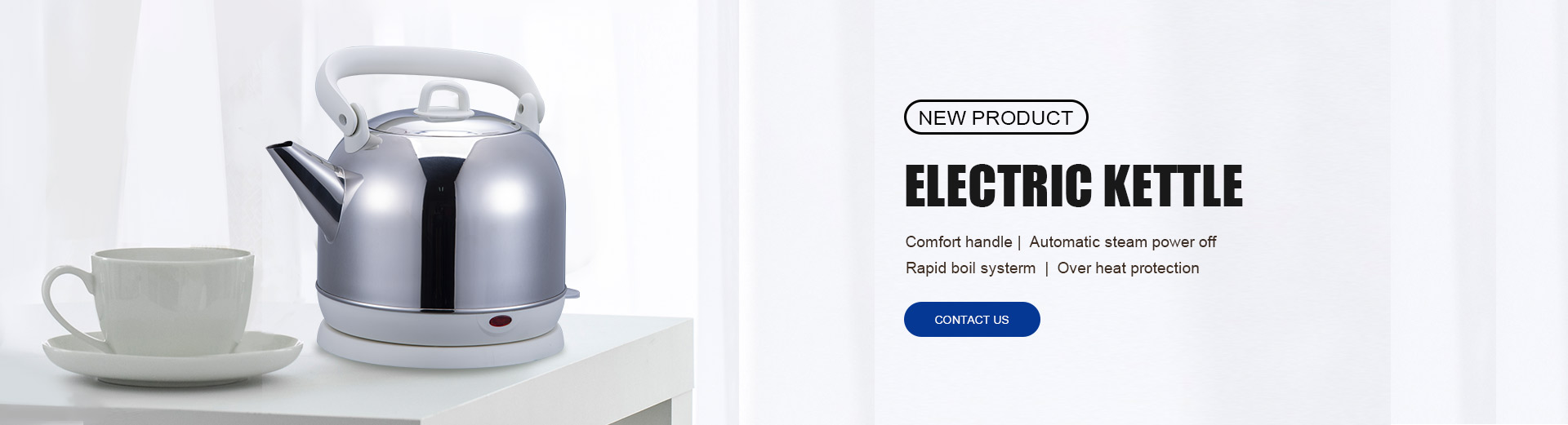
Material selection directly affects electric kettle durability by influencing corrosion resistance, heat performance, structural strength, and long-term product reliability.
The materials used in an electric kettle determine how well the product performs after thousands of heating cycles and daily handling. A kettle is exposed to high temperatures, water contact, cleaning processes, and repeated operation, making material quality a key factor in product lifespan.
Professional electric kettle manufacturers evaluate materials based on:
Resistance to heat and corrosion
Mechanical strength
Food-contact safety
Surface durability
Manufacturing compatibility
A well-selected material helps reduce product failures, maintain appearance quality, and improve user confidence throughout the kettle’s service life.
Stainless steel is widely used in electric kettle manufacturing because it provides a strong combination of durability, corrosion resistance, and appearance quality.
The main durability advantages include:
electric kettles frequently contact water and steam. Stainless steel materials with good corrosion resistance help prevent rust, surface damage, and performance degradation over time.
Compared with many lightweight materials, stainless steel provides stronger mechanical performance, helping the kettle body maintain stability during daily use.
Stainless steel can withstand repeated heating cycles while maintaining structural integrity, making it suitable for long-term operation.
For many electric kettle designs, stainless steel provides a reliable foundation for creating durable products.
Different stainless steel grades provide different levels of performance.
Common materials include:
| Stainless Steel Grade | Durability Characteristics |
|---|---|
| 304 Stainless Steel | Good corrosion resistance and widely used for daily applications |
| 316 Stainless Steel | Higher corrosion resistance for premium applications |
| Other Stainless Steel Materials | Selected according to specific component requirements |
The right material choice depends on product positioning, usage environment, and performance expectations.
For example, standard household electric kettles often use 304 stainless steel because it provides a good balance between reliability and production efficiency, while premium products may consider higher-performance materials.
Although stainless steel is important, plastic components also influence overall product lifespan.
Parts such as:
Handles
Lids
Switch buttons
Base covers
External housings
require heat-resistant and durable materials.
High-quality engineering plastics can provide:
Better heat insulation
Improved impact resistance
Stable shape retention
Comfortable user interaction
Material selection for plastic components must consider both safety and long-term performance because these parts are frequently touched and operated.
glass electric kettles provide unique design advantages, but material quality is especially important for durability.
High-quality glass materials can offer:
Better thermal stability
Clear appearance
Resistance to temperature changes
Easy cleaning characteristics
Manufacturers typically select heat-resistant glass materials and combine them with proper structural designs to improve reliability.
The connection between glass, heating components, handles, and bases must also be carefully engineered to prevent stress-related damage.
Electric kettles operate through repeated heating and cooling cycles, which creates stress on materials.
Suitable materials help maintain:
Stable heat transfer
Consistent heating performance
Resistance to thermal expansion
Long-term structural reliability
Poor material selection may lead to problems such as deformation, surface deterioration, or reduced product lifespan.
Manufacturers consider thermal properties during material evaluation to ensure that components can perform reliably under continuous use.
The surface of an electric kettle directly affects appearance and maintenance performance.
Different materials support different finishing processes, including:
Brushed stainless steel
Mirror polishing
Matte treatment
Decorative coating
A suitable material allows manufacturers to achieve:
More consistent surface appearance
Better scratch resistance
Improved cleaning performance
Longer-lasting visual quality
For customized electric kettles, material and surface finishing must be developed together to achieve both attractive design and durability.
When developing customized electric kettles, manufacturers need to evaluate multiple material-related factors.
Important considerations include:
Products used in homes, offices, hotels, or commercial environments may require different durability levels.
Larger kettles create higher structural demands because the filled water weight increases pressure on the body and handle.
Special shapes, finishes, and structures may require specific materials to maintain production feasibility.
Materials must meet applicable safety standards for different target markets.
A comprehensive material evaluation helps ensure that customized kettles achieve both design goals and reliable performance.
Material testing is an important part of quality control before mass production.
Common evaluation methods include:
Checking specifications and quality consistency of incoming materials.
Evaluating performance under repeated temperature changes.
Assessing resistance against water exposure and environmental conditions.
Checking strength, durability, and structural reliability.
These testing processes help manufacturers maintain stable product quality across different production batches.
Material selection requires a balance between engineering performance, production requirements, and market expectations.
Experienced electric kettle manufacturers understand how different materials affect:
Product lifespan
Manufacturing efficiency
Appearance quality
User experience
Cost control
Through professional material evaluation, advanced processing technology, and strict quality management, manufacturers can create electric kettles that deliver reliable performance throughout their service life.
Material selection is one of the most important factors affecting electric kettle durability. The right materials improve resistance against heat, water exposure, mechanical stress, and daily wear.
By combining suitable materials with precise manufacturing processes, electric kettle manufacturers can produce durable, safe, and high-quality products that meet different market requirements.