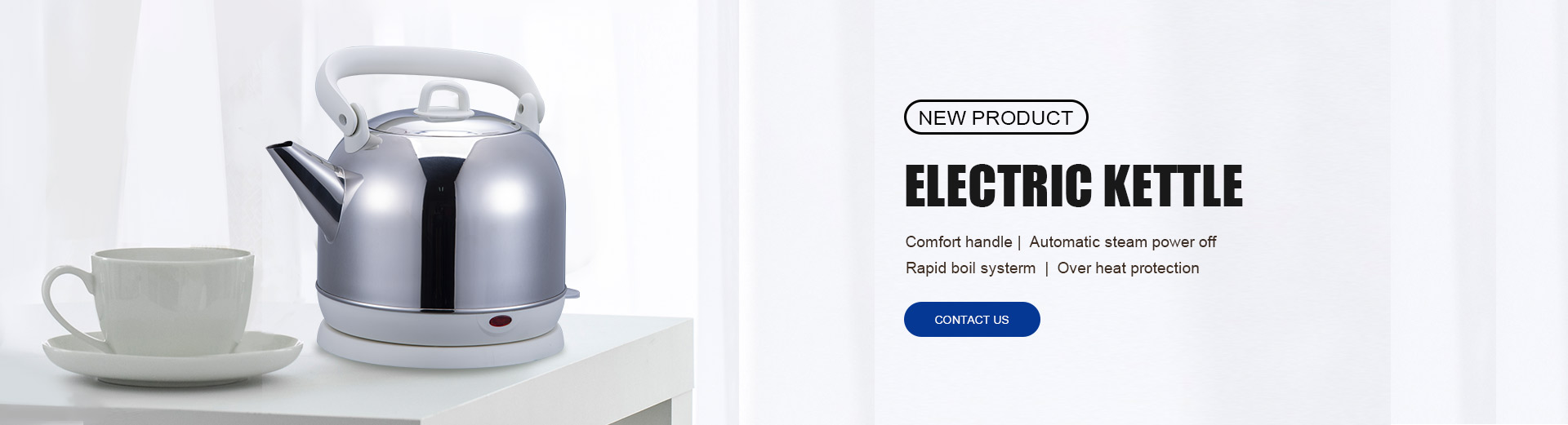
Electric kettle manufacturers commonly use stainless steel grades such as 304 and 316 stainless steel because they provide durability, corrosion resistance, and suitability for food-contact applications.
Stainless steel is one of the most important materials used in electric kettle production because it directly affects product safety, durability, appearance, and overall performance.
The inner container of an electric kettle is exposed to water and repeated heating cycles, so the selected stainless steel must maintain stable performance under high-temperature conditions.
A suitable stainless steel grade helps achieve:
Safe water contact performance
Strong corrosion resistance
Long service life
Better surface finishing results
Stable mass production quality
For manufacturers, stainless steel selection is not only a material decision but also an important part of product engineering and quality control.
304 stainless steel is one of the most commonly used materials in electric kettle manufacturing due to its balanced performance and wide application range.
Its main advantages include:
Good corrosion resistance
Strong durability
Stable performance under daily heating conditions
Suitable surface quality for polishing and brushing
304 stainless steel is often used for:
Inner water containers
Stainless Steel Kettle bodies
Water-contact components
Structural metal parts
Its combination of performance and manufacturing compatibility makes it suitable for many household and commercial electric kettle applications.
The inner container is the core part of an electric kettle because it directly holds water during heating. Material safety and stability are therefore critical.
304 stainless steel is widely selected because it can provide:
Reliable resistance against oxidation
Good stability during repeated heating
Smooth surfaces that are easier to clean
Compatibility with food-contact requirements
During manufacturing, the quality of stainless steel processing also influences the final product. Proper forming, welding, and surface treatment help maintain the performance advantages of the material.
316 stainless steel is a higher-performance stainless steel option that provides enhanced corrosion resistance compared with standard stainless steel grades.
It may be selected for electric kettle projects that require:
Higher material performance
Premium product positioning
Stronger resistance in demanding environments
316 stainless steel is generally considered a premium material choice because of its improved resistance characteristics.
However, material selection depends on product requirements, target markets, and cost considerations. Not every electric kettle application requires the highest-grade material.
304 and 316 stainless steel share many similarities, but their performance differences influence where they are used.
| Comparison Factor | 304 Stainless Steel | 316 Stainless Steel |
|---|---|---|
| Corrosion Resistance | Good | Higher |
| Daily Household Use | Widely suitable | Suitable |
| Premium Product Positioning | Common choice | Higher-end choice |
| Manufacturing Compatibility | Excellent | Excellent |
| Material Cost | More economical | Higher |
For most household electric kettles, 304 stainless steel provides a practical balance between performance and cost. 316 stainless steel is considered when enhanced material performance or premium positioning is required.
Although 304 and 316 stainless steel are commonly discussed, other stainless steel grades may also appear in electric kettle manufacturing depending on component requirements.
Different parts may require different material characteristics:
Outer decorative components may prioritize appearance and processing flexibility.
Structural parts may focus on strength and durability.
Water-contact areas require greater attention to safety and corrosion resistance.
Manufacturers select materials based on the function of each component rather than applying one material to every part.
Material selection for customized electric kettles depends on several factors:
Premium kitchen appliances may require higher-grade materials and advanced surface treatments, while standard products may focus on efficiency and reliability.
Different regions may have different expectations regarding materials, certifications, and product specifications.
The selected stainless steel must work well with forming, welding, polishing, and assembly processes.
For large-scale production, material consistency and supply stability are important considerations.
Professional manufacturers evaluate these factors together to create practical and reliable material solutions.
The stainless steel grade can influence the final appearance of the kettle because different materials respond differently during processing.
Common finishing methods include:
Brushed finishing
Mirror polishing
Matte surface treatment
Decorative coating
High-quality stainless steel provides a better foundation for achieving consistent surface effects.
For example, premium stainless steel surfaces can improve the uniformity of polishing and brushing, creating a more refined appearance for customized electric kettles.
Material quality control is essential for maintaining consistent electric kettle performance.
Manufacturers usually conduct:
Stainless steel materials are checked before production to verify specifications and quality consistency.
Forming, welding, and finishing processes are monitored to prevent defects.
Appearance, texture, and finishing effects are evaluated before final assembly.
Finished kettles undergo safety and functional testing to confirm reliability.
These processes help ensure that stainless steel materials deliver stable performance in finished products.
The stainless steel grade used in electric kettle manufacturing affects more than material strength. It influences safety, appearance, durability, and customer satisfaction.
Selecting the right stainless steel requires balancing technical performance, production requirements, and market expectations.
With professional material evaluation and manufacturing expertise, electric kettle manufacturers can develop products that provide reliable operation, attractive designs, and consistent quality for global markets.