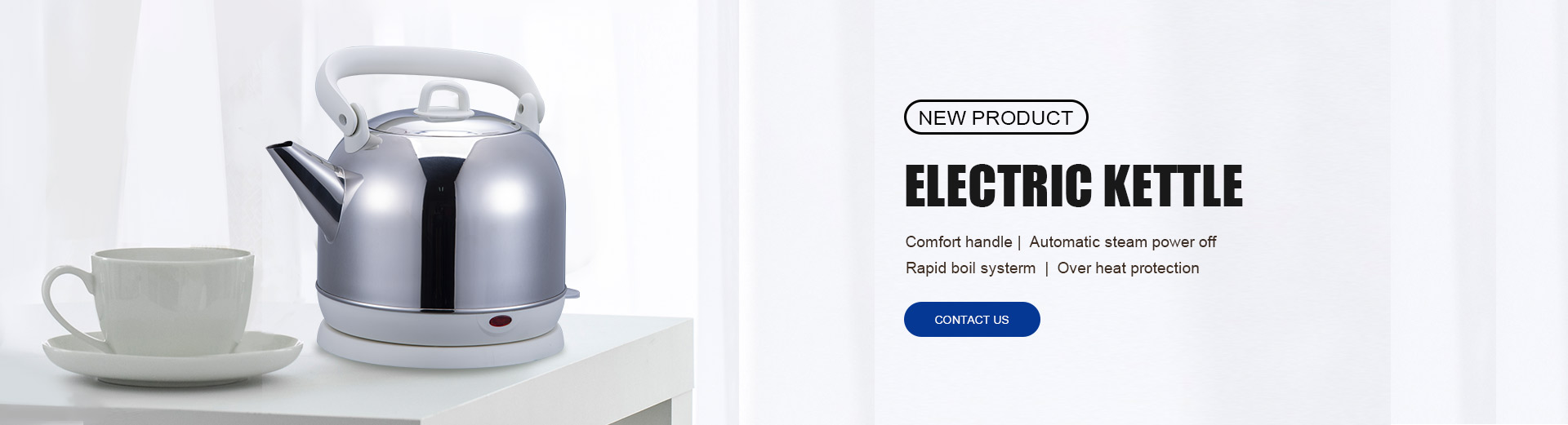
Making milk coffee in an electric kettle is possible, but the process needs more control than boiling water alone. Coffee extracts best when water is around 195°F to 205°F, while milk is usually best heated to about 55°C to 65°C and should not go beyond 70°C for better texture and taste. That means a kettle used for milk coffee should heat quickly, respond accurately, and remain easy to clean after use.
The usual method is to heat water first for the coffee portion, then warm the milk separately with close attention so it does not scorch or foam over. In real use, milk leaves more residue than water, so a kettle with a concealed heating element and food-contact inner surface is a better choice for this task. SHENBAO highlights concealed heating structures, calibrated thermostats, and multi-level safety protection in its kettle range, which supports more stable performance for repeated daily use.
For sourcing programs, the issue is not only how to make milk coffee, but how to keep product quality stable across volume orders. SHENBAO operates as a direct manufacturer with mold design, injection molding, metal stamping, and complete assembly under ISO9001 quality management. Compared with a trader model, this gives better control over lead time, engineering adjustment, and corrective action during OEM electric kettle and ODM kettle projects.
A project sourcing checklist should cover thermostat calibration, heating consistency, auto shut-off, dry-boil protection, residue cleaning review, packaging validation, and pre-shipment inspection. SHENBAO also states support for CE, CB, GS, RoHS, and LFGB, which is important for export market compliance and smoother bulk supply planning. Material standards used in food-contact areas and stable controller performance both affect long-term reliability in commercial-grade supply.
| Check item | Why it matters |
|---|---|
| Concealed heating element | Easier cleaning after milk use |
| Calibrated thermostat | Better control for coffee and milk temperature |
| Food-contact inner material | Supports hygiene and taste stability |
| Safety protection system | Reduces overheating and dry-boil risk |
| Certification package | Helps with export approval |
A milk coffee kettle should be evaluated by heating control, cleaning convenience, manufacturing consistency, and compliance readiness rather than unit price alone. For long-term supply, the stronger result usually comes from a factory that controls process, materials, and inspection from the start.