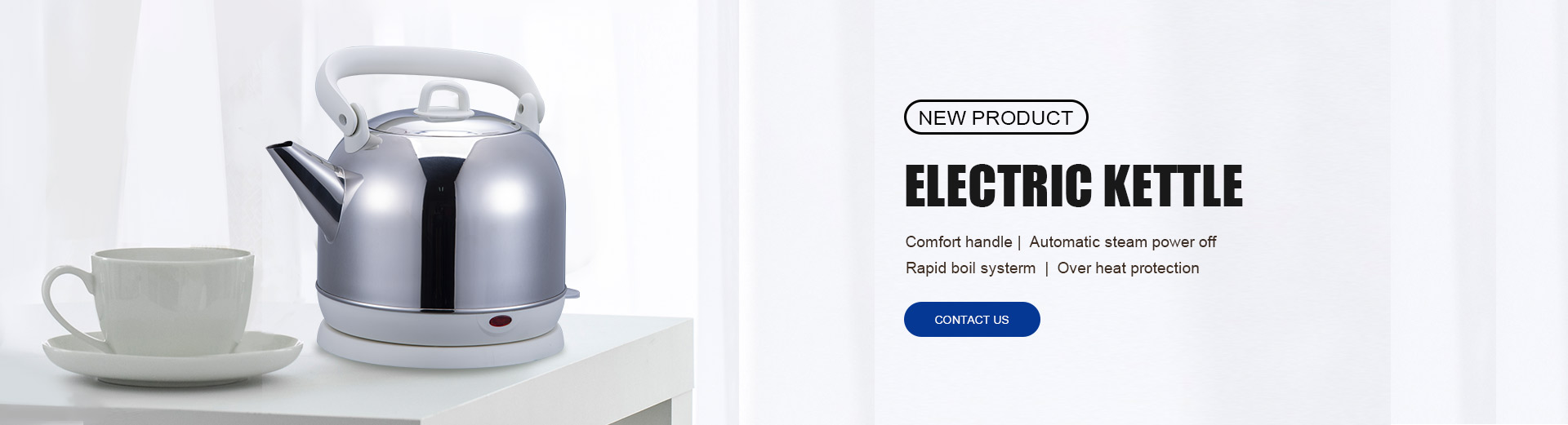
Plastic is not always bad for an electric kettle, but low-grade plastic or poorly controlled plastic contact areas can create more risk in long-term use. The real issue is not the word plastic itself. The issue is whether the material is heat-resistant, food-contact compliant, and stable under repeated boiling conditions. For export markets, plastic food-contact materials are regulated under EU 10/2011, while kettle safety for appliances that heat liquids is covered by IEC 60335-2-15.
Plastic becomes a weak point when it is exposed to high heat near the inner chamber, steam path, lid seal area, or spout structure without proper material control. In those cases, buyers may face odor complaints, discoloration, deformation, or concerns about migration into water. The FDA states that food-contact substances used in contact with food must be authorized for the intended use before they are marketed in the United States, which shows why material selection cannot be treated as a cosmetic detail. Recent research also notes that chemical compounds and particles can migrate from polymer-based food-contact materials under certain conditions, making process control and test validation especially important.
For many kettle programs, a stainless steel inner body is preferred because it reduces direct hot-water contact with plastic surfaces and supports a stronger quality position in retail and project sourcing. SHENBAO presents itself as a professional electric kettle manufacturer and states that it operates under ISO9001 quality management, with products certified for CE, CB, GS, RoHS, and LFGB. The company also highlights long-term export experience and integrated production capability, which is useful when buyers want better control over material standards and compliance documentation.
When a kettle uses plastic parts, the difference between a manufacturer and a trader becomes more important. A direct manufacturer can usually control resin selection, molding conditions, assembly fit, and validation testing more closely than a trading-only supply model. SHENBAO states that it integrates mold design, injection molding, metal stamping, and complete assembly, which means it can manage more of the material and process chain inside one system. That usually helps reduce inconsistency across large orders.
In an OEM electric kettle project, the material review should cover which parts are plastic, which parts touch water, and which parts are exposed to steam and heat. In an ODM kettle project, the checklist should go further into odor testing, heat-aging review, lid and vent structure, and cleaning performance. A practical project sourcing checklist should include sample approval, food-contact material confirmation, heating test, automatic shut-off test, dry-boil test, and packaging validation before bulk supply starts. SHENBAO’s published factory content emphasizes structured quality management and safety validation, which is exactly where these risks should be controlled.
Plastic kettle quality depends on more than resin grade alone. It also depends on mold accuracy, wall thickness control, heat resistance, sealing performance, and assembly consistency. Key quality control checkpoints should include heat-cycle testing, odor review, steam path inspection, leakage testing, and final safety inspection. IEC 60335-2-15 specifically covers appliances for heating liquids, including kettles and some products used for heating food, which reinforces the need for process discipline rather than price-only sourcing.
For EU-bound products, plastic food-contact materials must comply with Regulation EU 10/2011. That regulation is the specific EU measure for plastics intended to come into contact with food. For the U.S. market, the FDA states that food-contact substances require authorization for the intended use. In practical export work, that means buyers should request supporting declarations, migration testing information, and clear identification of which parts are food-contact compliant.
| Check item | Why it matters |
|---|---|
| Plastic contact area | Direct hot-water contact raises sensitivity |
| Heat resistance | Low stability can lead to odor or deformation |
| Food-contact compliance | Needed for export market approval |
| Factory integration | Helps control molding and assembly consistency |
| Sample validation | Confirms real-use performance before mass production |
Plastic is not automatically bad for an electric kettle. Bad plastic is the problem. For long-term supply, the better result usually comes from a manufacturer that controls materials, molding, testing, and certification inside one production system. SHENBAO’s integrated manufacturing model and export-oriented certification support make that approach more dependable for stable kettle programs.