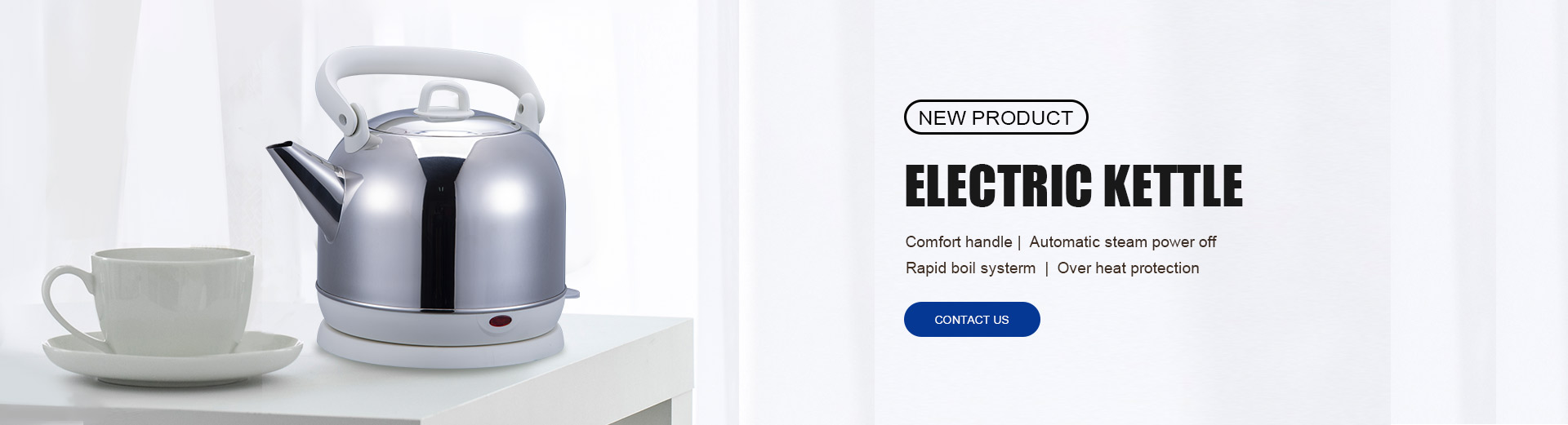
Choosing stainless steel materials for custom electric kettles requires evaluating corrosion resistance, food safety, durability, appearance, and manufacturing requirements.
Stainless steel is one of the most widely used materials in electric kettle manufacturing because it provides strength, durability, and a premium appearance. However, different stainless steel grades have different performance characteristics, making material selection an important step during product development.
For customized electric kettles, the right stainless steel material affects:
Water contact safety
Corrosion resistance
Heat performance
Product lifespan
Surface finishing results
Manufacturing consistency
A suitable material choice helps manufacturers create kettles that meet different market expectations while maintaining reliable performance during long-term use.
Different stainless steel grades are selected according to product requirements and application conditions.
304 stainless steel is commonly used for electric kettles because of its good corrosion resistance, durability, and suitability for food-contact applications.
Key characteristics include:
Stable performance in daily use
Good resistance to oxidation
Smooth surface quality
Easy compatibility with polishing and brushing processes
It is widely applied in kettle inner containers and stainless steel body structures where safety and durability are important.
316 stainless steel provides higher corrosion resistance due to its enhanced material composition.
Compared with standard stainless steel options, it offers:
Stronger resistance in demanding environments
Higher durability under specific conditions
Premium material positioning
This material may be considered for products requiring higher material performance or specialized market positioning.
Some electric kettle components may use other stainless steel materials depending on structural requirements and cost considerations. Manufacturers evaluate each component separately to achieve the right balance between performance and production efficiency.
Material quality directly influences kettle safety because the inner container is in frequent contact with water and heat.
Important material factors include:
The stainless steel used in water-contact areas should meet relevant safety requirements and maintain stability during repeated heating cycles.
The material should maintain structural stability under continuous temperature changes without deformation.
Good corrosion resistance helps prevent surface deterioration and supports longer product service life.
Professional manufacturers typically combine material inspection with production quality control to ensure consistent performance across different production batches.
Stainless steel thickness affects product strength, weight, appearance, and manufacturing cost.
A thicker material can provide:
Higher structural strength
Better impact resistance
More solid product feeling
However, excessive thickness may increase weight and production costs.
Manufacturers need to consider:
| Consideration | Influence |
|---|---|
| Kettle capacity | Larger capacity may require stronger structures |
| Product positioning | Premium products may prioritize solid construction |
| Manufacturing process | Thickness affects forming and assembly |
| User experience | Weight influences daily handling comfort |
The optimal thickness depends on the overall product design rather than a single specification.
Stainless steel selection influences the final appearance of customized electric kettles because different materials respond differently to finishing processes.
Common finishing options include:
Brushed finish
Mirror polishing
Matte treatment
Colored coating
Decorative surface processing
For example, stainless steel with good surface consistency can achieve more uniform polishing and brushing effects, improving the overall premium appearance of the kettle.
Material quality and finishing technology must work together to achieve stable visual results.
OEM and ODM projects require stainless steel selection based on multiple factors rather than appearance alone.
Important considerations include:
Premium kitchen appliances may require higher-grade materials and refined surface treatments, while practical models may focus on cost efficiency and durability.
Large-volume production requires materials with stable supply, consistent quality, and reliable processing performance.
Different markets may require specific safety and compliance standards, affecting material selection.
The chosen stainless steel should match available forming, welding, polishing, and assembly processes.
Reliable material control is essential for producing consistent electric kettles.
Typical quality processes include:
Manufacturers confirm stainless steel specifications and supplier quality before production.
The material surface is checked for defects that may affect appearance or processing results.
Testing helps confirm whether the material can withstand long-term exposure to water and heat.
During manufacturing, quality checks ensure that material performance remains consistent throughout production batches.
The right stainless steel material helps create electric kettles with stronger market appeal.
A suitable material choice can improve:
Product reliability
Premium appearance
Customer trust
Brand positioning
Long-term user satisfaction
For global markets, stainless steel selection becomes part of product differentiation. Manufacturers can combine material expertise, design capability, and production experience to develop customized kettle solutions for different applications.
Stainless steel selection is a critical decision that affects the entire electric kettle development process, from design and manufacturing to final user experience.
A professional approach considers safety, durability, appearance, cost, and production feasibility together. Through proper material evaluation and strict quality control, customized stainless steel electric kettles can achieve reliable performance and competitive product value in global markets.